Restaurants, hospitals, schools and warehouses often ask staff for non-slip shoes. Plenty of shoes look grippy, but slip resistance is something you can check before you buy.
In this guide
Short answer: Look for a clear slip-resistant claim, ideally to ASTM F3445, then check the outsole: soft rubber, a flat contact area and lots of small channels. Oil-resistant alone does not mean slip-resistant.
We may earn a commission when you buy through our links, at no extra cost to you.
Six checks
| Check | What to look for | Why | Shop |
|---|---|---|---|
| Label or listing | Slip resistant, ideally ASTM F3445 | A rated claim beats a marketing word | Check price |
| Outsole material | Soft, flexible rubber | Grips better than hard plastic | Check price |
| Tread pattern | Many small channels and grooves | Moves liquid away from the contact area | Check price |
| Contact area | Flat, wide sole | More rubber touching the floor | Check price |
| Heel | Low and wide | More stable on wet floors | Check price |
| Wear | Tread not worn smooth | Old soles lose grip | Check price |
What the official standard is
ASTM F2913 is a lab test method that measures the friction between a whole shoe and a floor, including floors with water, ice, oil or grease on them. ASTM F3445 sets minimum slip resistance requirements using that method.
A trade article in OH&S points out that before July 2021 the US had no universal specification for slip resistance, so older shoes were often just labelled slip resistant. It also notes that oil-resistant does not mean slip-resistant.
How to check a shoe in the store or at home
- Read the box, tag and listing for slip resistant and any standard number.
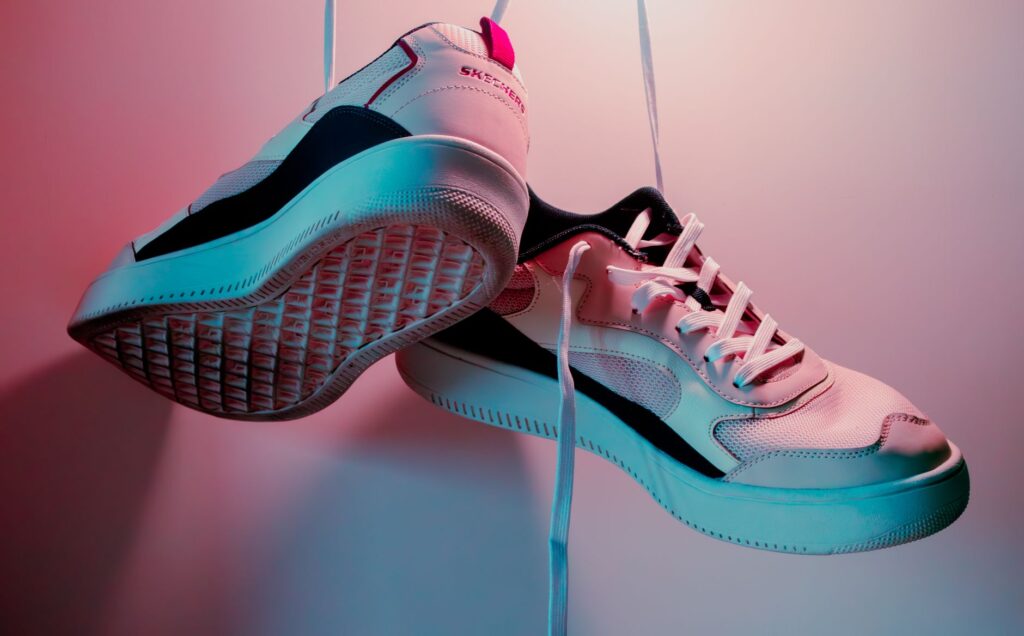
- Flip the shoe over. Soft rubber that you can press with a thumbnail usually grips better than hard plastic.
- Look for many small grooves across the whole sole, not just a few deep lugs.
- Check the edges: sharp, square edges tend to grip better than rounded ones.
- Make sure the sole is flat where it meets the floor.
Related: How to Shrink Shoes That Are Too Big: What Really Works
Slip-resistant picks to compare
Shoes For Crews work shoes
Best for: Kitchens and restaurants
A brand focused on slip-resistant work shoes.
- Good: Many styles
- Less good: Plain looks
Skechers Work slip-resistant
Best for: All-day comfort at work
Skechers’ work line with slip-resistant soles.
- Good: Comfortable
- Less good: Check the rating per style
Dansko professional clogs
Best for: Healthcare
Clogs popular with nurses.
- Good: Supportive
- Less good: Takes time to get used to
Non-slip sneakers
Best for: Retail and schools
Sneaker-style shoes with slip-resistant soles.
- Good: Casual look
- Less good: Less protection than work boots
Where to wear them
If your job requires slip-resistant shoes, check the ratings match your site requirements, as employers may ask for a specific standard. For quick fixes on shoes you already own, see how to make shoes non-slip.
Check the ratings match your site requirements before buying shoes for work. We are not affiliated with any brand named here. Prices and availability change, so check the listing before you buy.
Related guides
Read best slip-resistant work shoes.
Read how to make shoes non-slip.
Read best shoes for teachers.
Read why dress shoes are slippery.
Frequently asked questions
What makes a shoe non-slip?
Soft rubber, a flat contact area and many small channels that move liquid away. A rating to ASTM F3445 confirms it was checked in a lab.
Are oil-resistant shoes slip-resistant?
Not necessarily. Oil-resistant refers to the sole material, not grip.
How can I tell if my shoes are slip-resistant without a label?
Check for soft rubber and a fine tread pattern, but only a lab rating confirms it.
Do non-slip shoes wear out?
Yes. Once the tread wears smooth, grip drops, so replace them.