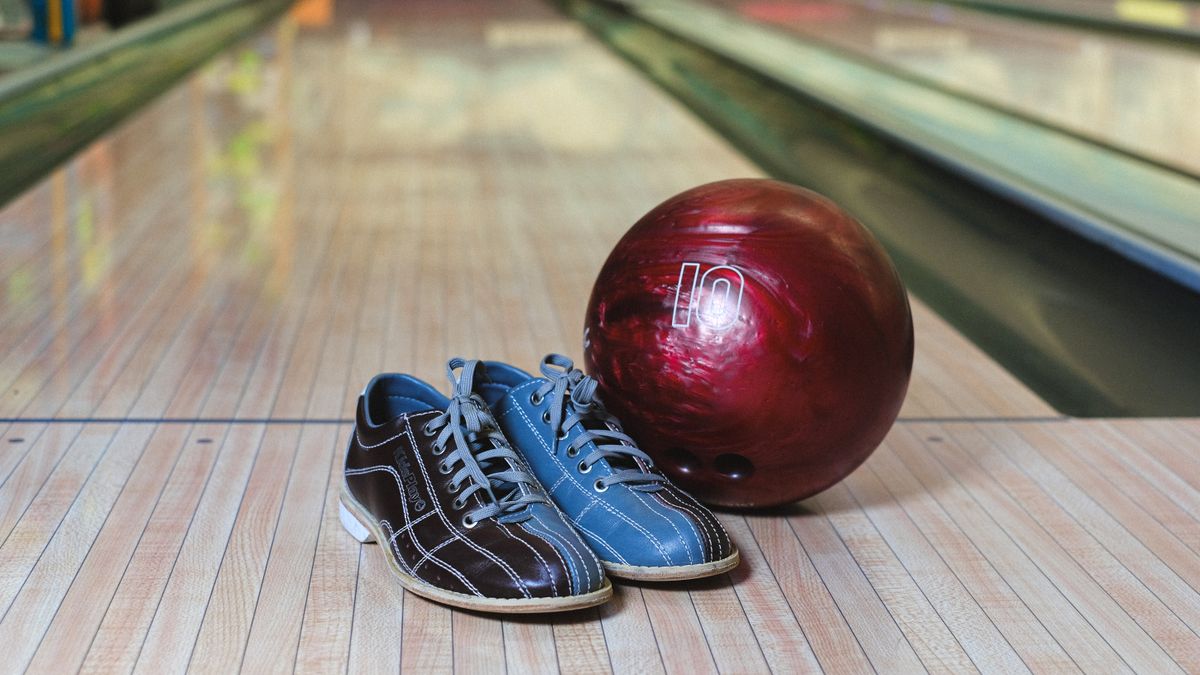
Bowling shoes have a smooth leather or microfibre sole that lets you slide on the wooden or synthetic approach in the last step before you release the ball, and a rubber heel that brings you to a controlled stop. Ordinary shoes grip the floor instead of sliding, which jars your knee and throws off your delivery, and they carry in dirt and moisture that damage the lanes.
In this guide
How the slide works
A bowler’s final step is a slide on the foot opposite the throwing hand. A right-handed bowler slides on the left foot. The slide lets your body decelerate smoothly while your arm swings through, so the release is consistent.
| Part | Material | Job |
|---|---|---|
| Slide sole | Leather, felt or microfibre | Glides on the approach |
| Traction (push-off) sole | Rubber | Grips so you can drive forward |
| Heel | Rubber | Brakes the slide |
| Upper | Leather or synthetic | Supports the foot; cushioned like a trainer in modern designs |
Rental, athletic and performance bowling shoes
- Rental (house) shoes: slide soles on both feet, so they work for left- and right-handed bowlers. Durable and basic.
- Athletic-style bowling shoes: look and feel like trainers, usually with slide soles on both feet. A good first pair for casual and league bowlers.
- Performance shoes: one sliding shoe and one traction shoe, made for either right- or left-handed bowlers. Many have interchangeable soles and heels so you can adjust the amount of slide to suit different approaches.
Why you cannot bowl in street shoes
- Safety: rubber-soled trainers stick on the approach. A sudden stop mid-slide can cause a fall or a knee injury.
- Lane protection: grit, water and oil from outdoor soles scratch and contaminate the approach, which then becomes sticky and dangerous for everyone.
- House rules: virtually every bowling centre requires bowling shoes.
Related: What Are Training Shoes? Training vs Running Shoes
Should you buy your own?
| You bowl | Best option |
|---|---|
| A few times a year | Rent |
| Once or twice a month | An entry-level athletic pair usually pays for itself within a season of rental fees |
| Weekly league | Your own pair; consider performance shoes with interchangeable soles |
Your own shoes also fit consistently, slide predictably and are more hygienic.
How should bowling shoes fit?
- Snug like a trainer, with a little toe room and no heel slip.
- Many bowling shoes fit close to your normal shoe size, but brands vary, so check the size chart.
- Wear the socks you bowl in when trying them on.
- If you have wide feet, look for wide-width models.
For measuring, see how to measure your shoe size at home.
How to look after bowling shoes
- Keep the soles dry and clean. A single drop of water on a slide sole can stop you dead. Never walk to the snack bar, toilets or car park in them without shoe covers.
- Brush the slide sole with a wire or stiff shoe brush to lift the nap if it gets shiny or sticky.
- Wipe the uppers with a damp cloth.
- Air them out after bowling instead of zipping them into a closed bag while damp. See how to get rid of shoe odor.
- Replace worn slide pads and heels on shoes with interchangeable parts.
A short history
Early bowlers wore ordinary leather-soled shoes, which happened to slide well. As rubber soles became standard on everyday footwear in the twentieth century, bowling centres needed dedicated shoes to protect the approaches, and the two-tone rental shoe, designed to be easy to size at a glance and unappealing to walk off with, became a familiar sight.
For the bigger story, see the history of footwear.
Frequently asked questions
Why are bowling shoes slippery?
The smooth sole is designed to slide on the approach so you can glide into your release without stopping abruptly.
Can you wear bowling shoes outside?
No. Dirt and moisture ruin the slide sole and get carried onto the lanes.
Do left- and right-handed bowlers need different shoes?
Only with performance shoes, which have one slide shoe and one traction shoe. Rental and most entry-level shoes slide on both feet.
Do I need socks with bowling shoes?
Yes. Centres require them with rental shoes for hygiene, and they prevent blisters.