To measure your shoe size at home, stand on a sheet of paper with your heel against a wall, mark the tip of your longest toe, and measure the distance in centimetres. Do both feet, use the larger measurement, and match it to the size chart below.
In this guide
What you need
- Two sheets of paper larger than your feet
- A pen or pencil
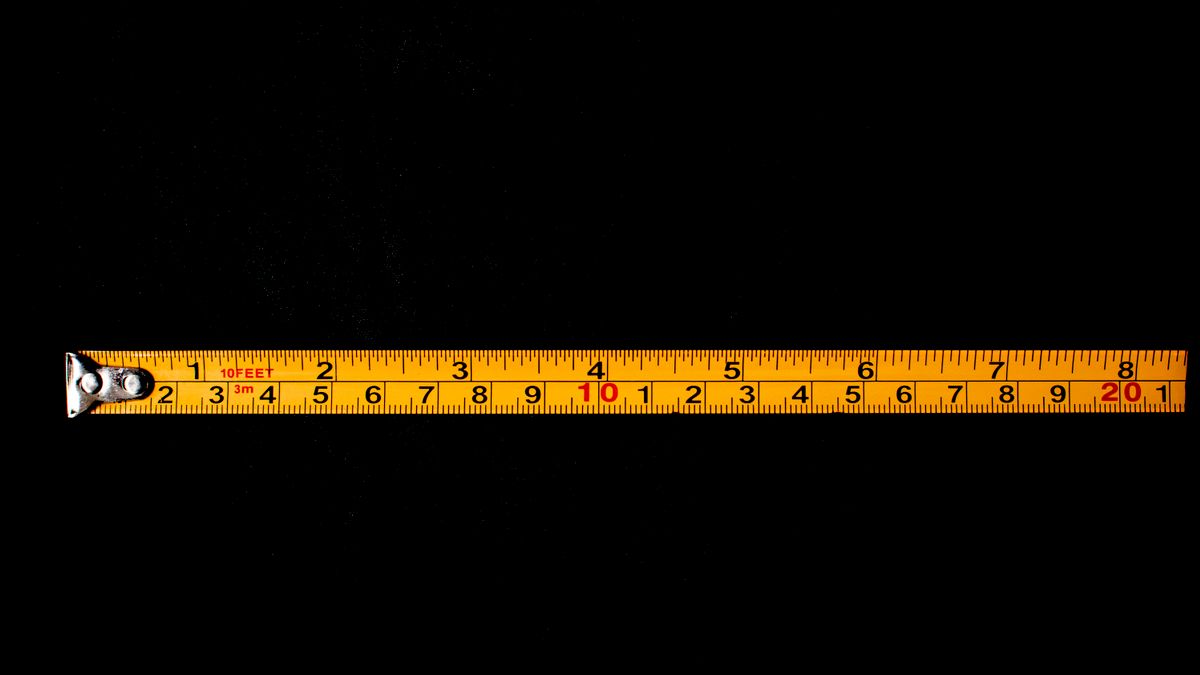
- A ruler or tape measure
- The socks you plan to wear with the shoes
How to measure your foot length
- Measure in the afternoon or evening. Feet swell slightly through the day, so morning measurements run small.
- Place the paper on a hard floor with one short edge against a wall.
- Stand on it with your heel touching the wall and your full weight on that foot.
- Mark the tip of your longest toe. Hold the pen upright, not angled under the toe. It is easier if someone else does this.
- Measure from the edge of the paper to the mark in centimetres.
- Repeat with the other foot and keep the larger number.
How to measure your foot width
- While standing on the paper, mark the widest points on each side of the forefoot, usually at the ball of the foot.
- Measure straight across between the two marks.
Width matters as much as length. In US sizing, D is the standard width for men and B for women; wider fittings run through E, 2E and 4E, and narrower ones through A and 2A.
Men’s shoe size chart
| Foot length (cm) | US men’s | UK | EU |
|---|---|---|---|
| 25.0 | 7 | 6 | 40 |
| 26.0 | 8 | 7 | 41 |
| 27.0 | 9 | 8 | 42.5 |
| 28.0 | 10 | 9 | 44 |
| 29.0 | 11 | 10 | 45 |
| 30.0 | 12 | 11 | 46 |
Related: How to Break In New Shoes Without Blisters
Women’s shoe size chart
| Foot length (cm) | US women’s | UK | EU |
|---|---|---|---|
| 23.0 | 6 | 4 | 36.5 |
| 24.0 | 7 | 5 | 37.5 |
| 25.0 | 8 | 6 | 39 |
| 26.0 | 9 | 7 | 40 |
| 27.0 | 10 | 8 | 41.5 |
These conversions are approximate. Sizing is not standardised between brands, so always check the size chart of the brand you are buying, using your measurement in centimetres.
How much room should you leave?
Your shoe should be a little longer than your foot. For most shoes, allow about 1 to 1.5 cm (roughly a thumb’s width) between your longest toe and the end of the shoe. Many brand size charts already include this allowance, which is why you look up your foot length, not the inside length of the shoe.
- Running shoes: often half a size up from casual shoes. See how running shoes should fit.
- Boots: leather boots frequently run half a size large. See how boots should fit.
Common measuring mistakes
- Measuring while sitting. Your foot lengthens and spreads under body weight.
- Measuring only one foot. Most people have one foot slightly larger.
- Angling the pen under the toes, which shortens the measurement.
- Relying on an old measurement. Feet can change with age, weight and pregnancy.
- Assuming you are the same size in every brand.
What if you are between sizes?
Go up to the larger size. A slightly roomy shoe can be adjusted with an insole or heel grip, while a short shoe cannot be made longer. Our guide to making shoes fit smaller covers the options.
Frequently asked questions
What is the most accurate way to measure shoe size?
A Brannock device in a shoe store measures length, arch length and width together. At home, the wall and paper method is accurate to within a few millimetres if you stand with full weight on the foot.
How do I convert women’s sizes to men’s?
In US sizing, subtract about 1.5 from the women’s size. A women’s 9 is roughly a men’s 7.5.
Should I measure with or without socks?
With the socks you will wear in the shoes. Thick socks can add several millimetres.
How often should I re-measure?
Every year or two as an adult, and every few months for growing children.