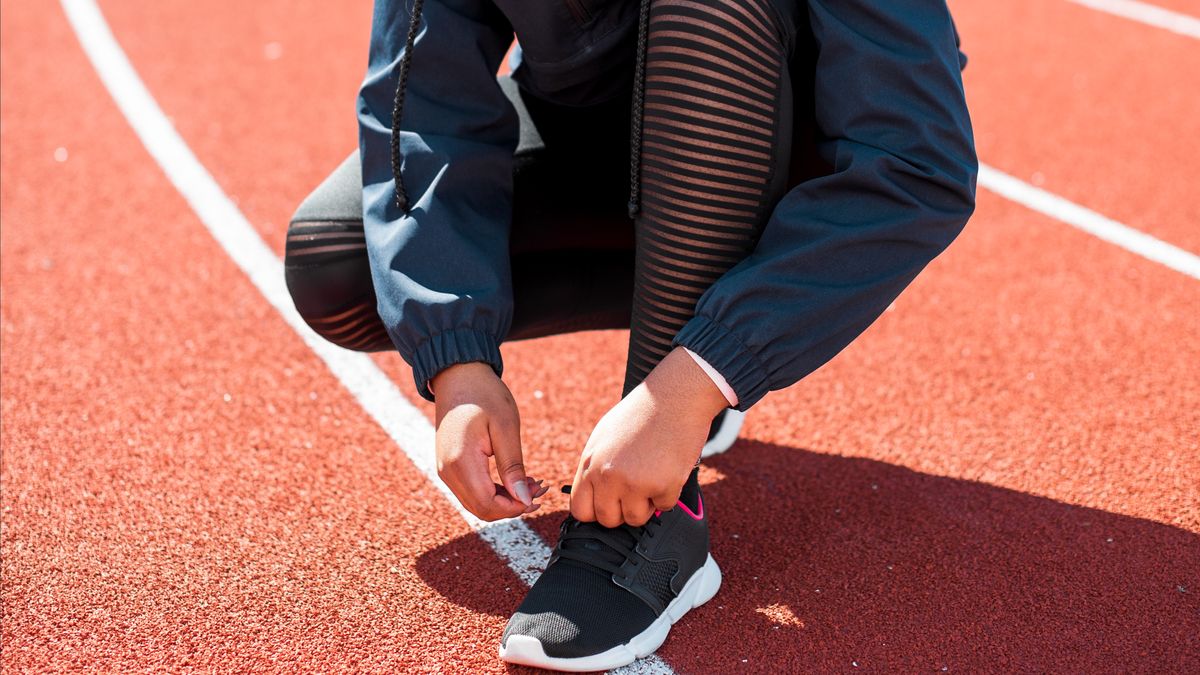
Running shoes should fit snugly at the heel and midfoot, leave about a thumb’s width of space in front of your longest toe, and give your toes room to spread. If you notice the shoe at all while you run, whether from rubbing, slipping or pressure, the fit is off.
In this guide
That sounds simple, but feet differ in length, width and volume, they swell during the day, and one foot is almost always bigger than the other. This guide walks through how to measure your feet, what a good fit feels like in each part of the shoe, and the warning signs that tell you to change size.
The quick fit check
| Part of the shoe | What a good fit feels like | Sign it is wrong |
|---|---|---|
| Toe box (length) | About a thumb’s width (roughly half an inch) between your longest toe and the end | Toes touch the front on downhills, black or bruised toenails |
| Toe box (width) | Toes can spread and wiggle; you can pinch a little material over the forefoot | Numbness, tingling, blisters between toes |
| Midfoot | Secure and wrapped, with no pressure on top of the foot | Foot slides sideways, or laces dig in |
| Heel | Held in place with little or no lift when you walk and jog | Heel blisters, heel lifting out with each step |
Step 1: Measure both feet
Start with a fresh measurement, even if you think you know your size. Feet tend to get longer and wider with age, and sizing varies between brands.
- Put on the socks you run in.
- Stand on a sheet of paper with your full weight on the foot and trace around it, or use a measuring device in a running store.
- Measure the length from heel to longest toe and the width across the widest part of the forefoot.
- Repeat for the other foot and use the measurements of the larger foot.
Most runners end up about half a size larger in running shoes than in their everyday shoes. The extra length gives your foot room to move forward and swell slightly as you run.
Step 2: Try shoes on the right way
How and when you try shoes on matters almost as much as the size on the box.
- Shop in the afternoon or evening. Feet swell through the day, so a shoe that fits at 9 a.m. can feel tight on a late run.
- Wear your running socks and bring any insoles or orthotics you use.
- Try several models and brands. Each brand builds its shoes around a different foot shape, so the same size can feel very different.
- Move in them. Walk, then jog on the spot or on the store treadmill. A shoe that feels fine standing can slip or pinch once you load it.
- Buying online? Test the shoes indoors on a clean floor so you can still return them.
Many specialist running stores offer a gait analysis, where staff watch or film you running to see how your foot lands. It is a useful way to find out whether you need a neutral or a stability shoe, but comfort should still make the final call.
Related: How to Clean Canvas Shoes Without Ruining Them
How each part of the shoe should feel
Toe fit
Stand up and press down in front of your longest toe, which is not always the big toe. You want about a thumb’s width of empty space. Your toes should be able to spread out flat when you land; that spread is part of how your foot balances and absorbs impact.
Midfoot fit
The upper should wrap your arch and the top of your foot like a firm handshake: secure, but with no hot spots. If you have to pull the laces very tight to feel held, the shoe is too wide or too high in volume for your foot.
Heel fit
The heel counter should cradle your heel without squeezing the Achilles tendon. A tiny amount of movement is normal in a brand-new shoe, but your heel should not lift out when you jog.
Signs your running shoes do not fit
- Numb or tingling toes: the forefoot is too narrow, or the laces are too tight across the top of the foot.
- Blisters on or between the toes, or bruised toenails: the toe box is too short or too narrow.
- Blisters on the ball of the foot: the shoe is too wide and your foot is sliding inside it.
- Heel blisters: the heel is slipping, or the heel cup is the wrong shape for you.
- Arch or top-of-foot pain: too little volume in the midfoot, or laces pulled too tight.
Pain that continues after you change shoes is worth showing to a podiatrist or sports doctor rather than trying to fix with another size.
Use lacing to fine-tune the fit
Lacing can adjust a shoe that is nearly right. It cannot rescue one that is the wrong size.
- Heel slipping: use the extra top eyelet to tie a runner’s loop (also called a heel lock).
- Pressure on top of the foot: skip one crossover above the sore spot.
- Wide forefoot: leave the lowest eyelets looser and tighten from the midfoot up.
If you keep your laces white and clean as well as tied properly, see our guide on how to clean white shoelaces.
Frequently asked questions
Should running shoes be a size bigger?
Usually about half a size bigger than your casual shoes. What matters is the thumb’s width of space in front of your longest toe, not the number on the box.
Should running shoes feel tight at first?
No. Modern running shoes need very little breaking in. They should feel comfortable in the store; snug is fine, tight or painful is not.
How do I know if my running shoes are too big?
Your heel lifts, your foot slides forward on downhills, and you get blisters on the ball of the foot. If you have more than a thumb’s width in front of your toes, try half a size down.
Do boots follow the same fit rules?
Not quite. Boots are stiffer and sit higher on the ankle, so the checks are different. See how boots should fit.
The bottom line
Measure both feet, shop late in the day in your running socks, and judge the shoe while moving. A thumb of space at the toes, a secure midfoot and a locked-in heel are the three things to look for. When the fit is right, you stop thinking about your shoes and get on with the run.