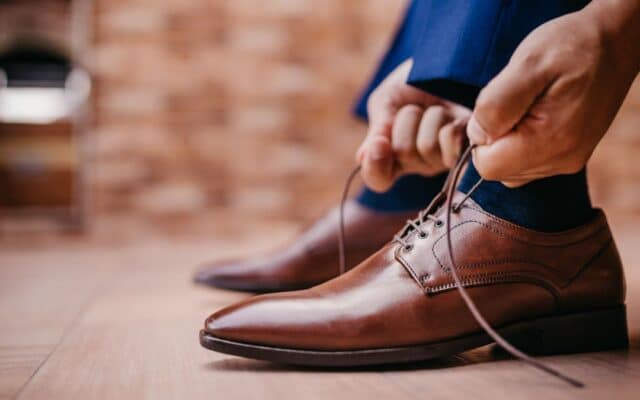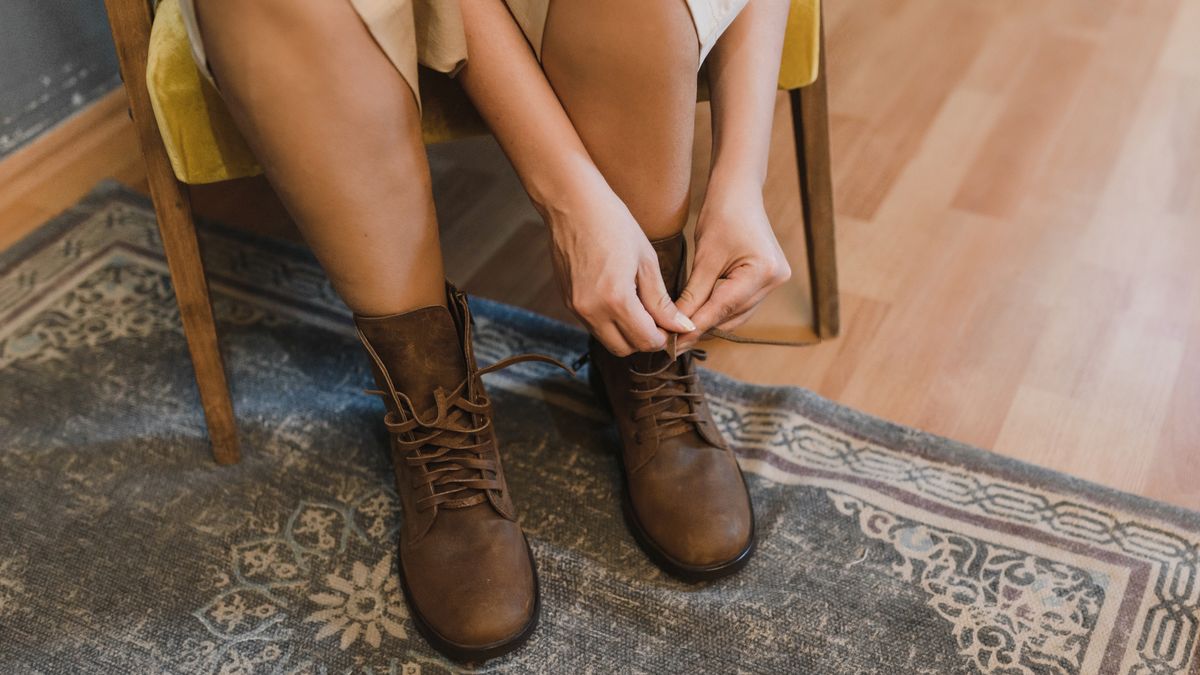
Boots should feel snug across the instep and the ball of the foot, leave room to wiggle your toes, and allow only a small amount of heel lift when they are new. They should never pinch, and your foot should not slide forward when you walk downhill.
In this guide
Boots are stiffer and heavier than shoes, so a poor fit shows up faster and hurts more. This guide covers how to find your size and how each part of a boot should feel, with notes for work boots, hiking boots and pull-on styles.
Start with your real size
Measure both feet standing up, at the end of the day, wearing the socks you plan to use with the boots. Fit the larger foot; most people have one foot up to half a size bigger than the other.
Boot sizing is less consistent than sneaker sizing. Many leather work and heritage boots run about half a size larger than athletic shoes, while some hiking boots run small. Check the brand’s size chart and treat the number as a starting point, then judge by feel.
How each part of the boot should fit
| Area | Good fit | Warning sign |
|---|---|---|
| Toe box | Toes wiggle freely; about a thumb’s width in front of the longest toe | Toes touch the front or overlap |
| Ball of the foot | Widest part of your foot sits at the widest part of the boot | Pressure on the sides, or the boot bends in the wrong place |
| Instep | Firm, even hold across the top of the foot | Laces dig in, or the foot slides forward |
| Arch | Insole follows your arch without a gap or a lump | Arch ache after an hour of wear |
| Heel | Up to about a quarter inch of lift in new boots | Heel rubbing, blisters, or lift that does not reduce |
| Ankle and shaft | Supportive without cutting in | Rubbing on the ankle bone or shin |
Toe box
You should be able to wiggle every toe. Cramped toes cause blisters, numbness and, over years, problems such as bunions and hammer toes. In safety boots, remember that a steel or composite toe cap will not stretch at all, so the toe box must fit from day one.
Ball of the foot and flex point
Every boot is built to bend at one place. That flex point should line up with the ball of your foot. If the boot is too long or too short, it creases against your toes or your arch instead, which is uncomfortable and wears the boot out faster.
Instep
The instep, the top of your foot between the ankle and the toes, is what actually holds a boot on. The fit here should be firm and even. If you have a high instep, look for boots with a longer lacing area or a wider fitting.
Arch
The insole should support your arch without pressing into it. Flat feet usually do better with a flatter, firmer insole, and high arches with more cushioning and support. A replacement insole can fix a boot that fits well everywhere else.
Heel
A slight heel lift is normal in new leather boots, because the sole is still stiff. It should reduce as the sole breaks in. Heel lift that causes rubbing, or that is still there after a couple of weeks, means the boot is too big or the heel cup is the wrong shape for you.

Related: How to Fix Flip Flops: Broken Straps, Pulled-Out Plugs and Worn Soles
Fit by boot type
- Work and safety boots: prioritise toe room, because the cap will not give. Try them with your work socks and stand, squat and climb a step before deciding.
- Hiking boots: walk down a slope or ramp. If your toes hit the front, go up half a size or adjust the lacing. Your heel should stay put on the way up.
- Pull-on boots (Chelsea, cowboy, wellington): with no laces, the instep does all the holding. Expect a firm pop as your foot goes in and a little more heel lift than in lace-up boots.
- Winter boots: leave room for thicker socks, but not so much that your foot slides. Tight boots restrict circulation and make feet colder.
How to test boots before you commit
- Try them on late in the day with the right socks.
- Lace them fully and stand up. Check toe room with your thumb.
- Walk for several minutes, including stairs or a slope if you can.
- Notice any single point of pressure. Overall stiffness eases; sharp pressure points usually do not.
- If you ordered online, wear them indoors only until you are sure.
Will boots stretch?
Leather boots give a little in width as they break in, typically enough to turn snug into comfortable. They do not get longer, and synthetic materials, rubber and safety toe caps barely stretch at all. Buy for length and toe room first, and let the leather mould around the rest.
Frequently asked questions
Should boots be tight or loose?
Snug but not tight. Your foot should feel held across the instep and midfoot, with free toes and no pinching anywhere.
Should I size up in boots?
Only if the brand runs small or you plan to wear thick socks. Many leather boots actually fit half a size down from sneaker size. Go by the brand’s chart and the fit checks above.
How much heel slip is normal in new boots?
Up to about a quarter of an inch, as long as it does not rub. It should lessen as the sole becomes more flexible.
Is the fit different for running shoes?
Yes. Running shoes are softer and should fit comfortably straight away. See how running shoes should fit.