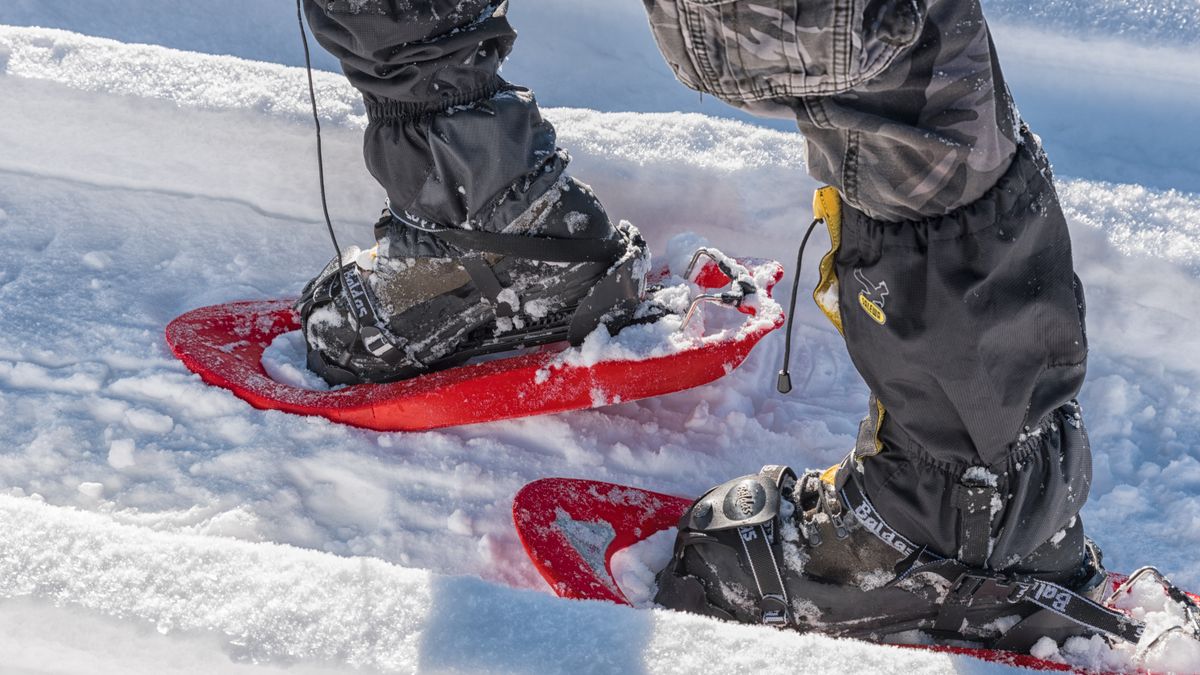
Choose snowshoes by three things: the terrain you will walk on, your total weight including clothing and pack, and the snow you expect. Flat-terrain models suit beginners on packed trails, rolling-terrain models suit most hikers, and mountain models have aggressive crampons for steep, icy ground. Heavier loads and deeper, softer snow need larger snowshoes.
In this guide
The three types of snowshoes
| Type | Best for | Features |
|---|---|---|
| Flat terrain (recreational) | Beginners, groomed and gentle trails | Simple bindings, modest traction, lower price |
| Rolling terrain (hiking) | Hills, off-trail walks, day hikes | Stronger crampons, sturdier bindings, sometimes heel lifts |
| Mountain terrain (backcountry) | Steep, icy slopes, mountaineering approaches | Aggressive crampons and side rails, heel lifts, secure bindings |
There are also light, narrow running snowshoes for racing on packed snow, and traditional wooden snowshoes, which are quiet and float well in deep powder but have little traction on ice.
What size snowshoes do you need?
Size is about flotation: spreading your weight so you do not sink. Use your weight when fully dressed with your pack.
| Total load | Typical length |
|---|---|
| Up to about 70 kg (150 lb) | 20 to 22 inches |
| 70 to 90 kg (150 to 200 lb) | 25 to 27 inches |
| Over 90 kg (200 lb) | 30 inches or more |
- Packed trails and wet, heavy snow: you can use the smaller end of the range.
- Deep, dry powder: go larger, or choose a model that takes add-on flotation tails.
- Steep or wooded terrain: shorter snowshoes are easier to manoeuvre.
These are general guides. Always check the load range the manufacturer gives for each model.
Key features to compare
- Frame and decking: aluminium frames with flexible decking are light and comfortable; one-piece composite decks are tough and good on hard snow.
- Traction: toe crampons under the ball of the foot do most of the work. Side rails add grip when crossing slopes.
- Heel lifts (climbing bars): a wire that flips up under your heel to reduce calf strain on long climbs.
- Bindings: should be easy to adjust with gloves on and hold your boot without pressure points.
- Women’s and children’s models: narrower frames and bindings sized for smaller boots.
Related: Best Water Shoes of 2027: 7 Picks for River, Beach and Boat
What to wear on your feet
You do not need special boots. Waterproof, insulated hiking or winter boots with a fairly stiff sole work well. Add wool or synthetic socks and gaiters to keep snow out. Check the fit of the boots first with how boots should fit, and re-treat older boots with a waterproofing product.
How to snowshoe: basics for beginners
- Walk naturally, with a slightly wider stance so the frames do not clip each other.
- Going uphill: kick the toe into the snow so the crampon bites, and flip up the heel lifts on sustained climbs.
- Going downhill: keep your knees soft and your weight slightly back, planting the heel first.
- Crossing a slope: stamp the uphill edge of each snowshoe into the snow to make a level step.
- Turning: walk in a small arc, or use a step turn. Walking backwards is awkward because the tails dig in.
- Use poles with snow baskets for balance.
- Start small: pick a short, marked trail for your first outing. Snowshoeing is harder work than walking.
Safety
- Dress in layers and carry water, food, a map and a light.
- Check the weather and daylight hours.
- In mountains, check the avalanche forecast and stay off steep slopes unless you have the training and equipment.
- Tell someone your route.
After your trip
Knock off snow and ice, dry the snowshoes before storing them, and check bindings and rivets. Dry your boots slowly with the insoles out; see how to dry shoes.
For summer adventures, see what water shoes are good for.
Snowshoes need a supportive, waterproof boot; see the best hiking boots.
Snowshoes need warm, waterproof footwear; see the best winter boots.
Frequently asked questions
Should I rent or buy snowshoes?
Rent for your first outing or two to learn what size and type you like, then buy if you plan to go several times a season.
Do I need poles for snowshoeing?
They are not essential on flat trails, but they help a lot with balance on hills and in deep snow.
Can I use hiking boots with snowshoes?
Yes, as long as they are waterproof and warm enough. Bindings fit most hiking and winter boots.
Are bigger snowshoes always better?
No. Larger snowshoes float better in powder but are heavier and clumsier. Choose the smallest size that supports your load in your usual conditions.