The best snowshoes for 2027 are the MSR Lightning Ascent for steep and icy terrain, the MSR Evo Trail as a durable budget choice and the Retrospec Drifter as a low-cost starter pair. For easy day hikes on rolling trails, the Atlas Helium Trail and Tubbs Flex TRK are lighter and simpler.
Snowshoes spread your weight so you stay on top of the snow instead of sinking to your knees. The right pair depends on where you walk and how much you and your pack weigh. The seven models below are the ones named most often in the latest snowshoe guides from outdoor gear reviewers.
Picks are based on published specifications and independent reviews, not our own testing. As an Amazon Associate, CC Discovery earns from qualifying purchases.
Quick picks
| Snowshoe | Best for | Deck | Heel lift |
|---|---|---|---|
| MSR Lightning Ascent | Steep, icy and mountain terrain | Fabric deck in aluminium traction frame | Yes |
| MSR Evo Trail | Durable budget pick | One-piece plastic | No |
| MSR Revo Explore | All-round hiking | Plastic with steel edge teeth | Yes |
| Atlas Helium Trail | Light day hiking | Lightweight composite | Yes |
| Tubbs Flex TRK | Rolling trails and beginners | Moulded with flexible tail | Yes |
| Retrospec Drifter | Lowest-cost starter kit | Fabric deck in aluminium tube frame | Yes |
| Crescent Moon Eva | Packed trails and casual walks | All-foam | No |
Related: Types of Sandals: A Guide to Every Style and Its Uses
The 7 best snowshoes
1. MSR Lightning Ascent
Best for: steep climbs, traverses and icy mountain trails
The Lightning Ascent is the model that several recent guides put at the top for serious winter hiking. Its aluminium frame has teeth along the whole edge, so it grips in every direction, and steel crampons sit under the foot. A mesh-style binding wraps the boot evenly, and a heel lift bar eases long climbs. It comes in three lengths, with add-on tails for deeper snow.
- Good: outstanding traction, secure binding, light for its capability, three sizes
- Less good: expensive; more snowshoe than flat trails need
2. MSR Evo Trail
Best for: a tough first pair that will last
The Evo Trail uses a single moulded plastic deck with steel traction rails underneath. It is simple, very hard to break and works with a wide range of boots. Reviewers describe it as dependable and durable, and optional tails add flotation for powder or heavier loads.
- Good: very durable, good grip on packed snow, tails available, fair price
- Less good: one length only without tails; no heel lift; louder on hard snow
3. MSR Revo Explore
Best for: all-round hiking on mixed terrain
The Revo Explore combines a tough plastic deck with steel teeth around its perimeter, giving much of the edge grip of a mountain snowshoe at a lower price. A ratchet-style binding is quick to use with gloves, and a heel lift is included for hills.
- Good: strong edge traction, easy binding, heel lift, durable deck
- Less good: heavier than fabric-deck models; pricier than basic plastic snowshoes
4. Atlas Helium Trail
Best for: light, easy day hikes
The Helium Trail is built around a lightweight composite deck with openings designed to shed snow, which keeps each step from feeling heavy. A wrap-style binding and a heel lift make it friendly for newer snowshoers, and it is sold in several lengths and as a kit with poles and a bag.
- Good: light on the feet, sheds snow well, simple binding, kit option
- Less good: less aggressive traction than mountain models; plastic deck can be noisy
5. Tubbs Flex TRK
Best for: rolling terrain and comfortable walking
The Flex TRK has a moulded deck with a tail that flexes as you step, which softens heel strike and gives a more natural stride. Steel traction rails and a toe crampon handle moderate slopes, a simple pull binding is easy for beginners, and a heel lift helps on climbs.
- Good: natural-feeling stride, easy binding, good value, heel lift
- Less good: limited flotation in very deep powder; not for steep icy routes
6. Retrospec Drifter
Best for: trying snowshoeing on a small budget
The Drifter appears as the budget pick in several recent guides. It uses a traditional aluminium tube frame with double-ratchet bindings and heel lifts, comes in three lengths and includes a carry bag. It suits occasional outings on flat and gently rolling trails.
- Good: low price, three sizes, heel lifts and carry bag included
- Less good: basic traction; heavier and less refined than premium models
7. Crescent Moon Eva
Best for: groomed and packed trails
The Eva is made entirely of foam with a curved, rocker shape, so it rolls forward like a running shoe and is very quiet. Simple hook-and-loop straps hold the boot. It is comfortable and fun on packed paths, but it is not designed for deep powder or steep ice.
- Good: very comfortable stride, light, quiet, easy to use
- Less good: limited flotation and grip; not for mountain terrain
How to choose snowshoes
Size by total weight
Snowshoe length is chosen by your weight plus your pack, then adjusted for snow type. These ranges are typical; always check the size chart for the model.
| Total load | Typical length | Notes |
|---|---|---|
| Up to about 150 lb (68 kg) | 21 to 23 in | Fine for packed trails at higher weights too |
| About 150 to 200 lb (68 to 90 kg) | 25 to 27 in | The most common adult size |
| Over about 200 lb (90 kg) | 30 in or more | Or a shorter shoe with add-on tails |
Light, dry powder needs more surface area; firm or packed snow needs less. Our full guide on how to choose snowshoes explains sizing and terrain types in detail.
Match traction to terrain
Flat and rolling trails need only a toe crampon and modest rails. Steep or icy ground calls for edge teeth along the frame and a heel lift to reduce calf strain.
Bindings
You will adjust bindings with cold hands, so simple is better. Ratchet and pull-strap systems are quickest; mesh and multi-strap bindings spread pressure more evenly on long days.
What to wear on your feet
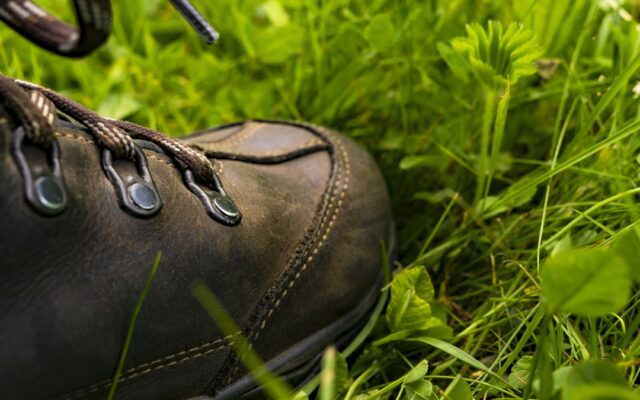
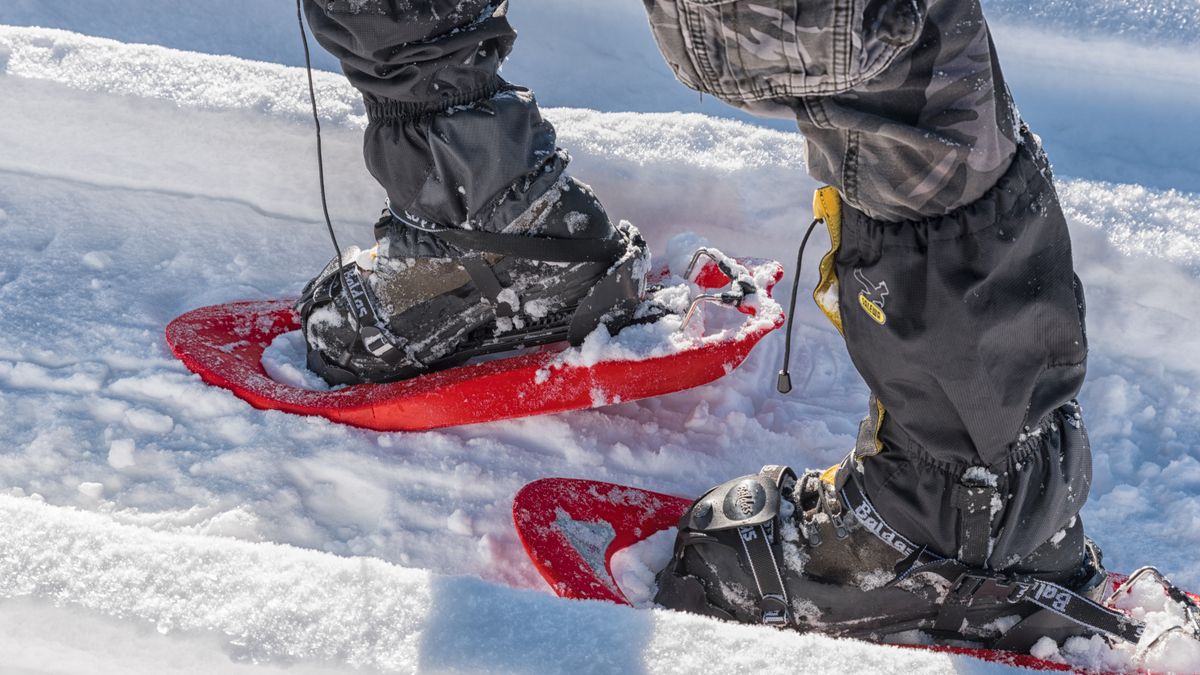
Snowshoes strap onto your own footwear. Waterproof, insulated boots with a fairly stiff sole work best; see our best winter boots and how to choose winter boots. Waterproof hiking boots with gaiters also work well, and our Gore-Tex guide explains how membranes behave in snow. Add warm hiking socks, and read how to keep feet warm in boots before a long day out. Re-proofing older boots with the steps in how to waterproof shoes helps too.
Poles
Adjustable poles with snow baskets improve balance, especially on slopes and in deep snow. Some kits include them.
Frequently asked questions
What size snowshoes do I need?
Choose by your weight including clothing and pack, using the maker’s chart. As a rough guide, lighter loads suit 21 to 23 inches, average loads 25 to 27 inches and heavy loads 30 inches or tails.
Are expensive snowshoes worth it?
For steep, icy or mountain routes, yes, because traction and bindings are much better. For flat trails a few times a year, a budget pair is enough.
Can you wear normal hiking boots with snowshoes?
Yes, if they are waterproof and warm enough. Add gaiters to keep snow out of the tops.
Do I need different snowshoes for men and women?
Women’s versions are usually narrower and shorter with bindings shaped for smaller boots. Choose whichever fits your boot and weight.
Is snowshoeing hard for beginners?
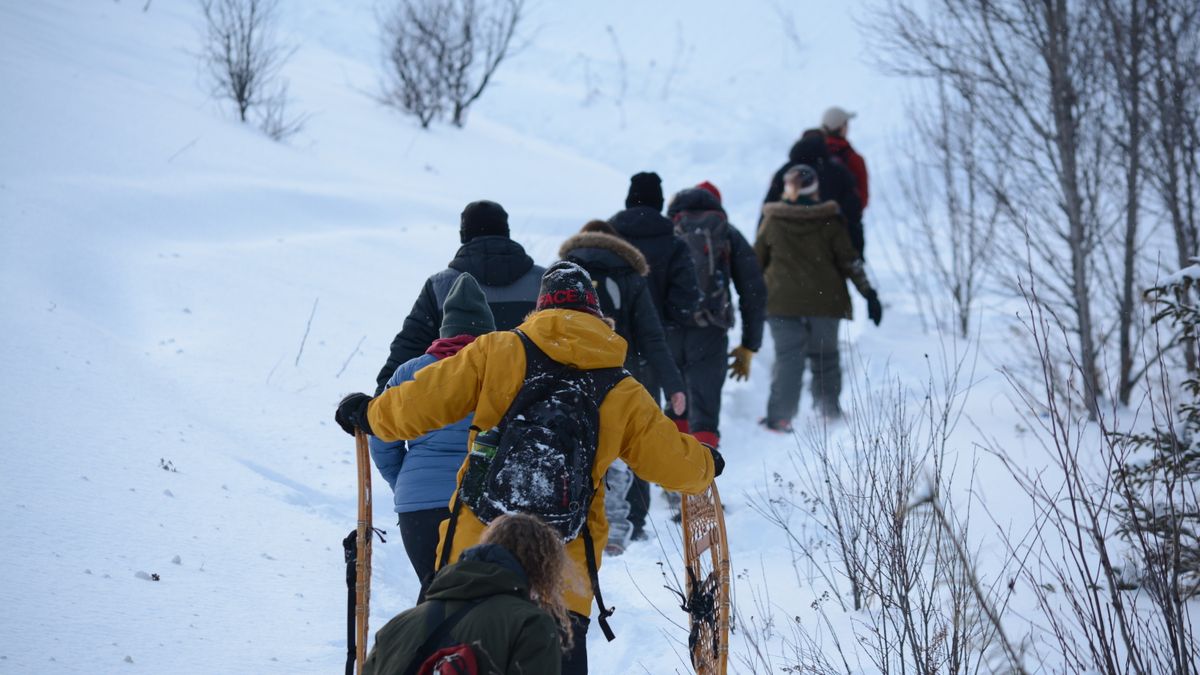
No. If you can walk, you can snowshoe. Start on a flat, marked trail and widen your stance slightly so the frames do not overlap.