To choose basketball shoes, start with fit and traction, then pick the cut and cushioning that suit how you play. The shoe should lock your heel and midfoot with about a thumb-width of space at the toes, grip the court you play on, and feel stable when you cut sideways.
In this guide
Basketball asks more of a shoe than most sports: sprinting, hard stops, sideways cuts and repeated jumping, all on a hard floor. Marketing tends to focus on signature names and colourways, but the parts that matter are easy to check once you know them. This guide for 2027 takes them one at a time.
1. Get the fit right first
- Length: roughly a thumb-width between your longest toe and the end of the shoe when you stand.
- Heel: locked down. If the heel lifts when you rise onto your toes, try another model; see how to fix heel slip for lacing fixes.
- Midfoot: held firmly without pinching. Your foot should not slide over the edge of the sole when you push off sideways.
- Width: many basketball shoes run narrow. Know your foot width and look for wide options if needed.
Try shoes on later in the day, with the socks and any ankle braces you play in, and measure both feet because sizes vary between brands.
2. Choose the cut
| Cut | Feel | Suits | Trade-off |
|---|---|---|---|
| Low-top | Light, free ankle movement | Guards and quick players who cut and change direction constantly | Least material around the ankle |
| Mid-top | Balanced | All-round players and anyone unsure | Neither the lightest nor the most supportive |
| High-top | Most coverage and a secure feel | Bigger players, rebounders, those who like a locked-in collar | Heavier and a little more restrictive |
Collar height changes how secure a shoe feels, but stability comes mainly from the base of the shoe: a wide, flat outsole, a firm heel counter and good lockdown. Our guide to the types of basketball shoes explains each cut in more detail.
3. Check the traction
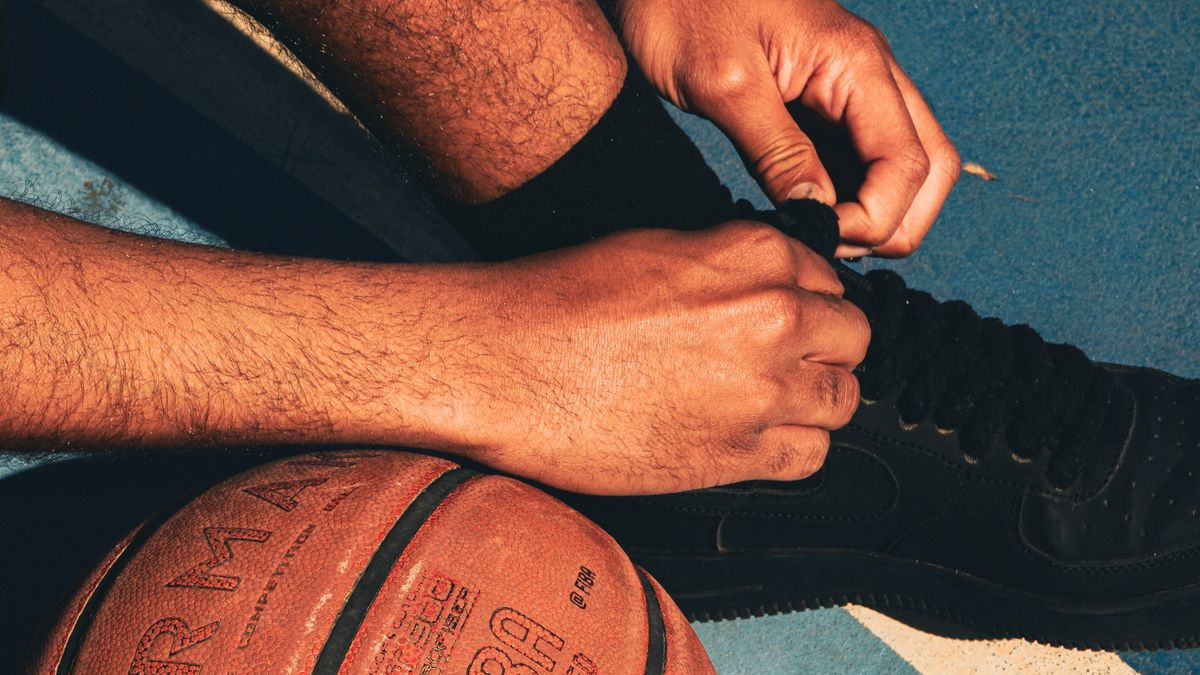
Grip is what lets you stop and change direction with confidence. Look at the outsole pattern and the rubber.
| Court | Outsole to look for | Why |
|---|---|---|
| Indoor hardwood | Softer rubber, fine herringbone or multidirectional pattern | Bites well on clean, smooth floors |
| Outdoor concrete or asphalt | Harder, thicker rubber with deeper grooves | Resists abrasion from rough surfaces |
| Both | Durable rubber with a full-coverage pattern | A compromise; keep a second pair if you play outside often |
Soft indoor outsoles wear down quickly on concrete, so a pair used on both surfaces loses its indoor grip early. Dust also reduces traction; wiping the soles during games helps.
4. Pick the cushioning
- Low and responsive: thinner, firmer foam keeps you close to the floor and gives a quick first step. Favoured by guards.
- Balanced: moderate foam, sometimes with an air or gel unit in the forefoot or heel. Works for most players.
- Maximum impact protection: thicker, softer cushioning that absorbs landings. Favoured by heavier players and frequent jumpers.
More cushioning protects joints on landing but raises the foot and can feel less stable in sharp cuts. If you use orthotics, check that the insole is removable; how to choose insoles covers the options.
Related: Running Shoes vs Walking Shoes: What Is the Difference?
5. Look for support features
- Heel counter: a firm cup around the heel that stops it from rolling.
- Outrigger: a small extension on the outside edge of the forefoot that resists rolling over on cuts.
- Midfoot shank: a stiff plate under the arch that stops the shoe from twisting.
- Lockdown: straps, lace loops or internal bands that pull the upper around the midfoot.
A quick shop test: hold the heel and toe and try to twist the shoe. It should resist through the middle and bend only at the ball of the foot.
6. Upper materials
Knit and mesh uppers are light, breathable and need little break-in. Synthetic leather and layered textiles are heavier but more durable and supportive, which suits outdoor play. Whatever the material, the area around the toes and the outside of the forefoot should be reinforced.
Match the shoe to your game
| Player | Cut | Cushioning | Priority |
|---|---|---|---|
| Quick guard | Low | Low and responsive | Traction and court feel |
| Wing or all-round player | Low or mid | Balanced | Versatility and lockdown |
| Forward or centre | Mid or high | Maximum impact protection | Stability and cushioning |
| Outdoor player | Any | Balanced to thick | Durable outsole and upper |
| Beginner or casual player | Mid | Balanced | Comfortable fit |
For specific models, see our best basketball shoes.
Can you use other shoes for basketball?
Running shoes are built for moving forward and have soft, narrow soles that are unstable in sideways cuts. Gym shoes are closer but usually lack the traction and impact cushioning for a full game; what are training shoes explains what they are designed for. For regular play, a basketball shoe is the safer choice.
When to replace basketball shoes
- The outsole pattern is worn smooth under the ball of the foot or heel.
- You slip on a clean court where you used to grip.
- The cushioning feels flat or your knees and feet ache after games.
- The heel counter has softened or the upper has stretched so your foot slides.
Players who are on court several times a week often need a new pair every few months, while occasional players can go much longer. The signs of worn cushioning are similar to those in how long running shoes last.
Frequently asked questions
Should basketball shoes be tight or loose?
Snug through the heel and midfoot with a little room at the toes. A loose shoe lets the foot slide in cuts, and a shoe that is too tight causes numb toes and black toenails.
Are high-tops better for your ankles?
They feel more secure, but collar height alone does not prevent sprains. A stable base, good lockdown and a proper fit matter more. Players with a history of ankle injuries should ask a physiotherapist about bracing or taping. This is general information, not medical advice.
Can I wear indoor basketball shoes outside?
You can, but the soft rubber wears quickly on concrete and the shoe will lose indoor grip. Regular outdoor players should choose a harder, thicker outsole.
Do basketball shoes need breaking in?
Most modern knit and mesh models feel ready within a session or two. Wear them for a practice or shootaround before a full game.
What socks should I wear for basketball?
Cushioned, moisture-managing crew or quarter socks that fit closely. Our guide on how to choose socks explains fibres and cushioning.