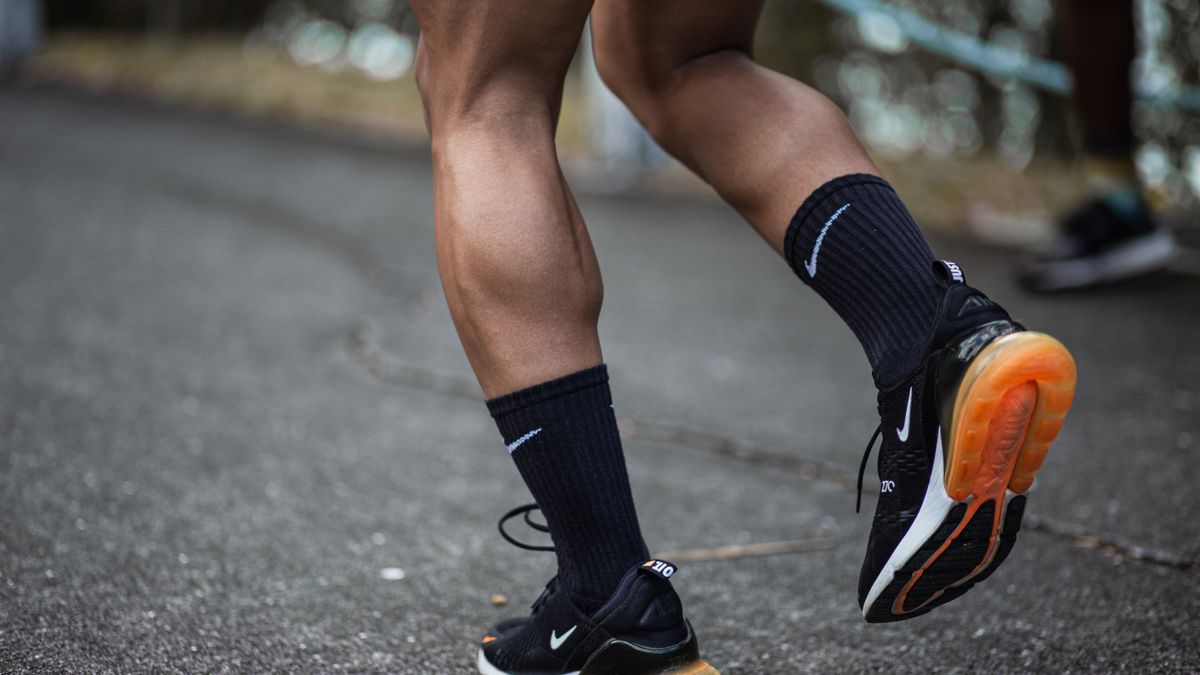
Most running shoes last about 300 to 500 miles (roughly 500 to 800 km). For someone running 15 miles a week, that is five to eight months. Lightweight racing shoes may last only 150 to 250 miles, while sturdy daily trainers can go beyond 500. Mileage is only a guide: replace your shoes when the cushioning feels flat, the tread is worn smooth or new aches appear.
In this guide
Typical lifespan by shoe type
| Shoe type | Typical lifespan |
|---|---|
| Daily trainer | 300 to 500 miles |
| Max-cushion trainer | 300 to 500 miles; soft foams can feel flat sooner |
| Lightweight or tempo shoe | 250 to 400 miles |
| Carbon-plated racing shoe | 150 to 300 miles |
| Trail running shoe | 300 to 500 miles; less on rocky ground or roads |
| Walking in running shoes | Often 500 miles or more, or six to twelve months of daily use |
How to work out your replacement date
| Weekly distance | 300 miles | 500 miles |
|---|---|---|
| 10 miles (16 km) | About 7 months | About 12 months |
| 20 miles (32 km) | About 3.5 months | About 6 months |
| 30 miles (48 km) | About 2.5 months | About 4 months |
| 40 miles (64 km) | Under 2 months | About 3 months |
Most running apps and watches let you assign runs to a pair of shoes and will track the total for you. Writing the start date inside the tongue works too.
Signs your running shoes are worn out
- The midsole feels dead. Less bounce, a harder landing, or deep horizontal creases in the foam that do not recover.
- Worn outsole. Smooth patches, or midsole foam showing through the rubber.
- Uneven tilt. Place the shoes on a table and look from behind; if they lean in or out, the support has broken down.
- Upper damage. Holes at the toes or a collapsed heel counter.
- New aches. Sore feet, shins or knees with no change in training often point to tired shoes.
- The comparison test. Try a new pair of the same model in a shop; if the difference is dramatic, yours are done.
Related: How to Break In Boots Without Wrecking Your Feet
What shortens a shoe’s life
- Body weight and stride. Heavier runners and hard heel strikers compress foam faster.
- Surface. Rough tarmac and concrete wear rubber faster than treadmills and smooth paths.
- Heat and damp. Hot cars, radiators and tumble dryers break down glue and foam.
- All-day wear. Walking around in your running shoes adds unseen mileage.
- No rest. Foam needs around a day to recover its shape fully.
How to make running shoes last longer
- Rotate two pairs if you run most days.
- Use them only for running.
- Untie them. Forcing shoes on and off crushes the heel counter.
- Dry them properly. Remove insoles and stuff with paper; see how to dry shoes.
- Clean by hand where possible; see how to wash shoes.
- Store them indoors, away from direct sun; see how to store shoes.
What to do with old running shoes
- Demote them to walking, gardening or gym use.
- Donate pairs with life left in them.
- Use a brand or shop recycling scheme for worn-out pairs.
Time for a new pair? Read how to choose running shoes and see the best running shoes for beginners or the best trail running shoes. Check the fit with how running shoes should fit.
Frequently asked questions
Do running shoes expire if you do not wear them?
Yes, slowly. Foam and glue age, so shoes stored for several years can feel firmer and may come apart sooner.
Can running shoes last 1,000 miles?
A few durable models can for light runners, but most lose meaningful cushioning well before then.
Is it bad to run in worn-out shoes?
Worn shoes absorb less impact and support the foot less evenly, which many runners link to aches and niggles. Replacing them is a simple precaution.
How long do running shoes last for walking?
Usually longer in miles, because walking loads the shoe less. Expect six to twelve months of regular use.