To choose running shoes, decide where you will run (road, trail or track), whether you need a neutral or stability shoe, how much cushioning you like, and then buy the pair that fits and feels most comfortable when you jog in it. Comfort is the best single predictor of a good choice. Brand, price and looks matter far less than fit.
In this guide
Running shoe types at a glance
| Type | What it is for | Who should buy it |
|---|---|---|
| Daily trainer (neutral) | Most runs on road and treadmill | Most runners, especially beginners |
| Stability shoe | Added support against inward rolling | Runners with low arches or noticeable overpronation |
| Max-cushion shoe | Easy and long runs, joint comfort | Heavier runners; anyone who likes a soft ride |
| Lightweight or tempo shoe | Faster training | Experienced runners adding a second pair |
| Carbon-plated racer | Race day | Runners chasing times; not needed to start |
| Trail shoe | Dirt, mud, rocks | Anyone running off-road regularly |
Step 1: Pick your surface
Road shoes are smooth-soled and cushioned for hard, even ground. Trail shoes have lugs for grip and tougher uppers. If you mostly run on pavements with the odd park path, a road shoe is fine. For regular off-road running, see the best trail running shoes.
Step 2: Neutral or stability?
Most runners do well in neutral shoes. A stability shoe is worth trying if your arches flatten and your ankles roll inward markedly, or if neutral shoes leave you with sore arches or shins. Check the wear pattern on an old pair, or read what pronation is. See also the best shoes for flat feet.
Related: How to Get Rid of Shoe Odor: What Works and Why Shoes Smell
Step 3: Choose cushioning and drop
- Cushioning. Soft, thick midsoles feel protective; firmer, thinner ones feel faster and more stable. Neither is proven to prevent injury, so choose what feels good.
- Heel-to-toe drop. Traditional shoes have 8 to 12 mm; low-drop shoes have 0 to 6 mm and load the calves and Achilles more. If you change, do it gradually.
- Rocker soles help the foot roll forward and suit many runners with stiff ankles or sore forefeet.
Step 4: Get the fit right
- Shop in the afternoon or after a run, when feet are slightly swollen.
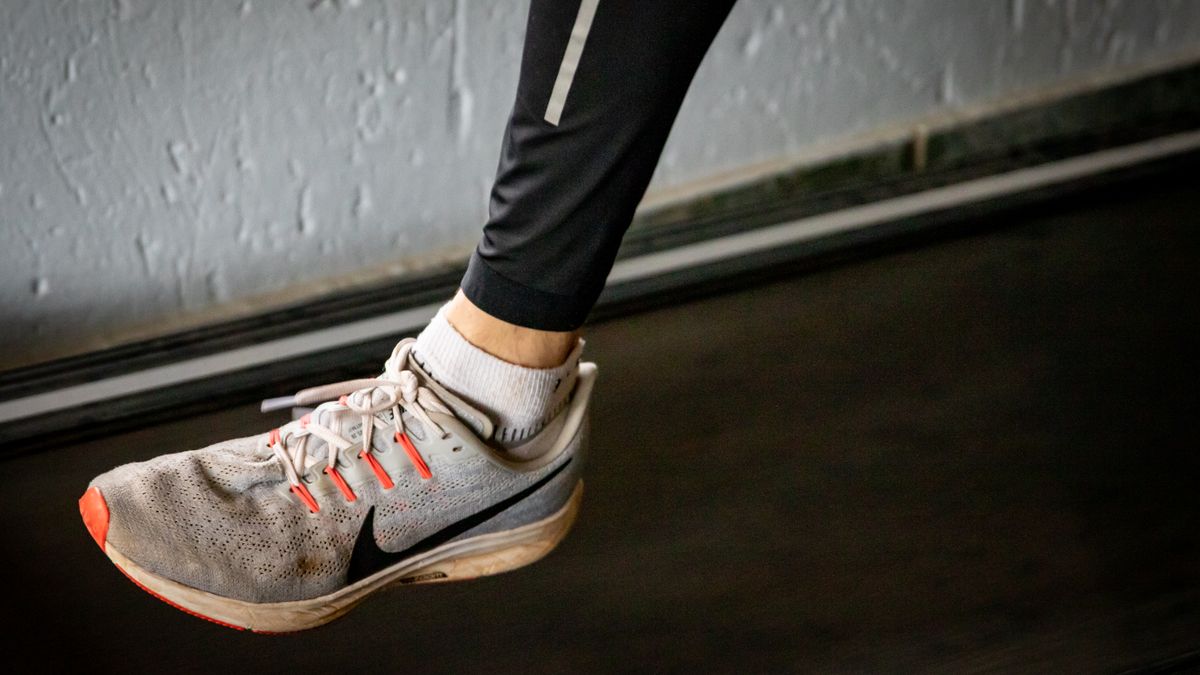
- Leave about a thumb’s width beyond your longest toe; this is often half a size up from casual shoes.
- The heel and midfoot should feel secure with no slipping or pinching.
- Your toes should be able to spread; ask for a wide fit if the sides bulge.
- Wear the socks you run in.
Full detail: how running shoes should fit and how to measure your shoe size.
Step 5: Test and decide
- Try at least three pairs and jog in each.
- Pick the one you notice least. A good shoe disappears on your foot.
- Do not expect running shoes to “break in”; they should feel right immediately.
- Check the returns policy, and consider last year’s version to save money.
Common mistakes
- Buying your casual shoe size
- Choosing by colour or brand loyalty
- Starting in a racing shoe
- Running in worn-out shoes: replace at roughly 300 to 500 miles
- Changing shoe type and training load at the same time
Ready to shop? See the best running shoes for beginners. For training basics, read how often you should run.
Frequently asked questions
Do I need a gait analysis to buy running shoes?
No. It can be useful, but trying several pairs and choosing the most comfortable works well for most people.
Should running shoes be a size bigger?
Often half a size bigger than everyday shoes, so there is a thumb’s width at the toes.
Are expensive running shoes better?
Not necessarily. Mid-priced daily trainers are durable and comfortable. The most expensive shoes are usually race models.
Can I use one pair for running and the gym?
For light gym work, yes. For lifting and side-to-side movements, flatter training shoes are more stable.