Pronation is the natural inward roll of your foot after it lands. It is how the foot absorbs impact and adapts to the ground. Everyone pronates. The differences are in how much: a moderate roll is called neutral pronation, a larger inward roll is overpronation, and too little roll, with the foot staying on its outer edge, is supination (also called underpronation).
In this guide
The three pronation types
| Type | What the foot does | Often seen with | Typical sole wear |
|---|---|---|---|
| Neutral pronation | Rolls inward moderately and pushes off evenly from the forefoot | Medium arches | Even wear, centred under the ball of the foot and outer heel |
| Overpronation | Rolls inward further; push-off comes mainly from the big toe side | Low arches or flat feet | Inner edge of the heel and forefoot |
| Supination (underpronation) | Rolls inward very little; weight stays on the outer edge | High, rigid arches | Outer edge of the sole |
How to check your pronation at home
1. Look at your old shoes
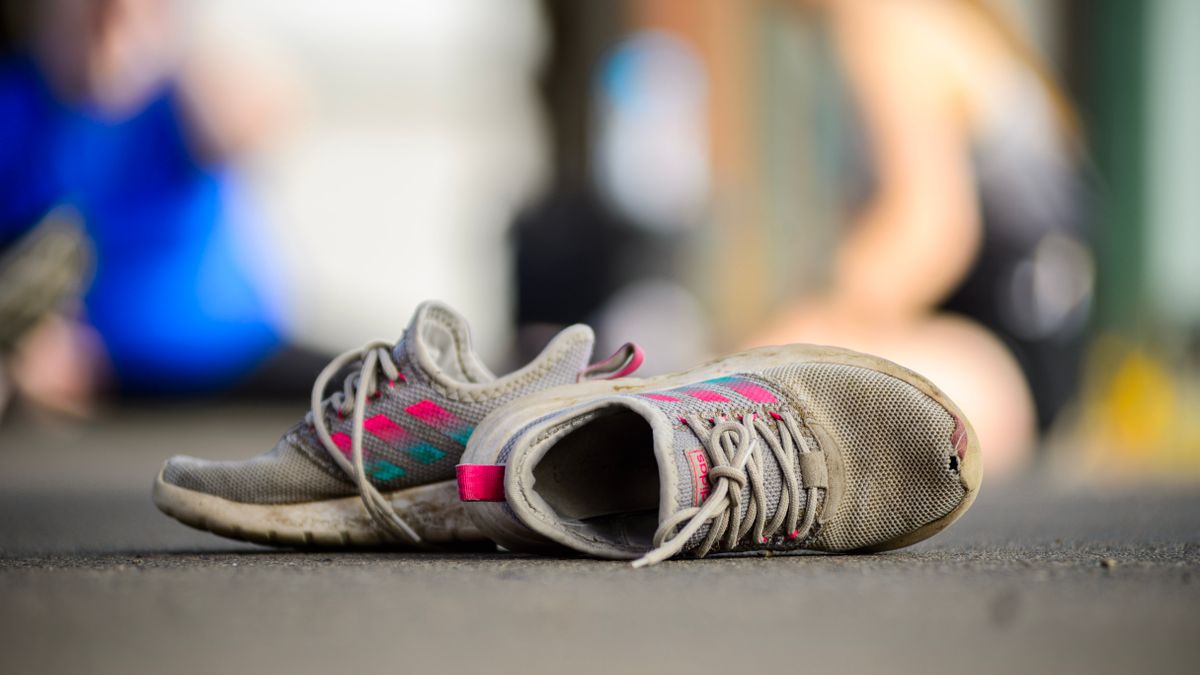
Put a well-worn pair on a table and look at them from behind and underneath. Heavy wear along the inner edge, or shoes that tilt inward, suggest overpronation. Wear along the outer edge, or an outward tilt, suggests supination.
2. Do the wet footprint test
- Wet the sole of your foot and step onto a piece of cardboard or dark paper.
- A footprint showing almost the whole sole suggests a low arch, which often goes with overpronation.
- A print with a very narrow band, or none, between heel and forefoot suggests a high arch, which often goes with supination.
- A print with about half the arch filled in suggests a medium arch.
Arch height is only a rough guide. It does not always predict how your foot moves when you run.
3. Get a gait analysis
Many running stores film you on a treadmill and look at how your ankle moves. A podiatrist or physiotherapist can do a fuller assessment if you have pain.
Related: How to Get Rid of Shoe Odor: What Works and Why Shoes Smell
What pronation means for choosing shoes
- Neutral shoes have no added motion-control features. They suit neutral runners and most supinators, who generally benefit from good cushioning and flexibility.
- Stability shoes add firmer foam or guide rails on the inner side to limit excessive inward roll. They are designed for mild to moderate overpronation.
- Motion control shoes are the firmest and most structured, for pronounced overpronation.
It is worth knowing that research over the past decade has made this picture less rigid. Studies have not consistently shown that matching shoes to foot type prevents injury, and comfort has been found to be a good guide when choosing running shoes. In practice: use your pronation type to narrow the options, then pick the pair that feels most comfortable and stable when you run in it.
Whatever the category, fit matters more than any feature. See how running shoes should fit and how to measure your shoe size.
Is overpronation or supination a problem?
Not by itself. Many people who overpronate or supinate run for years without trouble. These patterns become worth addressing if you have recurring pain, for example in the arch, shin, knee or outer ankle, or if you keep getting the same injury. In that case, see a podiatrist or physiotherapist, who may suggest different footwear, insoles or strengthening exercises. This article is general information, not medical advice.
Other things that help
- Replace worn shoes. Running shoes lose cushioning and support over time, commonly somewhere around 500 to 800 km (300 to 500 miles).
- Strengthen feet and calves with exercises such as calf raises and towel scrunches.
- Increase training gradually so your body has time to adapt.
- Consider insoles if a professional recommends them.
Frequently asked questions
Is pronation bad?
No. Pronation is a normal and necessary part of how the foot absorbs shock. Only excessive or insufficient pronation combined with pain needs attention.
What is the difference between supination and underpronation?
They are two names for the same thing: the foot rolls inward too little and weight stays on the outer edge.
Do flat feet always overpronate?
Often, but not always. Some people with low arches have stable feet, which is why watching the foot in motion is more useful than arch height alone.
Can I tell my pronation type from my shoes?
The wear pattern gives a useful first indication, especially on shoes with plenty of use. A gait analysis confirms it.