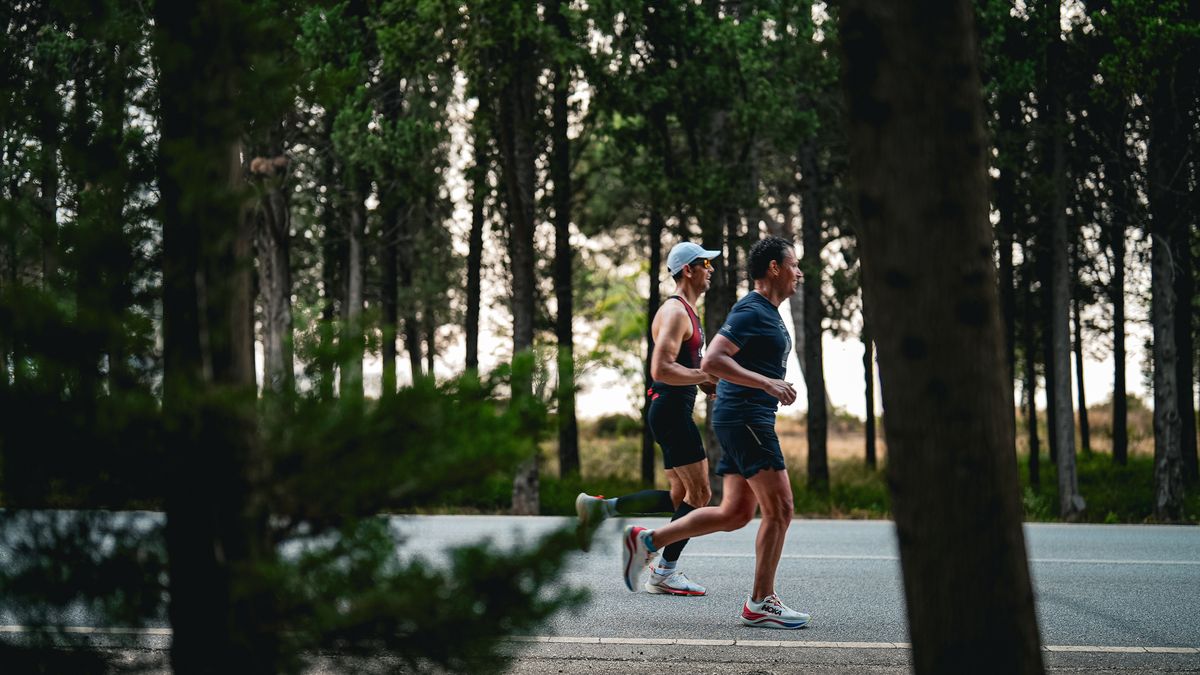
Hoka shoes are known for very thick, soft cushioning and a rocker-shaped sole that rolls you forward. Brooks shoes feel more traditional: balanced cushioning, a higher heel-to-toe drop and a wider range of widths. Choose Hoka if you want maximum softness and a smooth, rolling stride. Choose Brooks if you want a familiar, stable feel and an easier fit. Neither brand is better overall; the right one is whichever feels more comfortable on your foot.
In this guide
Hoka vs Brooks at a glance
| Hoka | Brooks | |
|---|---|---|
| Signature feel | Tall, soft, rockered | Balanced, smooth, traditional |
| Heel-to-toe drop | Mostly low (around 4 to 8 mm) | Mostly higher (around 8 to 12 mm) |
| Fit | Standard width runs snug; wide and extra-wide on key models | Roomier standard fit; up to four widths on core models |
| Stability approach | Firmer foam frame around the foot (Arahi, Gaviota) | GuideRails along both sides of the heel (Adrenaline GTS, Glycerin GTS) |
| Weight | Light for the amount of cushioning | Slightly heavier on average |
| Durability | Soft foam and exposed midsole can wear sooner | Generally long-lasting outsoles |
| Price | Similar: most daily trainers sit in the same range | Similar |
Closest matching models
| Use | Hoka | Brooks |
|---|---|---|
| Everyday neutral trainer | Clifton 11 | Ghost 18 |
| Max cushion | Bondi 9 | Glycerin or Ghost Max |
| Stability | Arahi 9 | Adrenaline GTS 25 |
| Trail | Speedgoat 7 | Cascadia 19 |
| Slip-resistant work shoe | Bondi SR | Addiction Walker 2 |
Cushioning and ride
Hoka built its name on oversized midsoles. Even its “moderate” shoes have more foam underfoot than most rivals, and the curved sole shape means you spend less effort pushing off. Many people with sore joints or long days on their feet like this. Brooks tunes its cushioning to be soft at landing but stable, with a more noticeable heel and a flatter forefoot. It feels like a classic running shoe, which makes it an easy first choice.
Related: What Are Training Shoes? Training vs Running Shoes
Drop: the difference people overlook
Hoka’s lower drop shifts some load from the knees toward the calves and Achilles tendon. Brooks’ higher drop does the reverse. If you have tight calves or Achilles soreness, Brooks may feel better at first. If you want to reduce heel-heavy impact, a rockered Hoka may suit you. Change gradually either way.
Fit and sizing
- Hoka: often snug through the midfoot and toe box in standard width. Wide-footed buyers should choose the wide or extra-wide options.
- Brooks: more accommodating, with narrow, standard, wide and extra-wide in the Ghost and Adrenaline lines.
- For both, most people take half a size up from casual shoes. See how running shoes should fit and the best shoes for wide feet.
Which is better for…
- Beginners: either. The Brooks Ghost and Hoka Clifton are both in our best running shoes for beginners.
- Standing all day: Hoka’s Bondi is a favourite; see the best shoes for standing all day.
- Flat feet: Brooks Adrenaline GTS is the usual starting point; see the best shoes for flat feet.
- Plantar fasciitis: some prefer Hoka’s rocker, others Brooks’ higher drop; see the best shoes for plantar fasciitis.
- Walking: both work well; see the best walking shoes.
- Trails: Hoka Speedgoat for cushioning and grip; Brooks Cascadia for stability. See the best trail running shoes.
Frequently asked questions
Is Hoka or Brooks better for bad knees?
There is no single answer. Soft, rockered Hokas reduce impact for many people, while others feel steadier in a Brooks. Comfort when you walk or jog in them is the best guide; see a professional for persistent knee pain.
Do Hoka and Brooks fit the same?
Not quite. Hoka tends to be narrower in standard width; Brooks is roomier and offers more width options.
Which lasts longer?
Brooks shoes often have more outsole rubber and wear slowly. Both should give roughly 300 to 500 miles.
Are Hokas good for walking?
Yes. The cushioning and rocker sole make them popular for walking and all-day wear.