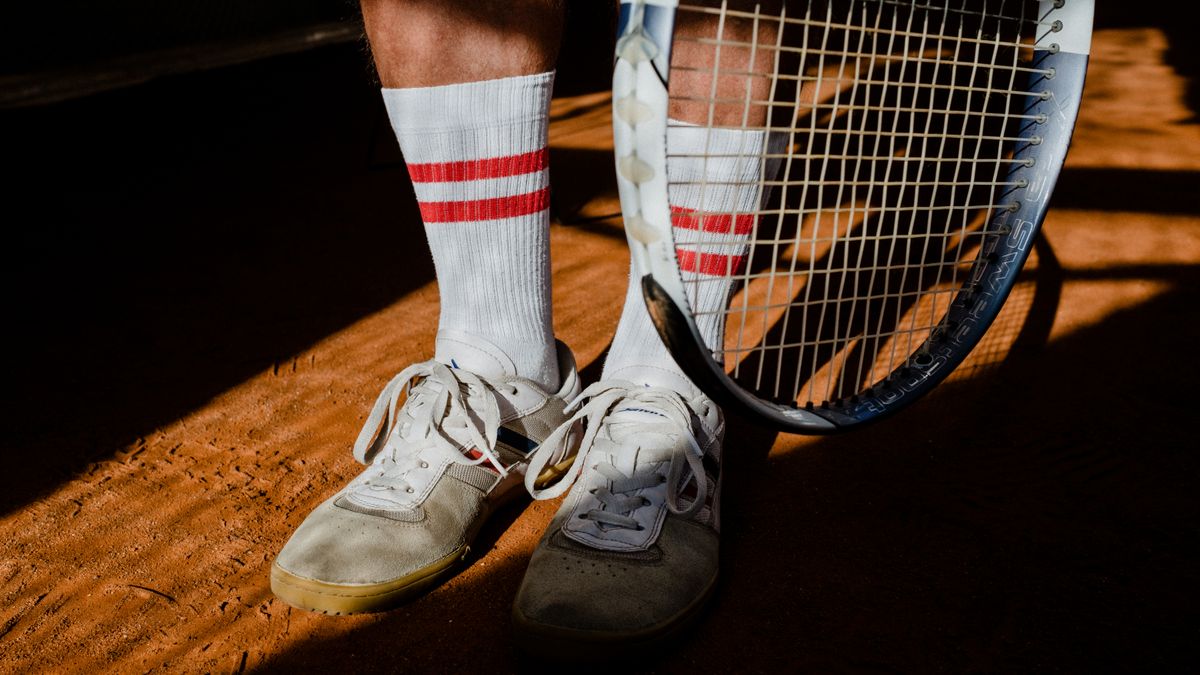
True tennis shoes are athletic shoes designed for playing tennis. They have a flat, durable outsole, strong side support and a reinforced toe to cope with constant sideways movement, sudden stops and sliding. In everyday American English “tennis shoes” is also used to mean any sneakers, which is where the confusion comes from. If you play tennis regularly, you need the real thing.
In this guide
Tennis shoes vs running shoes vs sneakers
| Feature | Tennis shoes | Running shoes | Casual sneakers |
|---|---|---|---|
| Built for | Lateral cuts, stops, short sprints | Straight-line running | Walking and style |
| Outsole | Flat, hard-wearing, non-marking | Soft, curved, flexible | Varies |
| Side support | Strong | Minimal | Minimal |
| Cushioning | Firm and low to the ground | Soft and thick | Varies |
| Toe area | Reinforced against dragging | Light mesh | Unreinforced |
| Weight | Heavier | Lighter | Varies |
Playing tennis in running shoes is a common cause of rolled ankles: the tall, soft sole is unstable when you push off sideways, and the mesh upper tears quickly.
Tennis shoes by court surface
| Court | Outsole | Why |
|---|---|---|
| Hard court | Tough rubber with a modified herringbone pattern and plenty of cushioning | Hard courts are abrasive and unforgiving on joints |
| Clay court | Full, tight herringbone tread | Lets you slide in a controlled way and releases clay from the grooves |
| Grass court | Small rubber pimples or nubs | Grip on slippery grass without damaging the surface |
| All court | A compromise pattern | For players who use more than one surface |
Most recreational players are fine with a hard-court or all-court shoe. Clay-court clubs often ask for clay-specific soles, and smooth or heavily lugged soles are usually not allowed on grass or clay.
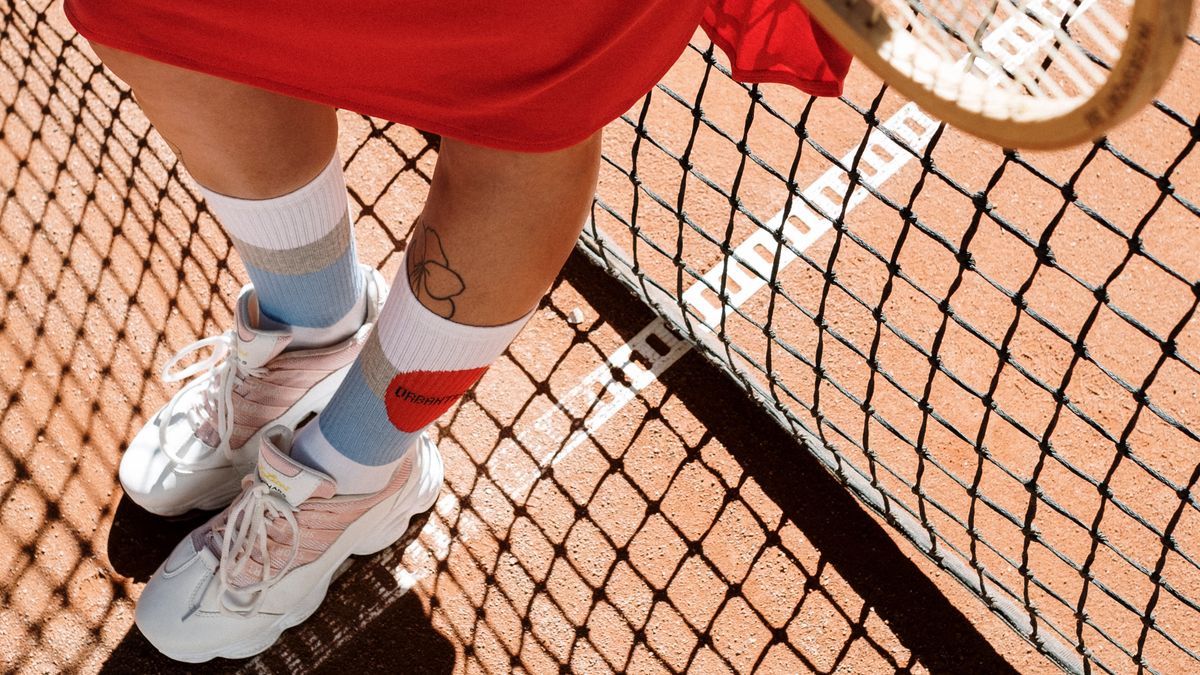
Key features
- Lateral stability: a wide base and firm sidewalls for side-to-side movement.
- Durable outsole: some shoes carry an outsole wear guarantee for frequent players.
- Toe guard: extra rubber at the front and inner edge for players who drag a foot on serves and volleys.
- Midfoot shank: stops the shoe twisting.
- Non-marking sole: required on indoor courts.
- Cushioning vs weight: heavier, more cushioned shoes suit baseline players and hard courts; lighter shoes suit quick movers.
Related: How Should Running Shoes Fit? A Simple Fit Check
How should tennis shoes fit?
- Toes: about a thumb’s width (roughly half an inch) of space. Your toes hit the front on hard stops, so too little room leads to bruised nails.
- Midfoot: snug, with no sideways sliding when you change direction.
- Heel: locked in, with no lift.
- Width: the forefoot should not bulge over the sole. Several tennis brands offer wide fittings; see shoe widths explained.
- Try them in the afternoon with tennis socks, and do a few side shuffles and split steps.
Measure your feet with our shoe size guide. Tennis shoes need a short break-in; wear them for a couple of light sessions before a long match. See how to break in new shoes.
How long do tennis shoes last?
For someone playing two or three times a week, typically four to six months. Replace them when:
- the tread is worn smooth, especially under the ball of the foot
- the midsole shows deep creases and feels flat
- the upper has stretched or torn at the toe
- your feet, shins or knees start to ache after play
Looking after tennis shoes
- Keep them for the court; walking on pavement wears the sole.
- Knock off clay and brush out the tread after play.
- Wipe the uppers with a damp cloth and mild soap. Avoid the washing machine unless the brand allows it; see how to wash shoes.
- Air dry with the insoles out; see how to dry shoes.
Frequently asked questions
Are tennis shoes and sneakers the same thing?
In casual speech, often yes. Technically, tennis shoes are sneakers made specifically for the sport, with flat durable soles and side support.
Can I use tennis shoes for running?
For short distances, but they are heavier and firmer than running shoes and less comfortable over distance.
Can I wear tennis shoes for pickleball or padel?
Yes. The movement is similar, and tennis shoes are widely used for both.
Do I need different shoes for clay and hard courts?
Only if you play regularly on clay or your club requires it. An all-court shoe covers occasional play on both.