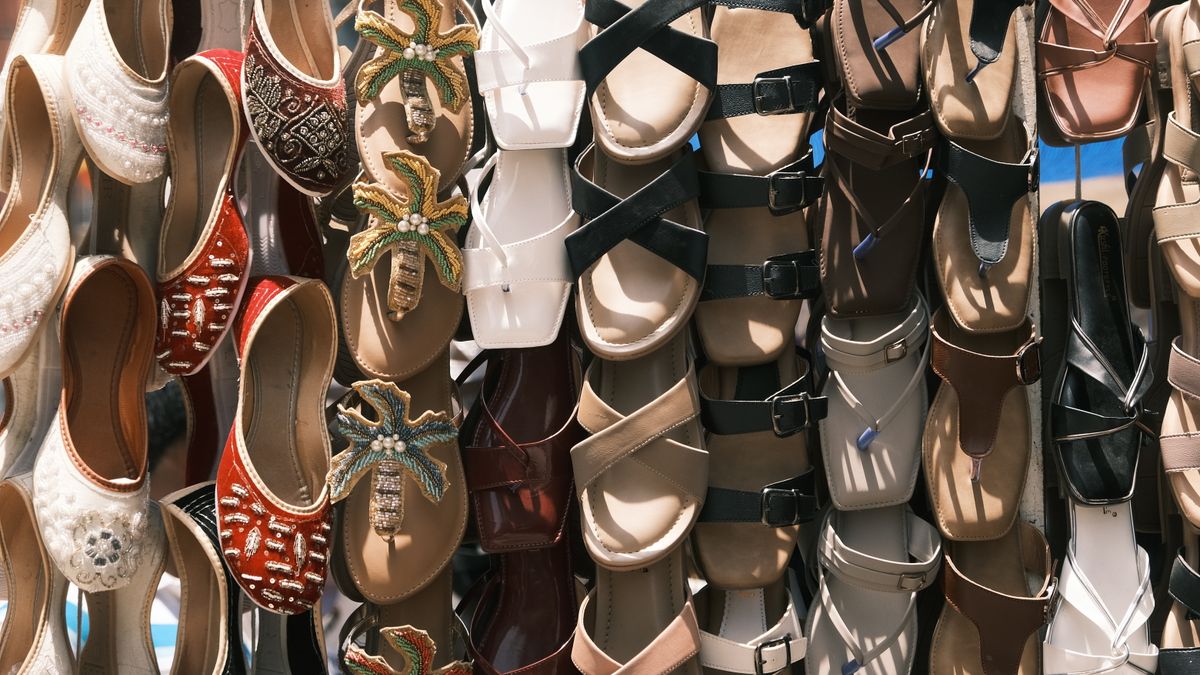
Sandals fall into a handful of families: flip-flops and slides for the beach and pool, footbed sandals for everyday comfort, sport and hiking sandals for trails and water, and gladiator, wedge and heeled sandals for dressier outfits. What separates them is how they hold your foot. The more straps, especially one behind the heel, and the more shaped the footbed, the further you can comfortably walk.
In this guide
Sandal types at a glance
| Type | Best for | Support |
|---|---|---|
| Flip-flop (thong) | Beach, pool, short errands | Low |
| Slide | Pool, gym showers, around the house | Low to medium |
| Footbed sandal | Everyday walking, travel | Medium to high |
| Sport sandal | Walking, rafting, light trails | High |
| Closed-toe hiking sandal | Rocky trails, river crossings | High |
| Fisherman sandal | Smart casual summer wear | Medium |
| Gladiator | Casual and dressy outfits | Low to medium |
| Wedge and platform | Dresses, events, added height with stability | Medium |
| Heeled sandal | Formal events | Low |
| Huarache and espadrille | Warm-weather casual wear | Low to medium |
Casual sandals
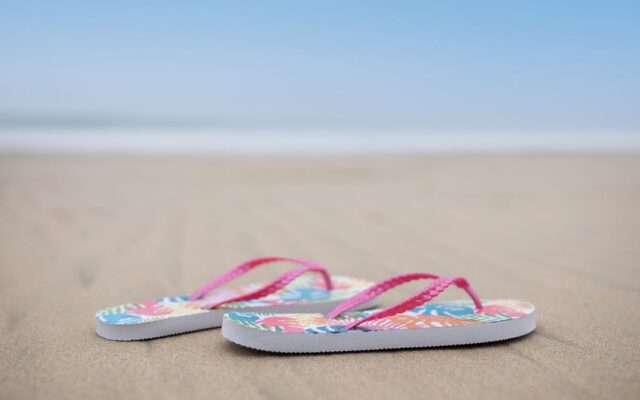
- Flip-flops have a Y-shaped strap that sits between the toes. They are light and quick to slip on, but your toes have to grip to keep them on, which is tiring over long distances. If a strap pulls out, see how to fix flip-flops.
- Slides have one or two bands across the top of the foot and an open back. Moulded versions are ideal for the pool; leather ones can look smart.
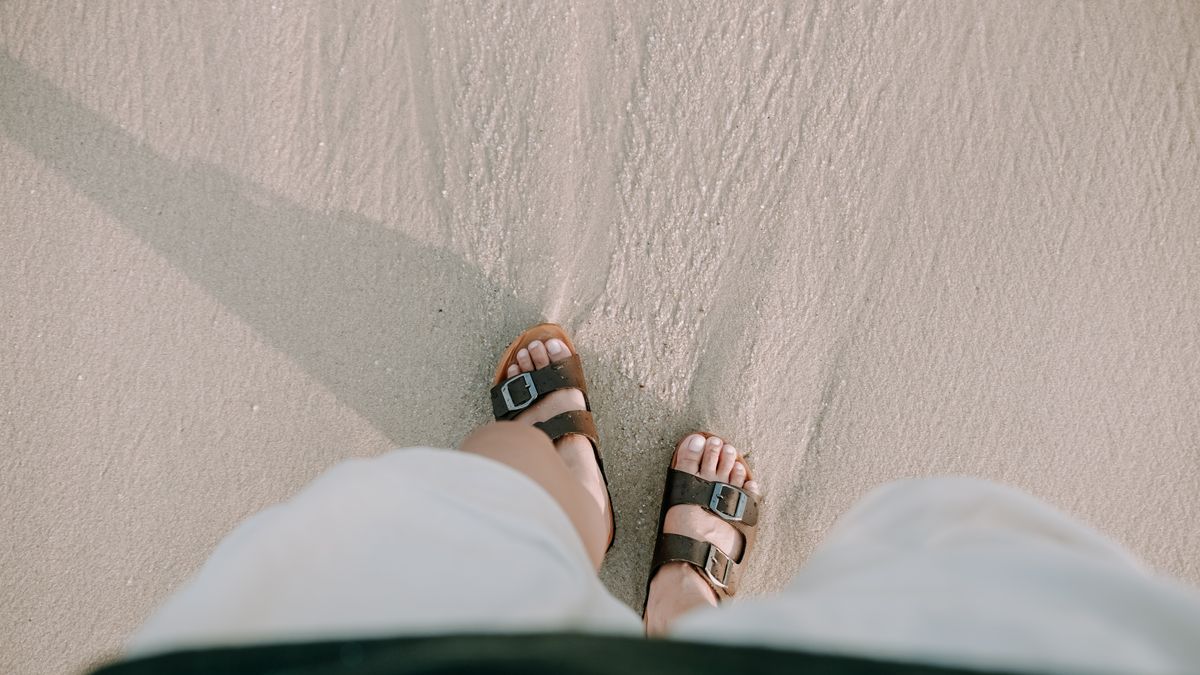
- Footbed sandals have a contoured cork, foam or rubber base with an arch and heel cup, usually with adjustable buckles. They are among the most comfortable options for all-day wear.
Sport and hiking sandals
- Sport sandals use webbing straps over the forefoot, around the ankle and behind the heel, with a grippy rubber sole. They dry fast and stay on in water.
- Closed-toe hiking sandals add a rubber toe bumper to protect against rocks and roots. They sit between a sandal and a shoe.
- Water sandals have drainage and quick-drying materials for boating and river use.
For swimming, rocky beaches and boating, compare with water shoes.
Related: How to Hide Shoelaces: 5 Clean Ways to Lace Sneakers
Dress and fashion sandals
- Gladiators have multiple straps across the foot and sometimes up the leg, in flat or heeled versions.
- Wedges raise the heel on a solid sole, which is steadier than a narrow heel, especially on grass.
- Platforms lift the whole foot, reducing the effective heel height.
- Strappy heels, including stiletto and block-heel sandals, are for evening and formal wear. Block heels are the more stable choice.
- T-strap and ankle-strap sandals hold the foot more securely than a slip-on.
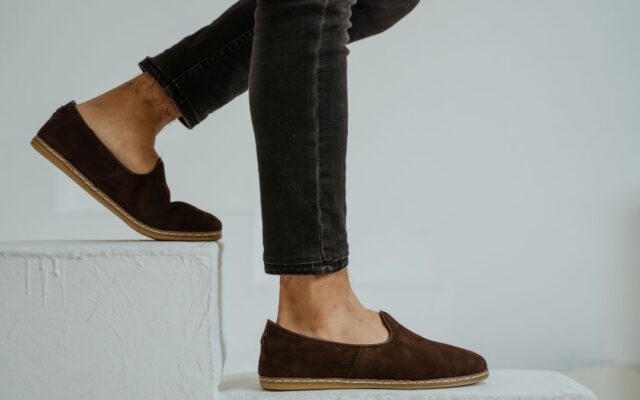
- Fisherman sandals have woven leather straps and a closed or semi-closed toe; a smart option for men and women.
- Espadrilles have a rope-wrapped sole; huaraches have a woven leather upper.
Materials
| Material | Good for | Watch out for |
|---|---|---|
| Leather | Moulds to the foot, looks smart | Does not like getting soaked |
| Suede and nubuck | Soft against the skin | Stains easily; see how to clean suede |
| EVA foam and rubber | Waterproof, light, easy to rinse | Can be slippery inside when wet |
| Webbing (nylon or polyester) | Quick-drying, adjustable | Can rub until softened |
| Cork | Shapes to your foot over time | Avoid prolonged soaking |
How to choose
- Walking far? Choose a heel strap and a contoured footbed.
- Getting wet? Choose rubber, EVA or webbing with a grippy sole.
- Uneven ground? Choose a closed toe and a lugged outsole.
- Dressing up? Choose leather straps, and a block heel or wedge for stability.
- Low arches or sore heels? Avoid completely flat sandals; see how to manage flat feet.
How sandals should fit
- Your heel should sit fully inside the heel cup or back edge, with a few millimetres to spare.
- Toes should not hang over the front.
- Straps should be snug without digging in; you should be able to slide a finger underneath.
- The arch of the footbed should line up with your own.
Check your size with our measuring guide. New straps rubbing? See how to break in new shoes. To keep them fresh, see how to clean sandals and flip-flops.
Frequently asked questions
What is the difference between slides and flip-flops?
Flip-flops have a strap between the toes; slides have a band across the top of the foot.
Which sandals are best for walking?
Sandals with a heel strap, adjustable fit and a contoured footbed, such as sport or footbed sandals.
Can you hike in sandals?
Yes, on easy to moderate trails with proper hiking sandals. For heavy loads or rough ground, closed shoes protect better.
Are sandals bad for your feet?
Flat, unsupportive ones can be tiring if worn all day. Supportive sandals with a shaped footbed are fine for most people.