To choose sandals, first match the type to what you will do in them (walking, hiking, water, beach or dressing up), then check four things: your whole foot sits inside the footbed, the straps hold your heel and forefoot securely, the footbed supports your arch, and the sole has enough grip and cushioning for the surface. A sandal that passes those checks will be comfortable for hours; a flat flip-flop is fine for the pool but not for a day of sightseeing.
In this guide
Step 1: Pick the right type for the job
| Activity | Best sandal type | Key features |
|---|---|---|
| City walking and travel | Walking sandal with adjustable straps | Contoured footbed, heel strap, cushioned sole |
| Hiking and rough paths | Sport or hiking sandal | Three-point straps, lugged rubber outsole, firm footbed |
| Rivers, kayaking, rocky shores | Closed-toe water sandal | Toe bumper, quick-drying webbing, wet grip |
| Beach and pool | Flip-flop or slide | Waterproof, easy on and off |
| Around the house, after sport | Recovery slide | Thick soft foam, arch contour |
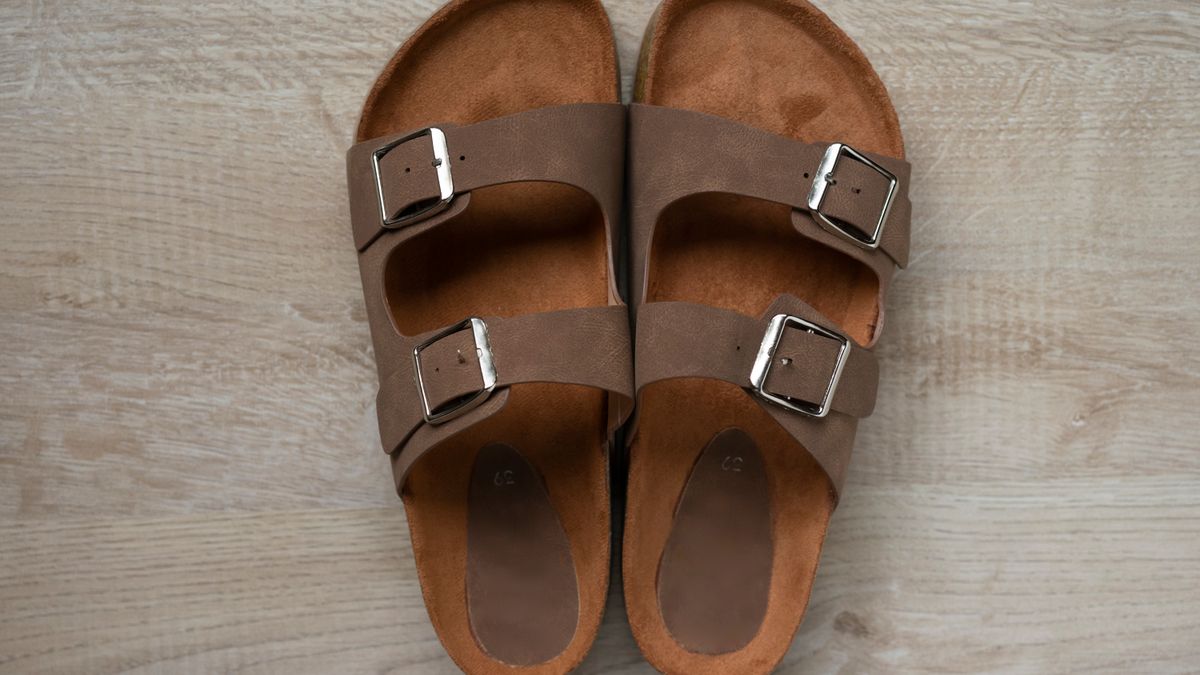
| Everyday casual | Cork-footbed or leather strap sandal | Moulded footbed, adjustable buckles |
| Smart and evening wear | Dress sandal, low block heel or wedge | Ankle strap, padded insole, stable heel |
For a full tour of styles, see types of sandals.
Step 2: Get the size and fit right
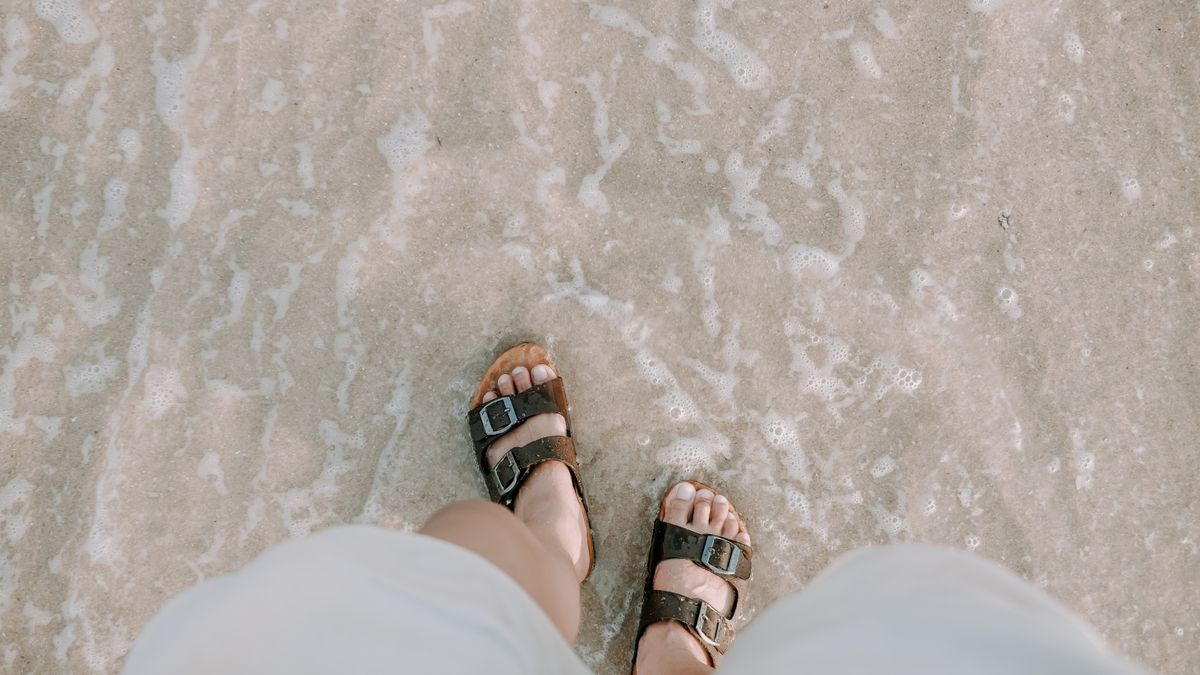
- Length: your heel should sit in the heel cup and your toes should stop a few millimetres short of the front edge. Nothing should hang over.
- Width: the sides of your foot should stay on the footbed, not spill over or sit far inside the edge.
- Arch position: the raised part of the footbed should sit under your arch, not in front of or behind it.
- Half sizes: many sandals come in whole sizes only. With adjustable straps, most people between sizes go down; with a toe post or fixed straps, go up.
- Try them late in the day when feet are slightly swollen, and measure first with how to measure your shoe size and how to measure foot width.
Step 3: Check the straps
| Strap setup | Security | Good for |
|---|---|---|
| Toe post only (flip-flop) | Low; toes grip to hold it on | Short distances, beach, pool |
| Single band (slide) | Low | Home, poolside |
| Two bands with buckles | Medium | Casual wear, light walking |
| Forefoot strap plus heel strap | High | Walking, travel |
| Three-point adjustable (forefoot, instep, heel) | Highest | Hiking, water, long days |
Adjustable straps matter because feet swell in heat. Soft linings or padded webbing reduce rubbing, and a heel strap stops your toes clawing with every step.
Step 4: Look at the footbed and sole
- Contoured footbed: a heel cup, arch contour and slight toe bar spread pressure and keep the foot in place. Cork-latex footbeds mould to your foot over time; care tips are in how to clean Birkenstocks.
- Cushioning: EVA foam is light and soft; polyurethane is firmer and lasts longer.
- Bend test: the sandal should flex at the ball of the foot, not fold in half in the middle.
- Outsole: rubber with a visible tread for wet pavements and trails. Smooth foam soles are slippery when wet.
- Heel height: a small rise of 1 to 2 cm is often more comfortable than completely flat, especially if you have tight calves or heel pain.
Related: 7 Best Waterproof Hiking Shoes for 2027: Dry Feet on Trail
Step 5: Choose materials for where you will wear them
| Material | Pros | Cons | Best for |
|---|---|---|---|
| Leather | Moulds to the foot, durable, smart | Dislikes water; needs breaking in | Everyday and dress |
| Nylon or polyester webbing | Quick-drying, adjustable, tough | Can rub until softened | Hiking, water, travel |
| EVA foam | Very light, waterproof, cheap | Compresses, less support | Beach, pool, recovery |
| Cork-latex footbed | Supportive, shapes to the foot | Should not be soaked | Daily casual wear |
| Rubber | Grippy, waterproof | Heavier, can be hot | Outsoles, water use |
Fit checklist before you buy
- Heel and toes fully inside the footbed
- Arch contour sits under your arch
- Straps snug without pinching, with room to loosen
- No strap or buckle on a bony point or bunion
- Heel does not slap or slide when you walk
- Sole bends at the ball of the foot and grips the floor
- Comfortable after ten minutes of walking indoors
Sandals and foot problems
If you have heel or arch pain, choose a sandal with a deep heel cup, firm arch support and a slight heel rise, and avoid thin flat flip-flops; our best shoes for plantar fasciitis explains the features to look for. Bunions do better with soft, adjustable straps that do not cross the joint. People with diabetes or reduced feeling in the feet should ask a podiatrist before wearing open sandals. This is general information, not medical advice.
Where to go next
Ready for specific models? See our best sandals for walking, best hiking sandals and best water shoes. To keep them fresh, follow how to clean sandals and flip-flops, and if a strap pulls out, try how to fix flip-flops.
Frequently asked questions
How should sandals fit?
Your whole foot should rest inside the footbed, with a few millimetres of space at the toes and heel, and the straps should hold the foot without digging in.
Should I size up or down in sandals?
If you are between sizes, go down in sandals with fully adjustable straps and up in styles with a toe post or fixed straps. Always check the brand’s guidance.
Are flip-flops bad for your feet?
They are fine for short periods. For long walks they offer little support, and the toes have to grip to keep them on, which can tire the feet and lower legs.
What sandals are best for walking all day?
Sandals with a contoured footbed, a heel strap, adjustable forefoot straps and a cushioned rubber sole.
Do sandals need arch support?
For all-day wear, yes for most people. A shaped footbed spreads pressure and reduces fatigue compared with a flat sole.