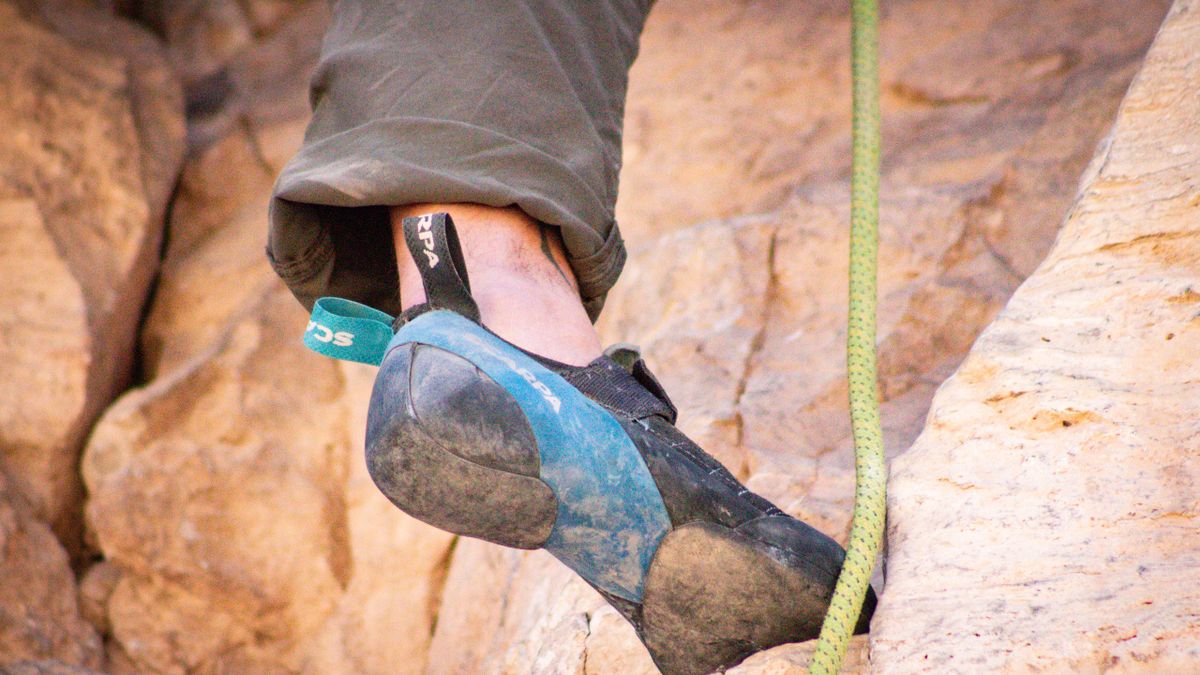
Break in climbing shoes by wearing them for short spells at home and on easy climbs, taking them off between routes, and flexing them by hand. Most pairs soften within three to six sessions. Leather shoes stretch noticeably; synthetic shoes barely stretch, so they need to fit almost right from the start.
In this guide
First: are they the right size?
Climbing shoes are meant to be snug, with your toes at the end of the shoe and no dead space. They are not meant to cause sharp pain.
- Right: toes flat or gently curled, firm even pressure, no air pockets at the heel.
- Too small: toes painfully crunched, hot spots on the knuckles, numbness within a minute or two.
- Too big: toes lie flat with room to spare, heel lifts when you stand on your toes.
Beginners do best in a flat, comfortable shoe that they can keep on for a whole route. Very tight, downturned shoes are for steep, advanced climbing.
How much will they stretch?
| Upper | Typical stretch | What it means when buying |
|---|---|---|
| Unlined leather | Up to a full size | Buy snug; they will give |
| Lined leather | About half a size or less | Buy close to the fit you want |
| Synthetic | Very little | Buy the fit you want from day one |
Shoes stretch mostly in width and volume, not in length, because the rubber rand around the toe and heel holds its shape.
How to break them in: step by step
- Wear them at home. Put them on for 10 to 15 minutes at a time while sitting or standing. Flex your toes and rise onto the balls of your feet.
- Flex them by hand. Bend the sole and work the heel cup and toe box with your thumbs for a few minutes.
- Climb easy routes. Do several short, easy climbs or traverses, and take the shoes off between each one. Climbing is what shapes the shoe to your foot.
- Build up gradually. Add time on the wall each session. Bring your old pair or another comfortable pair for the rest of the session.
- Protect hot spots with a little climbing tape on knuckles or the back of the heel.
Related: Best Shoes for Plantar Fasciitis in 2026: 7 Picks
Ways to speed it up
- Warm them first. Rubber and leather soften with warmth. Keep the shoes inside your jacket or in a warm room before climbing. A hairdryer on low for 30 seconds works too, but keep it moving and off the glue lines.
- The warm shower method (leather shoes only). Wear the shoes in a warm shower for a few minutes, then walk and flex in them until they are nearly dry, and stuff them with paper to finish drying. It moulds leather quickly but can bleed dye, and it is not recommended for synthetic shoes or by every manufacturer.
- Thin socks or plastic bags over your feet for the first few wears make very tight shoes easier to get on.
What not to do
- Do not use an oven, microwave or direct high heat. Heat weakens the glue and delaminates the rubber.
- Do not freeze bags of water in them. It stretches unevenly and can split seams.
- Do not leave them in a hot car. The rubber can deform and the sole can peel.
- Do not walk around outside in them. It wears the rubber and packs dirt into the sole, which reduces grip.
Looking after climbing shoes
- Air them out after every session; clip them to the outside of your bag instead of sealing them inside.
- Wipe the rubber with a damp cloth and brush off chalk and dust for better grip.
- Deal with odour early; see how to get rid of shoe odor.
- Dry wet shoes slowly at room temperature; see how to dry shoes.
- Have them resoled when the rubber at the toe gets thin, before you wear through the rand.
For everyday footwear, the approach is different; see how to break in new shoes.
For the approach hike, see the best hiking socks.
Frequently asked questions
How long does it take to break in climbing shoes?
Usually three to six climbing sessions. Unlined leather softens fastest; stiff synthetic shoes take longest and change least.
Should climbing shoes hurt?
They should feel tight, not painful. Sharp pain, numbness or tingling means they are too small or the wrong shape for your foot.
Do you wear socks with climbing shoes?
Most climbers go barefoot for the best fit and feel. Thin socks are fine for rental shoes or if you prefer them.
Do synthetic climbing shoes stretch?
Hardly at all. They soften a little but keep their size, so buy them in the fit you want.