To choose climbing shoes, start with fit: your toes should reach the end of the shoe and lie flat or slightly curled, with no empty space and no sharp pain. Beginners do best in a flat, fairly stiff shoe with a simple closure, and should save tight, downturned models for later.
In this guide
Climbing shoes look strange next to everyday footwear. They are small, close-fitting and covered in sticky rubber, and the advice around them is full of talk about pain and sizing down. Most of that advice is aimed at experienced climbers. This guide explains what each feature does, so you can pick a pair for 2027 that matches the climbing you actually do.
The three shoe shapes
The profile of the shoe, seen from the side, is the first thing to decide. It controls how much power goes to the toes and how long you can keep the shoes on.
| Shape | What it looks like | Best for | Comfort |
|---|---|---|---|
| Neutral (flat) | Flat sole, toes lie almost straight | Beginners, long routes, cracks, all-day wear | High |
| Moderate | Slight downward curve (camber) | Steeper gym routes, technical sport climbs | Medium |
| Aggressive | Strong downturn and asymmetric toe | Overhangs, hard bouldering, small footholds | Low, short sessions only |
A neutral shoe lets you stand on your feet for a full session while you learn footwork. A downturned shoe pulls on steep rock like a hook, but that benefit only appears on overhanging terrain that most new climbers are not yet on. If you are buying a first pair, our best climbing shoes for beginners are all neutral or close to it.
How climbing shoes should fit
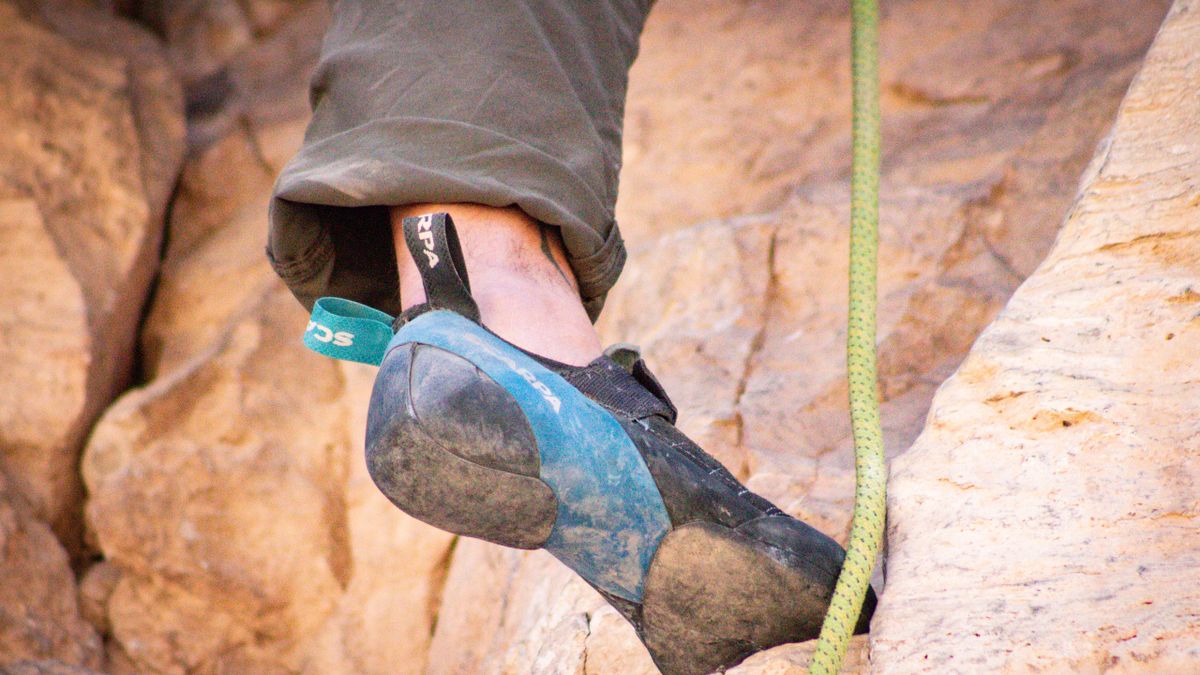
Fit matters more than brand, rubber or price. Use this checklist when you try shoes on:
- Toes: touching the front, flat or gently curled. Knuckles forced into a tight bend are a sign of a shoe that is too small for a beginner.
- No dead space: there should be no air pocket above the toes, under the arch or around the heel.
- Heel: snug and fully seated. If the heel cup gapes or slips when you stand on your toes, try a different model, not just a different size.
- Pressure, not pain: firm, even pressure is normal. Sharp pain on a toe joint or the Achilles tendon is not.
- Width: the foot should fill the shoe side to side without bulging over the sole. Many models come in a low-volume version for narrow feet, and it helps to know your foot width first.
Try shoes on in the afternoon or after a walk, when feet are slightly larger. Sizes differ a lot between brands, so treat your street size as a starting point only; measuring your feet in centimetres makes brand size charts far easier to use. Our general guide to how tight shoes should be explains the difference between snug and harmful.
Should you size down?
The old rule of buying climbing shoes several sizes too small does not suit beginners. Tight shoes make you step carefully because your feet hurt, not because your technique is good. A sensible approach is to choose the smallest size you can wear for 20 to 30 minutes without wanting to take the shoes off. For many people that is close to street size or about half a size below it, depending on the brand.
Children and teenagers who are still growing should never wear tightly downsized shoes.
Leather or synthetic uppers
The upper material decides how much the shoe changes after you buy it.
| Upper | Stretch | Feel | Sizing tip |
|---|---|---|---|
| Unlined leather | Up to about a full size | Moulds to the foot, breathes well | Buy snug, it will relax |
| Lined leather | About half a size or less | Holds shape better | Buy close to final fit |
| Synthetic | Very little | Consistent fit, often vegan | Buy the fit you want to keep |
Because leather gives, a leather shoe that feels perfect in the shop can end up loose. Synthetic shoes stay closer to their first fit but tend to hold more odour. For the breaking-in stage itself, see how to break in climbing shoes, and for the general picture, do shoes stretch.
Related: How to Choose Hiking Boots: Fit, Type and Features
Laces, straps or slippers
- Laces give the most adjustable fit from toe to ankle. They suit unusual foot shapes and long routes, but take longer to put on.
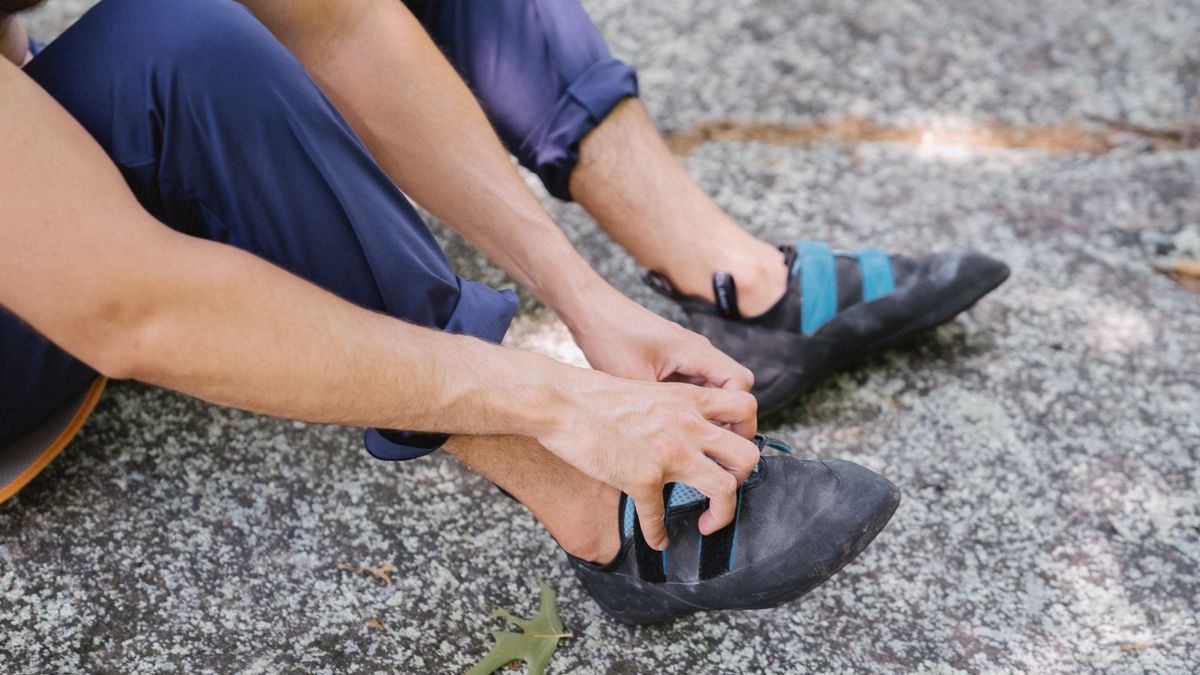
- Hook-and-loop straps are quick to open between climbs, which is why they are the most popular choice for gym climbing and bouldering.
- Slippers have elastic only. They are soft and sensitive, good for training, but offer the least support for a first pair.
Stiffness and rubber
A stiffer sole supports the foot on small edges, so the shoe does part of the work while your foot muscles get stronger. A softer sole bends over the hold and gives more feel, which helps on smooth volumes and slabs but tires new feet quickly.
Rubber thickness follows the same trade-off. Beginner shoes usually carry roughly 4 to 5 mm of rubber, which lasts longer while you are still dragging your toes up the wall. Thinner rubber, around 3 to 4 mm, is more sensitive but wears through sooner. When the sole gets thin near the toe, a resole is far cheaper than a new pair; the principle is the same as in our guide on how to resole shoes.
Match the shoe to your climbing
| Where you climb | Shape | Closure | Sole |
|---|---|---|---|
| Indoor gym, first year | Neutral | Straps | Medium to stiff, thick rubber |
| Indoor bouldering, improving | Neutral to moderate | Straps | Softer |
| Outdoor sport routes | Moderate | Laces or straps | Medium to stiff |
| Long multi-pitch or cracks | Neutral | Laces | Stiff |
Common mistakes
- Buying an aggressive shoe because stronger climbers wear one.
- Choosing by street size without trying the shoe on or checking the brand chart.
- Ignoring a loose heel because the toes feel right.
- Walking around the gym in climbing shoes, which wears the rubber and collects dirt.
- Leaving shoes in a hot car, where heat can weaken the glue.
Frequently asked questions
Should climbing shoes hurt?
No. They should feel tight and unfamiliar, but not painful. Firm pressure around the whole foot is normal; sharp pain on one spot means the size or shape is wrong.
Do you wear socks with climbing shoes?
Most climbers go barefoot for a closer fit and better feel. Thin socks are fine with rental shoes or in cold conditions, but allow for them when you choose a size.
How long do climbing shoes last?
It depends on how often you climb and how precisely you place your feet. Beginners often wear through the toe rubber in several months of regular gym sessions. Resoling early extends the life of the shoe.
Are women’s climbing shoes different?
They are usually low-volume versions with a narrower heel and lower instep. Anyone with a slim foot can wear them, and anyone with a wide foot can choose the standard version.
Can I use one pair for gym and outdoor climbing?
Yes. A neutral or moderate all-round shoe works in both places. Many climbers later keep an older pair for the gym and a newer pair for rock.