Shoes should be snug around the heel and midfoot and roomy at the toes. Your heel should not lift when you walk, the sides should hold your foot without squeezing, and there should be about a thumb’s width (roughly 1 cm) between your longest toe and the front of the shoe. If you feel pressure, numbness or pinching anywhere, the shoe is too tight. If your foot slides forward or your heel rubs, it is too loose.
In this guide
The 60-second fit check
- Stand up with your full weight on both feet; feet spread when loaded.
- Check length: press above your longest toe. You should feel about a thumb’s width of space.
- Check width: the widest part of your foot should sit at the widest part of the shoe, with no bulge over the sole.
- Check the heel: walk a few steps. A tiny amount of movement is fine; rubbing or lifting is not.
- Check the top: the laces or upper should feel secure across the instep without pressure or tingling.
- Wiggle your toes: all of them should move freely.
Too tight or too loose? Signs to look for
| Too tight | Too loose |
|---|---|
| Numb or tingling toes | Heel lifts or rubs with each step |
| Red marks or dents on the skin after wear | Foot slides forward on slopes or stairs |
| Toes pressed together or touching the end | You curl your toes to grip the shoe |
| Bulging over the edge of the sole | Deep creases across the toe box |
| Blisters on the sides of toes; black toenails | Blisters on the heel or ball of the foot |
| Pain on top of the foot from the laces | Laces pulled so tight the eyelets nearly meet |
How snug by shoe type
| Shoe | How it should feel |
|---|---|
| Running shoes | Secure heel and midfoot; a full thumb’s width at the toes, often half a size up. See how running shoes should fit. |
| Walking and casual shoes | Comfortable immediately; a finger to a thumb’s width at the toes. |
| Leather dress shoes | Close but not painful; leather eases slightly in width, never in length. See types of dress shoes. |
| Boots | Locked heel, room for thicker socks. See how boots should fit. |
| Hiking boots | Extra toe room for descents; no heel lift. |
| Gym and court shoes | Snugger through the midfoot to stop sliding sideways. |
| Cycling and climbing shoes | Deliberately close; see how cycling shoes should fit. |
| Heels | No gap at the back, toes not crushed; see how to make heels more comfortable. |
Related: How to Clean Canvas Shoes Without Ruining Them
How tight should laces be?
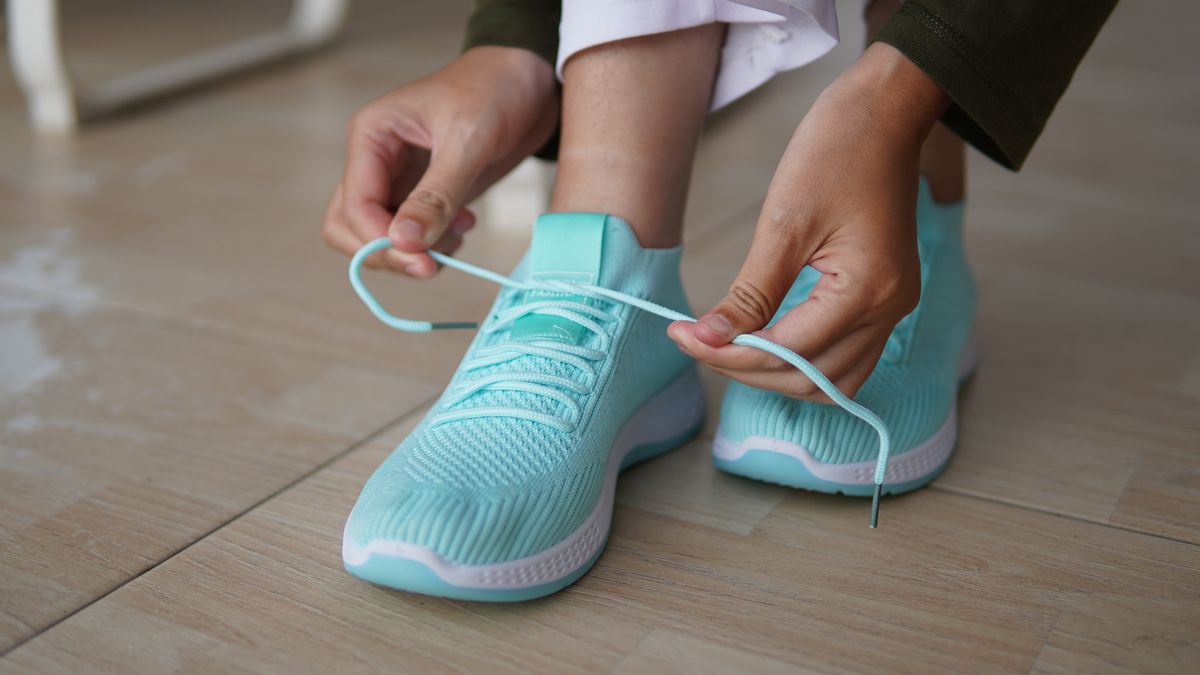
- Firm enough that the heel does not move, loose enough to slide a finger under the knot.
- Looser over the toes, firmer near the ankle.
- If the top of your foot aches or tingles, loosen the middle eyelets or skip one.
- For heel slip, use a heel-lock (runner’s loop); see how to lace boots and how to tie shoes.
Will tight shoes stretch?
- Leather and suede: a little in width over a few weeks.
- Mesh and knit: slightly.
- Synthetics and patent leather: hardly at all.
- Length: never. If your toes touch the end, the shoe is too small.
For a pair that is just slightly snug, see how to stretch shoes and how to break in shoes.
What if they are a little too big?
Thicker socks, an insole, heel grips or tongue pads can take up small amounts of space; see how to make shoes smaller. More than half a size too big is hard to fix.
Tips for getting it right first time
- Measure both feet and fit the larger one; see how to measure shoe size.
- Know your width; see what D means in shoe size and the best shoes for wide feet.
- Sizes vary between brands, so judge by feel, not the number.
- Do not buy shoes that hurt in the shop expecting them to improve.
Tight shoes are a leading cause of rubbing; see how to prevent blisters. This article is general information; see a podiatrist for ongoing foot pain or numbness.
Frequently asked questions
Is it better for shoes to be tight or loose?
Neither. Aim for secure at the heel and midfoot with free toes. If you must choose, slightly roomy is easier to fix than too small.
How much room should be in the toe of a shoe?
About a thumb’s width, roughly 1 to 1.3 cm, in front of your longest toe when standing.
Should new shoes feel tight?
Leather shoes can feel close across the width at first. They should never be painful or short.
Why do my shoes feel tighter in the evening?
Feet swell during the day, and more in heat or after exercise. That is why afternoon fitting is recommended.