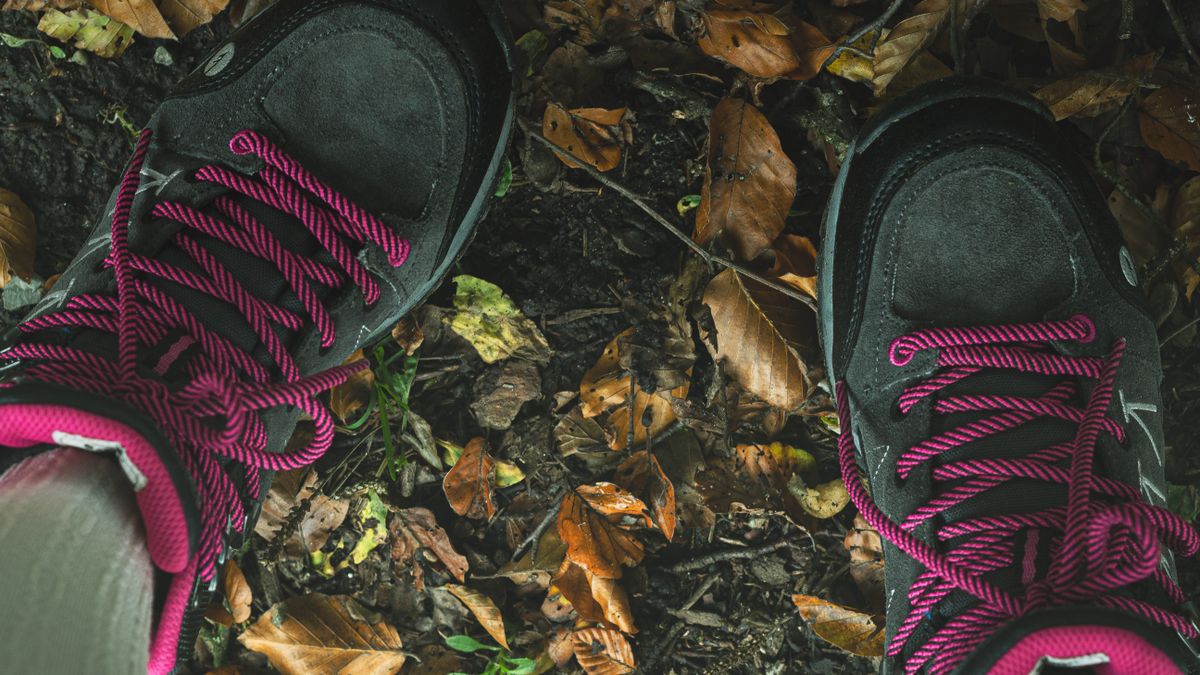
To choose hiking boots, start with the kind of hiking you do, then pick the lightest boot that gives enough support for your load and terrain, and finally make sure it fits with your hiking socks on. For day hikes on marked trails a light mid-cut boot or hiking shoe is enough. For multi-day trips with a heavy pack or rough ground, choose a stiffer backpacking boot. Fit matters more than brand or price.
In this guide
Types of hiking footwear
| Type | Best for | Trade-offs |
|---|---|---|
| Trail runners | Fast, light hiking; warm weather | Least protection and durability |
| Hiking shoes (low cut) | Day hikes, light loads | Little ankle coverage |
| Day hiking boots (mid cut) | Most hikers; mixed terrain; light overnight packs | Heavier than shoes |
| Backpacking boots | Heavy packs, rocky or off-trail routes | Stiff, heavy, need breaking in |
| Mountaineering boots | Snow, ice, crampons | Too stiff for ordinary trails |
Not sure you need a boot at all? Read hiking boots vs trail runners.
Step 1: Match the boot to your hiking
- Load. The heavier your pack, the stiffer the sole you need to stop your feet tiring.
- Terrain. Smooth paths need little; scree, roots and mud call for deeper lugs, a toe cap and a higher cut.
- Climate. Hot and dry favours breathable mesh; cold and wet favours leather and a waterproof lining.
- Trip length. Comfort problems that are minor on a two-hour walk become serious on day three.
Step 2: Understand the materials
| Upper | Strengths | Weaknesses |
|---|---|---|
| Full-grain leather | Very durable, water resistant, supportive | Heavy, warm, longer break-in |
| Nubuck or suede leather | Durable but more flexible | Needs treating; scuffs |
| Split leather and mesh | Lighter, cooler, cheaper | Less water and abrasion resistant |
| Synthetic | Light, quick drying, little break-in | Wears out sooner |
Related: How to Clean White Shoelaces (Machine and Hand Methods)
Step 3: Decide on waterproofing
Waterproof membranes such as Gore-Tex keep rain and shallow puddles out, which is valuable in cool, wet places. They also trap heat and, once water gets in over the top, dry slowly. In hot or dry climates a non-waterproof boot is more comfortable. You can top up water repellency later; see how to waterproof shoes.
Step 4: Check the sole and support
- Outsole. Look for deep, widely spaced lugs and a defined heel edge for braking on descents. See shoe sole types.
- Midsole. EVA is lighter and softer; polyurethane is firmer and lasts longer.
- Stiffness. Try to twist the boot. More resistance means more support on uneven ground.
- Protection. A rubber toe cap and a rock plate matter on stony trails.
Step 5: Get the fit right
- Shop in the afternoon, wearing the socks you hike in; see the best hiking socks.
- Before lacing, slide your foot forward: one finger should fit behind your heel.
- Laced up, your heel should stay down and your toes should wiggle freely.
- Walk down a slope or ramp. If your toes hit the front, go up half a size or try another last.
- Check for pressure on the widest part of your foot and over the instep.
- Try more than one brand; each uses a different foot shape.
Full details: how boots should fit. Wide feet? See the best shoes for wide feet.
Step 6: Break them in and look after them
- Wear new boots around the house, then on short walks, before a big trip; see how to break in boots.
- Learn a heel-lock; see how to lace boots.
- Deal with hot spots early; see how to prevent blisters.
- Clean and dry boots after muddy hikes; see how to clean leather boots.
Ready to buy? See our best hiking boots of 2027.
Frequently asked questions
Should I buy hiking boots a size bigger?
Often half a size up from everyday shoes, to allow for thicker socks, swelling and downhill toe room.
Do I need ankle support for hiking?
A higher cut helps with heavy packs and rough ground and keeps debris out. On easy trails with a light load, low-cut shoes are fine for most people.
Are leather or synthetic hiking boots better?
Leather lasts longer and supports better; synthetics are lighter, cooler and need less break-in. Choose by climate and load.
How much should I spend on hiking boots?
Good day-hiking boots sit in the middle of the price range. Spend more only if you need the durability and support of a backpacking boot.