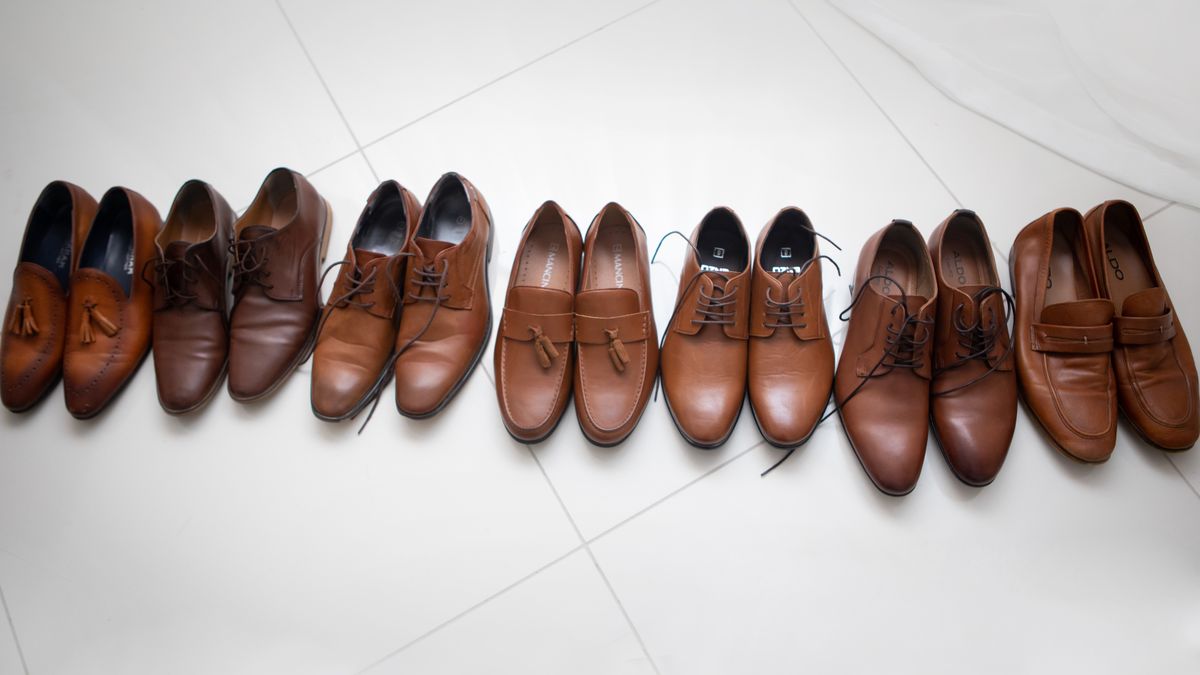
The main types of men’s dress shoe are the Oxford, Derby, monk strap, loafer and dress boot. The Oxford is the most formal, thanks to its closed lacing and sleek shape. Derbies are slightly more relaxed, loafers and monk straps sit in the smart casual range, and brogueing (decorative perforations) makes any shoe less formal. As a rule: the plainer, darker and slimmer the shoe, the more formal it is.
In this guide
Dress shoe types at a glance
| Type | How to recognise it | Formality | Wear with |
|---|---|---|---|
| Oxford | Closed lacing: the eyelet tabs are stitched under the front of the shoe | Most formal | Suits, black tie (in patent or polished black), business dress |
| Derby | Open lacing: the eyelet flaps sit on top and open fully | Smart; a step below the Oxford | Suits, chinos, smart jeans |
| Monk strap | No laces; one or two buckled straps | Smart to smart casual | Tailoring, odd trousers and jackets |
| Loafer | Slip-on with a low heel; penny, tassel or horsebit styles | Smart casual | Chinos, summer suits, jeans |
| Brogue | Any of the above with perforated decoration | Less formal the more perforation it has | Tweed, flannel, chinos, denim |
| Dress boot | Ankle-height Oxford, Derby, Chelsea or chukka in polished leather | Smart; practical in winter | Suits and heavier trousers |
Oxford
The Oxford’s closed lacing gives a clean, close-fitting front. A plain black cap-toe Oxford is the standard for business, interviews, weddings and funerals. A “wholecut” Oxford, made from a single piece of leather, is sleeker still. Because the lacing does not open wide, Oxfords suit feet with a low to medium instep.
Derby
On a Derby the two lacing flaps are sewn on top of the front of the shoe and open wide, which makes it easier to get on and more comfortable for high insteps and wider feet. Derbies in dark, smooth leather work with a suit; in suede or with a thicker sole they move toward casual.
Brogues: a decoration, not a shape
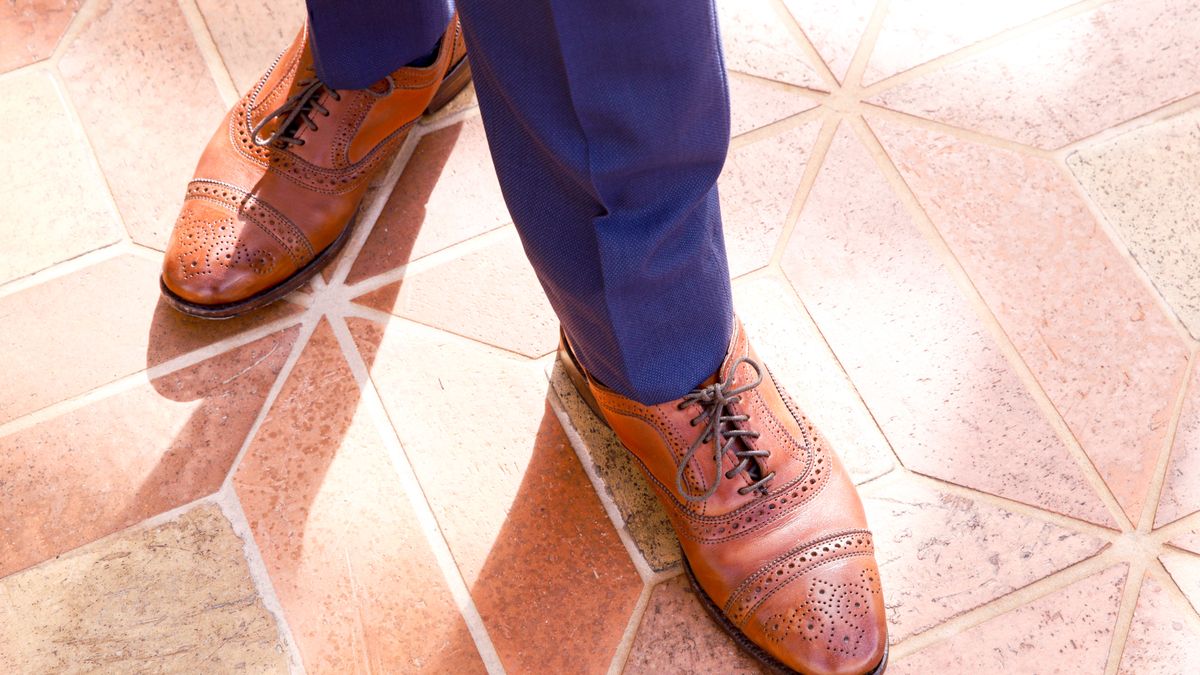
- Quarter brogue: perforations along the toe cap seam only.
- Semi brogue: perforated toe cap edge plus a decorative medallion on the toe.
- Full brogue (wingtip): a pointed, W-shaped toe cap that sweeps along the sides.
- Longwing: the wing runs all the way round to the heel.
Brogueing began as drainage holes in country shoes, which is why heavily brogued shoes still read as less formal.
Related: How to Clean White Leather Shoes and Keep Them White
Monk straps and loafers
- Monk straps fasten with a buckle. Single monks are cleaner; double monks are more of a statement. They suit tailoring without a tie as well as a full suit.
- Penny loafers have a strap with a slot across the top; tassel loafers are a touch dressier; horsebit loafers have a metal bar. Loafers work with or without visible socks in warm weather.
Which colour?
| Shoe colour | Best with |
|---|---|
| Black | Black, charcoal, grey and navy suits; the most formal option |
| Dark brown | Navy, grey, brown and green; very versatile for business |
| Tan and light brown | Light grey, blue, beige; casual and summer wear |
| Oxblood or burgundy | Navy, grey, charcoal; a smart alternative to brown |
What to wear for common occasions
- Job interview or business meeting: black or dark brown Oxfords or plain Derbies, polished.
- Wedding: Oxfords or smart Derbies; brown brogues for daytime or country weddings.
- Black tie: black patent or highly polished plain Oxfords.
- Smart casual office: Derbies, loafers, monk straps, suede brogues.
- Dinner or a date: loafers, Chelsea boots or suede Derbies with dark jeans or chinos.
How should dress shoes fit?
- Snug at the heel with little or no slip.
- The widest part of your foot at the widest part of the shoe.
- About a thumb’s width in front of the toes; pointed lasts need a little extra length.
- On an Oxford, the lacing should close to a narrow V, not gape.
- Leather shoes soften with wear; see how to break in new shoes.
Measure your feet with our shoe size guide.
Care
- Use shoe trees and rotate pairs.
- Polish regularly; see how to polish shoes.
- Tie them properly; see how to tie dress shoes.
- Choose the right sole for your climate; see leather soles vs rubber soles.
For boots, see how to wear Chelsea boots and chukka boots.
Frequently asked questions
What is the difference between an Oxford and a Derby?
The lacing. Oxfords have closed lacing stitched under the vamp; Derbies have open flaps on top. Oxfords are more formal.
Are brogues formal?
Less so than plain shoes. A quarter brogue Oxford is fine for business; a full brogue is better with casual tailoring.
Can you wear loafers with a suit?
Yes, with lighter or more relaxed suits, especially in warm weather. For formal business dress, lace-ups are safer.
What is the most versatile dress shoe?
A dark brown cap-toe Oxford or plain Derby covers most occasions short of black tie.