The simplest rule for wearing ankle boots with jeans is to control where the hem meets the boot. Either the jeans end just above the top of the boot, showing a sliver of ankle or sock, or they fall cleanly over the shaft. What you want to avoid is fabric bunching up on top of the boot.
In this guide
Which jeans with which boots?
| Jean cut | Best way to wear | Boot style that suits |
|---|---|---|
| Skinny | Tucked in, or cropped at the ankle | Any, including boots with a looser shaft |
| Straight leg | Cropped or a single cuff just above the boot | Fitted shaft, Chelsea boots, heeled ankle boots |
| Cropped or ankle length | As they are, hem sitting 1 to 3 cm above the boot | Sock boots, Chelsea boots, pointed toes |
| Bootcut and flare | Hem over the boot, almost to the floor | Heeled boots with a slim shaft |
| Wide leg | Over the boot; let the toe peek out | Block heels and platforms for height |
| Boyfriend or relaxed | Rolled cuff showing the whole boot | Flat, chunky or lace-up boots |
1. The crop
Cropped or ankle-length jeans that stop just above the boot are the easiest option. A gap of about a finger’s width between hem and boot looks intentional. In cold weather, fill the gap with a sock in a matching or contrasting colour.
2. The single cuff
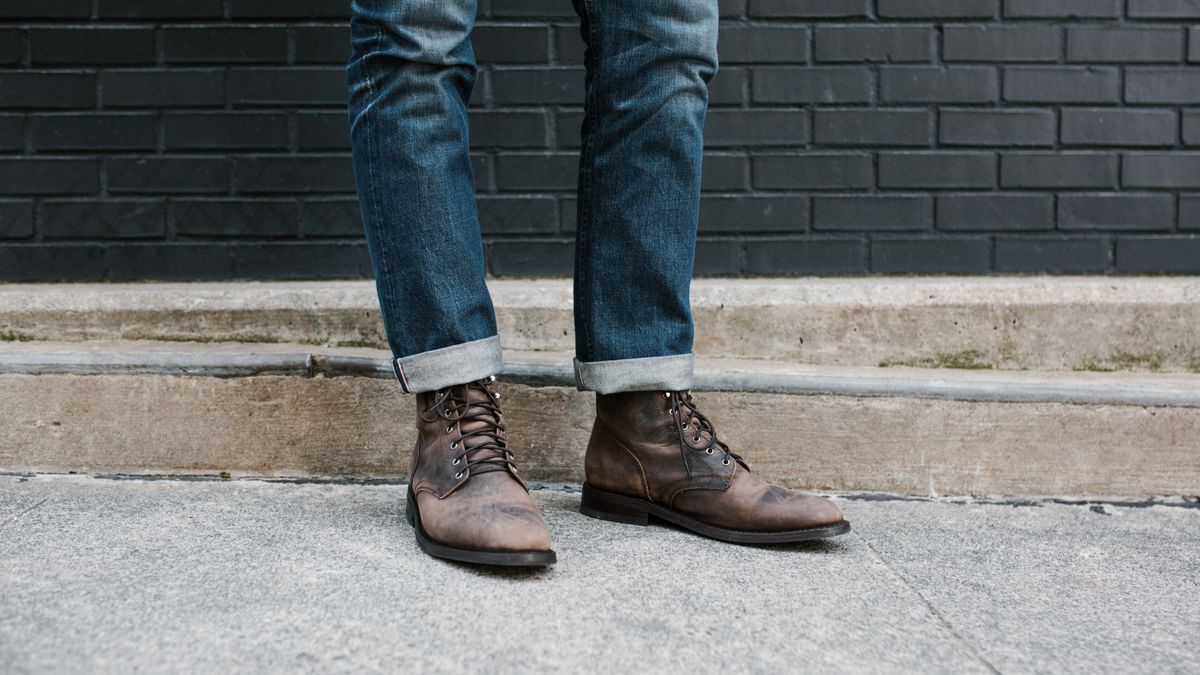
If your jeans are a little long, fold the hem up once by 2 to 4 cm so it sits just above the boot. It works best with straight and slim jeans in rigid denim.
3. The double roll
Roll the hem twice in narrow turns for a more casual finish. This suits relaxed and boyfriend jeans with flat or chunky boots. Keep the rolls neat and even.

4. The tuck
Skinny jeans can be tucked into ankle boots with a slightly wider shaft. Smooth the denim flat first, or fold the hem under inside the boot so it does not bunch. Tucking does not work with straight or wide jeans.
Related: Composite Toe vs Steel Toe vs Alloy Toe: Which Is Best?
5. Over the boot
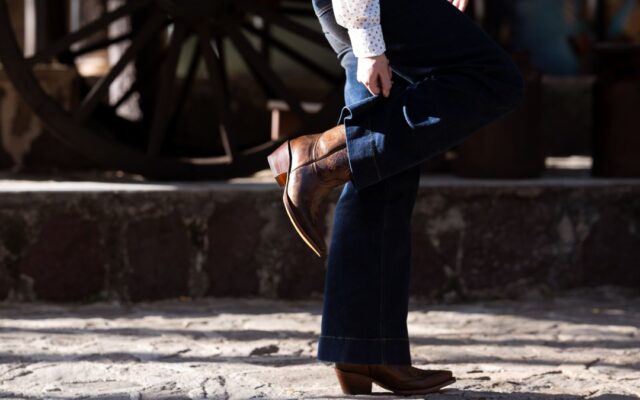
Bootcut, flared and wide-leg jeans are designed to go over a boot. The hem should cover most of the shaft and finish a centimetre or two above the floor at the heel, so wear the boots when checking length. A heel adds the height these cuts need.
6. The raw or stepped hem
Jeans with a raw, frayed or stepped hem are cut to sit at the ankle and pair naturally with ankle boots, with no folding needed.
Getting the proportions right
- Fitted shaft, slim jeans. A close-fitting boot keeps a slim leg line unbroken.
- Chunky boot, relaxed jeans. Heavier soles balance looser denim.
- Match colours to lengthen the leg. Black boots with black jeans, or tan boots with light denim, make legs look longer. Contrast draws attention to the ankle.
- Pointed or almond toes elongate; round toes look more casual.
- A little heel helps with cropped and wide cuts.
What about socks?
- No-show socks for a bare-ankle look in mild weather.
- Fine-knit socks in a matching tone when you want the gap covered.
- A deliberate flash of colour or texture, such as ribbed or sparkly socks, with cropped jeans.
- Thick boot socks scrunched above the boot with relaxed jeans in winter.
Common mistakes
- Stacking long jeans on top of the boot so the fabric bunches.
- Tucking in straight-leg jeans, which balloon over the top.
- A cuff so deep it shortens the leg.
- Hems that end halfway down the boot shaft.
Fit and care
Ankle boots should hold your heel and instep without rubbing at the ankle bone; see how boots should fit. Protect suede pairs before wet weather with a waterproofing spray, and keep leather pairs in shape with regular polishing.
For specific styles, see how to wear Chelsea boots, chukka boots and cowboy boots.
Frequently asked questions
Should jeans cover ankle boots?
Only with bootcut, flared or wide-leg jeans. Slim and straight jeans look better ending just above the boot.
Can you tuck jeans into ankle boots?
Yes, with skinny jeans and a boot shaft wide enough to hold them smoothly.
How much ankle should show?
About one to three centimetres between the hem and the top of the boot.
What shoes go with cropped jeans in winter?
Ankle boots with a fitted shaft, worn with socks that cover the gap.