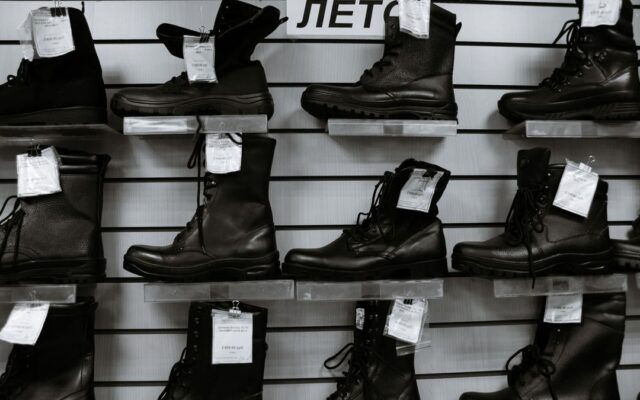
Duck boots are lace-up boots with a waterproof rubber foot and sole joined to a leather or canvas upper. The rubber “shell” keeps water out around the foot, while the softer upper makes them more comfortable and easier to walk in than all-rubber rain boots. They are made for rain, slush, mud and wet autumn and winter days.
In this guide
Where the name comes from
The style was created in 1912 by Leon Leonwood Bean, founder of L.L.Bean, who wanted dry feet on hunting trips in Maine and stitched leather uppers onto rubber work-boot bottoms. They were sold as the Maine Hunting Shoe and became known as duck boots, from duck hunting and their water-shedding design. They are also called Bean boots.
How a duck boot is built
| Part | Material | What it does |
|---|---|---|
| Lower (shell) | Moulded rubber | Fully waterproof around the foot |
| Sole | Rubber with a chain or lug tread | Grip on wet ground and mud |
| Upper | Leather or waxed canvas | Flexibility and ankle support; water-resistant, not waterproof |
| Lining | Unlined, fleece, shearling or synthetic insulation | Warmth, depending on the model |
| Seam | Stitched and sealed join between rubber and upper | Keeps water out up to that height |
Duck boots, rain boots and snow boots compared
- Rain boots (wellingtons): all rubber and fully waterproof to the top, but loose, sweaty and awkward for long walks.
- Duck boots: waterproof at the foot, more supportive and better looking with everyday clothes. Not for standing in deep water.
- Snow boots: heavily insulated with deep tread for cold and deep snow. Warmer than most duck boots but bulkier.
Related: What Are Water Shoes Good For? Uses, Types and Fit
Are duck boots good for snow and ice?
They handle slush and light snow well. Unlined pairs are cold in freezing weather, because rubber does not insulate, so choose a lined or insulated model and warm socks for winter. The traditional chain tread is modest on ice; take care on frozen surfaces or add ice grips.
How should duck boots fit?
- Many traditional duck boots come in whole sizes only and run large. A common recommendation is to size down if you are a half size and plan to wear thin socks, and to take your usual size for thick socks. Always check the brand’s guidance.
- The rubber foot does not stretch or mould, so the fit you feel on day one is the fit you keep.
- Some heel lift is normal because the rubber shell is stiff.
General fit checks are in how boots should fit.
How to wear duck boots
- With jeans: slim or straight jeans, either tucked in, cuffed just above the boot, or stacked over the top.
- With leggings or thick tights and an oversized jumper or parka.
- With chinos or cords for a smarter cold-weather look.
- Socks: thick wool socks, with the cuff showing above the boot if you like.
- Outerwear: waxed jackets, puffers, flannel shirts and field coats all suit them.
They are casual, outdoor boots. They do not suit formal offices or tailored outfits.
How to care for duck boots
- Rinse mud from the rubber with water and wipe dry.
- Clean and condition the leather upper a few times a season; see how to clean leather boots.
- Re-treat the leather with wax or a waterproofing product; see how to waterproof shoes and boots.
- Dry them at room temperature with the insoles out. Heat can crack rubber; see how to dry shoes.
- Store them away from direct sunlight, which degrades rubber.
Duck boots are unlined, so wear warm socks; see the best hiking socks.
For colder conditions, see the best winter boots of 2026.
Frequently asked questions
Are duck boots waterproof?
The rubber lower is fully waterproof. The leather or canvas upper is water-resistant, so they are not meant for wading above the seam.
Are duck boots warm?
Unlined versions are not. For cold weather, choose a pair with fleece, shearling or synthetic insulation.
Do duck boots run big?
Many do, particularly traditional styles made in whole sizes. Check the brand’s sizing advice before ordering.
Can you hike in duck boots?
They are fine for short, muddy walks. For longer hikes, proper hiking boots give better support, cushioning and grip.