
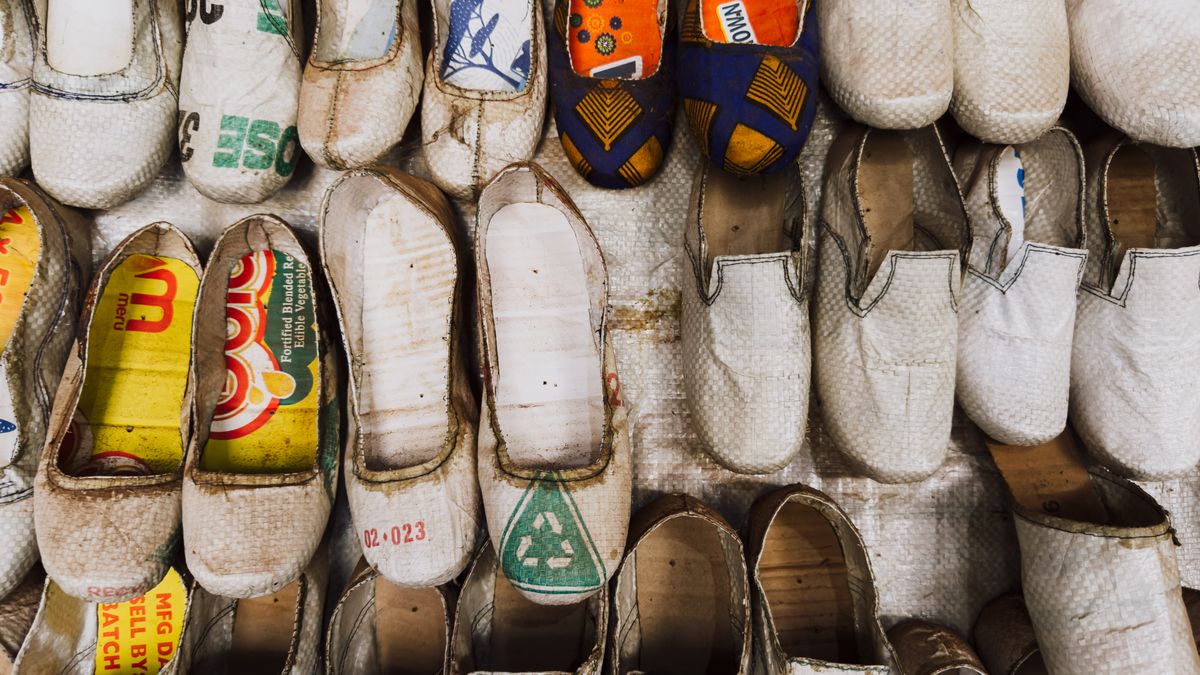
Eco-friendly shoes are designed to reduce environmental impact, through recycled or renewable materials, cleaner manufacturing, longer life, or easier repair and recycling. No shoe has zero impact. The most reliable ways to cut your footwear footprint are to buy fewer pairs, choose durable ones, look after them, and repair them before replacing.
In this guide
Why footwear has an environmental cost
- A typical shoe combines many materials, including leather, textiles, foams, rubber and adhesives, which makes it hard to recycle.
- Synthetic uppers, foams and many soles are made from fossil fuels.
- Leather tanning and textile dyeing use water and chemicals.
- Most worn-out shoes end up in landfill or are burned.
Common “sustainable” materials
| Material | What it is | Things to know |
|---|---|---|
| Recycled polyester | Fibre made from used plastic bottles or textile waste | Reduces new plastic use; still sheds microfibres and is hard to recycle again |
| Organic cotton and hemp | Natural fibres grown with fewer synthetic inputs | Breathable; less durable when wet |
| Natural rubber | Latex tapped from rubber trees | Renewable; look for responsibly managed sources |
| Recycled rubber | Ground-up old soles or tyres | Gives waste a second use in outsoles |
| Cork | Bark harvested without felling the tree | Renewable, light and cushioning; used in footbeds |
| Bio-based foams | Midsoles partly made from sugarcane, algae or castor oil | Usually blended with conventional foam |
| Plant-based leather alternatives | Materials made using pineapple leaf, cactus, apple waste or mycelium | Often combined with plastic coatings or backings; durability varies |
| Leather from audited tanneries | Hides processed under environmental standards | Long-lasting and repairable; still an animal product with a significant footprint |
| Wool | Natural fibre used in knitted uppers | Breathable and odour-resistant; less abrasion resistant |
How to judge a brand’s claims
- Look for specifics. “Made with 50 percent recycled polyester in the upper” tells you something. “Eco-conscious” on its own does not.
- Check which part of the shoe is meant. A recycled lace does not make a sustainable shoe.
- Look for independent certification. Examples include the Global Recycled Standard for recycled content, GOTS for organic textiles, FSC for natural rubber and cork, Leather Working Group audits for tanneries, and B Corp certification for the company as a whole.
- Ask about durability and repair. A shoe that lasts twice as long usually beats one made from “better” materials that wears out quickly.
- Check for take-back or recycling schemes.

Related: How to Make Shoes Smaller: 8 Fixes for Big Shoes
How eco-friendly shoes are made differently
- Fewer parts and less waste: knitted one-piece uppers cut offcuts compared with traditional cut-and-sew patterns.
- Water-based adhesives instead of solvent-based glues.
- Dyeing methods that use less water.
- Designs for disassembly, with stitched or single-material construction so parts can be separated and recycled.
- Resoleable construction, which lets a shoe keep going with a new sole. See how shoes are made for the different construction methods.
The most effective steps you can take
- Buy less and choose well. Pick versatile pairs that fit properly, so you actually wear them. See how to measure your shoe size.
- Look after them. Cleaning, drying and storing shoes correctly can add years. See how to dry shoes, how to waterproof shoes and how to store shoes.
- Repair. Re-glue soles, replace insoles and laces, and use a cobbler for heels and resoling. See how to fix shoe sole separation.
- Rotate pairs so each lasts longer.
- Pass them on. Donate or sell wearable shoes.
- Recycle the rest through brand take-back schemes or textile recycling points where available.
Are vegan shoes more eco-friendly?
Not automatically. Vegan shoes avoid animal products, but many use conventional plastics such as polyurethane, which are made from fossil fuels and may not last as long as leather. Leather has a large footprint from farming and tanning, but can last for many years and be repaired. Which matters more depends on your priorities. In either case, durability and how long you keep the shoes make a big difference.
Frequently asked questions
What makes a shoe eco-friendly?
Lower-impact materials, cleaner production, durability, repairability and a plan for the end of its life. The more of these a shoe has, the better.
Are recycled plastic shoes good for the environment?
They reduce demand for new plastic, which helps, but they are still plastic and difficult to recycle again. Long life matters as much as recycled content.
Can old shoes be recycled?
Some can, through brand take-back programmes and specialist recyclers. Wearable shoes are better donated or resold.
What is greenwashing?
Making a product sound more environmentally friendly than it is, usually with vague terms and no evidence. Specific figures and independent certification are the best check.