Most shoes are made in the same broad sequence. A design is turned into flat patterns, the pieces are cut from leather, fabric or synthetic material, the pieces are stitched together into an upper, the upper is pulled over a foot-shaped form called a last, the sole is attached, and the shoe is finished and inspected. A single pair can involve well over a hundred separate operations.
In this guide
The main stages
| Stage | What happens |
|---|---|
| 1. Design and last | The style is drawn and a last is made to define the shoe’s shape, size and fit |
| 2. Pattern making | The 3D design is translated into flat pattern pieces for every size |
| 3. Cutting (“clicking”) | Upper and lining pieces are cut by hand, die press or computer-controlled cutter |
| 4. Stitching (“closing”) | Pieces are skived, glued, stitched and reinforced to form the upper |
| 5. Lasting | The upper is stretched over the last and fixed to the insole |
| 6. Bottoming | The outsole (and midsole) is attached by cement, stitching, vulcanising or moulding |
| 7. Finishing | The last is removed; the shoe is trimmed, cleaned, polished, laced and inspected |
1. Design and the last
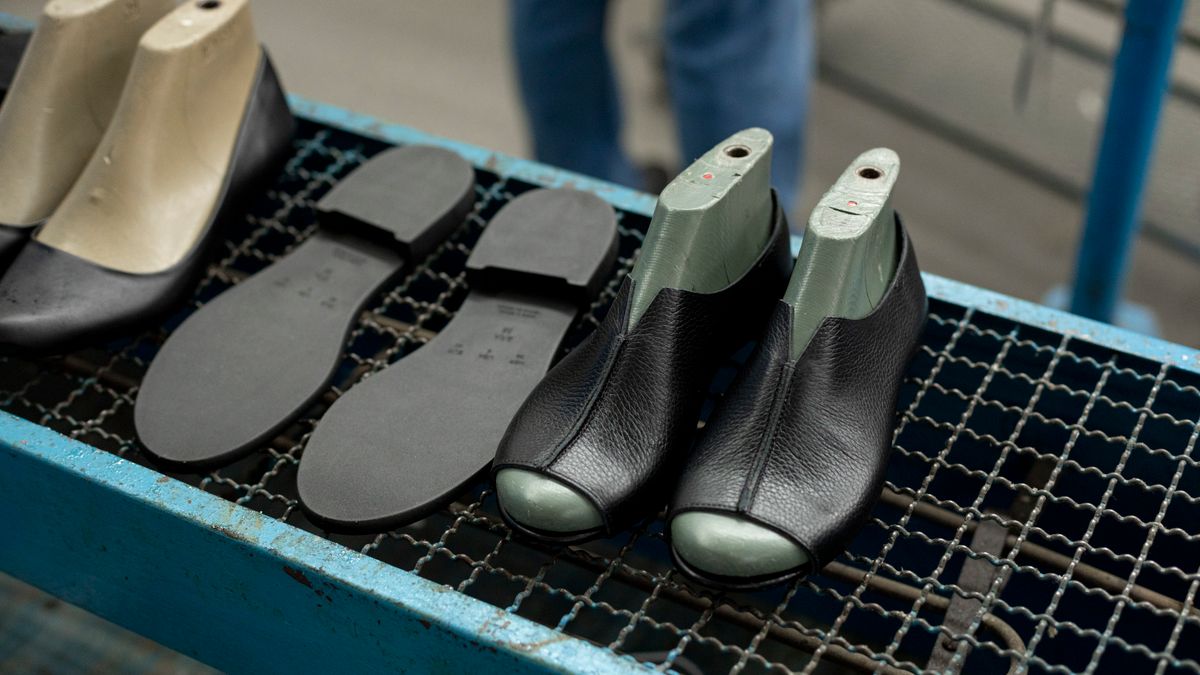
Everything starts with the last, a solid form in the shape of a foot, traditionally carved from wood and now usually moulded in plastic. The last sets the toe shape, heel height, width and volume, so it determines how the finished shoe fits. Each size and width needs its own pair of lasts, left and right. This is why the same marked size can fit differently between brands and even between models; see how to measure your shoe size.
2. Pattern making and cutting
The designer’s drawing is taped onto the last, marked up and flattened into paper or digital patterns. Each part of the upper, such as the vamp at the front, the quarters at the sides, the tongue and the linings, becomes a separate piece. Leather is cut with care to avoid scars and to use the hide efficiently. Fabrics and synthetics are usually cut in stacks by machine.
3. Stitching the upper
In the closing room, edges are thinned (skived) so seams lie flat, reinforcements are added at the toe and heel, eyelets are punched, and the pieces are sewn together. This is skilled work, done at sewing machines, and it accounts for a large share of the labour in a shoe.
Related: How to Clean White Shoelaces (Machine and Hand Methods)
4. Lasting
An insole is fixed to the bottom of the last. The upper is softened with heat or moisture, pulled tightly over the last and fastened to the insole with adhesive, tacks or stitching. The shoe then rests on the last so the material sets in shape.
5. Attaching the sole
| Construction | How the sole is attached | Typical shoes |
|---|---|---|
| Cemented | Glued with strong adhesive and pressed | Most sneakers and everyday shoes |
| Goodyear welted | A strip of leather (the welt) is stitched to the upper and insole, then the outsole is stitched to the welt | Quality dress shoes and boots; easy to resole |
| Blake stitched | The outsole is stitched directly through the insole | Slim, flexible dress shoes |
| Vulcanised | Raw rubber is bonded to the upper with heat and pressure | Canvas sneakers and skate shoes |
| Injection moulded | Molten sole material is injected into a mould around the lasted upper | Work boots, some casual shoes |
The construction method affects flexibility, water resistance, how long the shoe lasts and whether it can be repaired. For the materials involved, see shoe sole types explained and leather soles vs rubber soles.
6. Finishing
Once the sole has bonded, the last is pulled out. Edges are trimmed and inked, leather is cleaned, creamed and polished, the sock liner is inserted, and laces are added. Each pair is checked for defects before boxing.
Handmade vs factory-made
- Factory production uses machines for cutting, lasting and sole attachment, and can produce thousands of pairs a day.
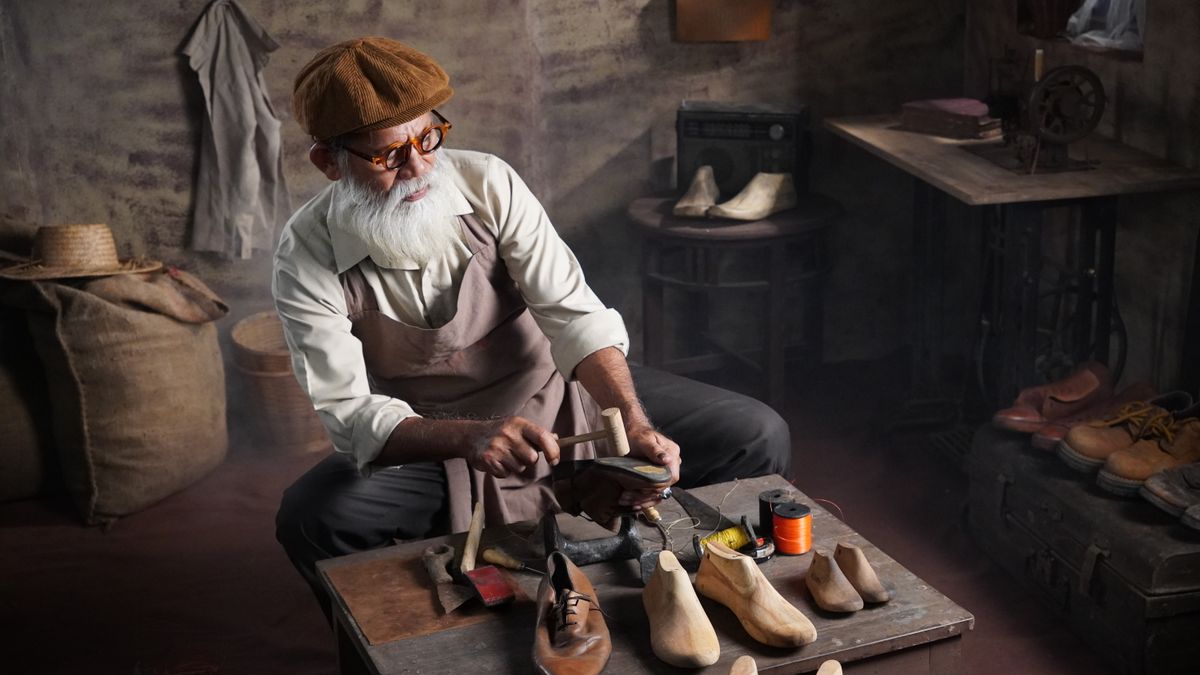
- Bespoke shoemaking starts with measurements of the customer’s feet, a personal last, and hand cutting, lasting and stitching. A pair can take weeks or months.
- Modern methods include knitted one-piece uppers, which reduce waste, and 3D-printed midsoles.
What this means when you buy and care for shoes
- Glued soles can come apart with heat and moisture, which is why shoes should not be dried on radiators. If a sole lifts, see how to fix shoe sole separation.
- Welted shoes cost more but can be resoled several times.
- Leather uppers mould to your foot because they were shaped over a last; see how to break in new shoes.
- Regular care extends life; see how to polish shoes.
For lower-impact materials and methods, see eco-friendly shoes.
Frequently asked questions
What is a shoe last?
A foot-shaped form that the shoe is built around. It determines the shoe’s shape and fit.
How long does it take to make a pair of shoes?
In a factory, a pair moves through production in hours to a few days. A bespoke handmade pair can take many weeks.
What does Goodyear welted mean?
A construction in which the upper, insole and a strip called the welt are stitched together, and the outsole is stitched to the welt. It makes resoling straightforward.
Why do shoe sizes vary between brands?
Each brand builds its shoes on its own lasts, so the same marked size can differ in length, width and volume.