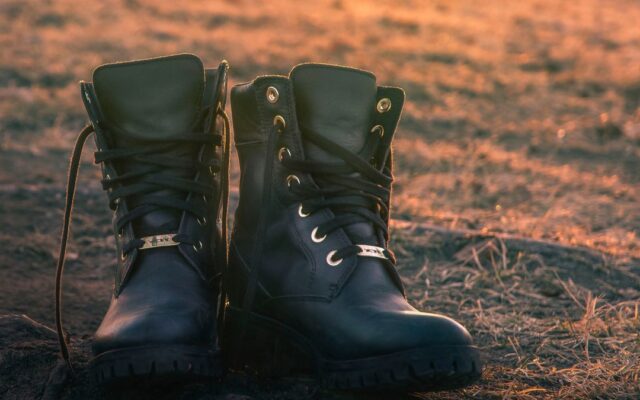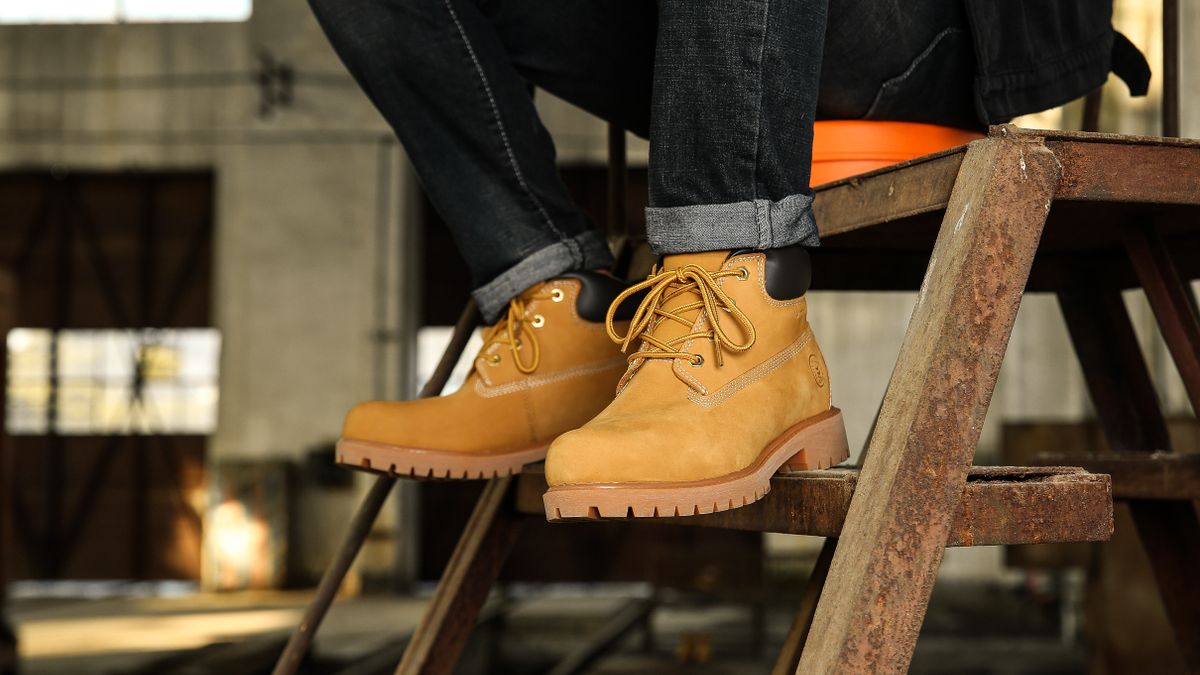
To choose work boots, start with the hazards of your job and the safety rating your employer requires, then choose the toe type, sole, upper material and height that suit your work, and finally get the fit right with your work socks on. A boot that meets the standard but hurts by lunchtime is the wrong boot, and a comfortable boot without the right protection is not allowed on site. Safety first, then comfort, then price.
In this guide
Step 1: Check what protection you need
Ask your employer or check the site rules. In the United States, protective footwear is rated to ASTM F2413, and the label inside the boot lists the features it has passed.
| Label code | Meaning | Needed for |
|---|---|---|
| I/75, C/75 | Impact and compression protection for the toes | Construction, warehouses, manufacturing |
| Mt | Metatarsal guard over the top of the foot | Heavy materials, foundries |
| EH | Electrical hazard: insulating sole | Electricians, maintenance |
| SD | Static dissipative | Electronics, some chemical plants |
| PR | Puncture-resistant plate | Sites with nails, scrap or sharp debris |
| SR or slip-resistant marking | Tested outsole grip | Wet, oily or polished floors |
In the UK and EU the equivalent markings are EN ISO 20345 classes such as S1P and S3.
Step 2: Choose the toe type
| Toe | Pros | Cons |
|---|---|---|
| Steel | Strongest, thinnest cap, cheapest | Heavier; conducts cold and heat |
| Composite | Lighter, non-metallic, does not conduct cold | Bulkier cap; costs more |
| Alloy (aluminium, titanium) | Light and thin | Most expensive |
| Soft toe | Lightest, most flexible | No impact protection |
Full comparison: composite toe vs steel toe.
Step 3: Pick the right sole
- Wedge sole: flat, full contact; comfortable on concrete, steel decking and paving.
- Heeled, lugged sole: grips ladders, mud and uneven ground.
- Slip-resistant tread: fine channels for wet and oily floors. See what slip-resistant shoes are.
- Oil- and heat-resistant rubber for workshops, kitchens and asphalt.
More in shoe sole types.
Related: How to Stretch Shoes That Are Too Tight
Step 4: Decide on material and construction
- Upper: leather for durability and heat; synthetic for low weight. See leather vs synthetic work boots.
- Goodyear welt: stitched sole, resoleable, stiffer and heavier.
- Cement or direct-attach: glued or moulded sole, lighter and more flexible, usually not resoleable.
- Waterproofing: a membrane keeps feet dry outdoors but runs warmer indoors.
- Insulation: 200 to 400 g for cold weather; none for indoor or summer work.
Step 5: Choose the height and fastening
- Low shoes and hikers: light, good for walking-heavy jobs.
- 6-inch boots: the standard balance of ankle support and mobility.
- 8-inch boots and loggers: more support and protection on rough ground.
- Pull-on (Wellington) boots: quick on and off, easy to clean, less ankle hold.
- Side zips and BOA dials: faster than laces where boots come off often.
Step 6: Get the fit right
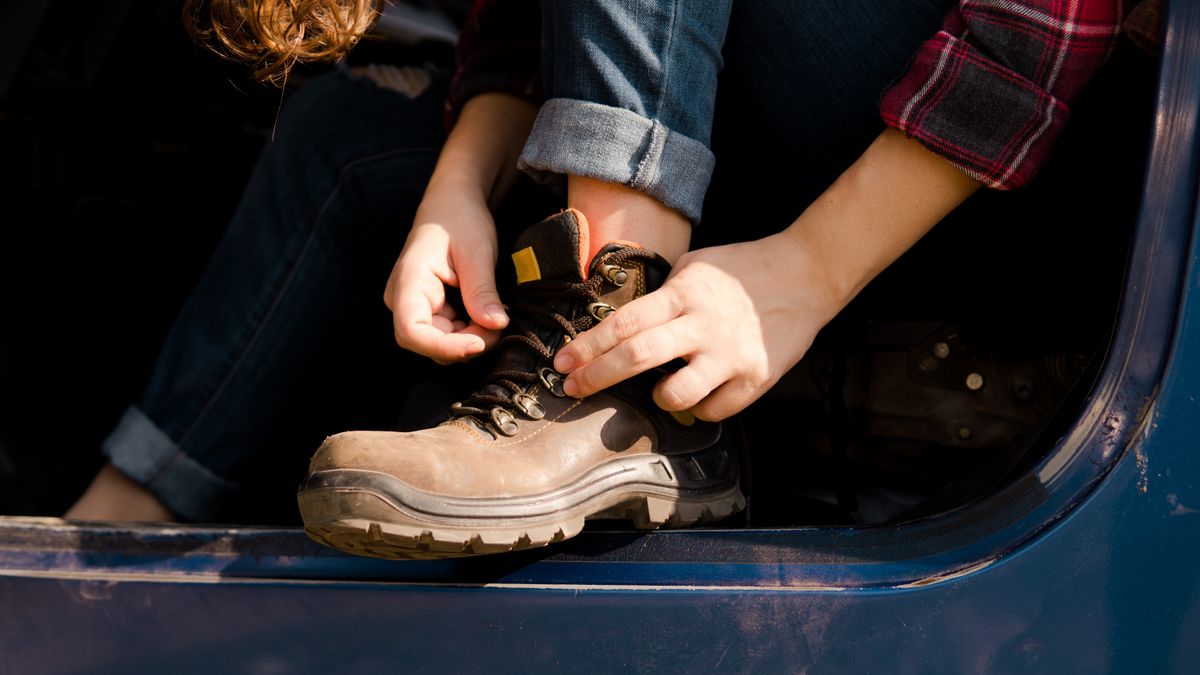
- Try boots on late in the day with your work socks.
- Your toes should not touch the safety cap, even walking downhill. Caps do not stretch.
- The heel should be held with only slight lift when new.
- The widest part of your foot should sit at the widest part of the boot; ask for wide sizes if needed.
- Walk, squat and climb a step before deciding.
See how boots should fit and wide vs regular shoe width.
Step 7: Plan for comfort
- Break new boots in over a week or two: how to break in boots.
- Replace thin factory footbeds: the best insoles for standing all day.
- Wear cushioned, moisture-wicking socks; consider the best compression socks for long shifts.
- On hard floors, read walking on concrete all day.
- Rotate two pairs if you can, so each dries between shifts.
Ready to shop? See the best steel toe work boots and the best slip-resistant work shoes.
Frequently asked questions
How much should I spend on work boots?
If you wear them every day, a mid-priced to premium pair usually costs less per year because it lasts longer and can sometimes be resoled.
How long should work boots last?
Six to twelve months for light, glued boots in hard use; two years or more for welted leather boots that are cared for.
Should work boots be tight or loose?
Snug at the heel and instep with free toes. Tight boots cause numbness; loose boots cause blisters and trips.
Do I need waterproof work boots?
Yes for outdoor, wet or muddy work. For dry indoor jobs, non-waterproof boots are cooler and more comfortable.