Concrete has no give, so every step sends more impact back into your feet, calves, knees and lower back than softer ground does. Standing still on it is tiring as well, because the same muscles work constantly and blood pools in the legs. The fix is mostly about footwear and habits: cushioned, supportive shoes with thick soles, replaced before they wear flat, plus insoles, movement and calf stretches.
In this guide
This article is general information, not medical advice. See a doctor or podiatrist for pain that persists.
Why concrete is hard on your body
- No shock absorption. Grass, dirt and even wooden floors compress slightly. Concrete does not.
- Repetition. A warehouse, retail or hospital shift can involve many thousands of steps.
- Static standing. Standing in one place loads the heels, arches and calves without the pumping action of walking.
- Worn-out shoes. Cushioning that has compressed stops protecting you long before the upper looks worn.
Common complaints
| Where it hurts | What is often going on |
|---|---|
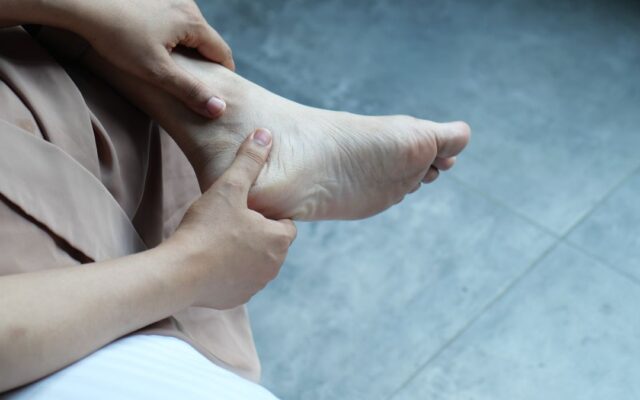
| Heel and arch | Strain on the plantar fascia, the band under the foot |
| Ball of the foot | Pressure on the forefoot; see metatarsalgia |
| Calves | Tightness and fatigue from constant work, especially in flat, thin or stiff shoes |
| Shins | Overload of the lower leg; see shin splints |
| Knees, hips, lower back | Impact travelling up the leg; posture changes when feet are tired |
| Swollen feet and ankles | Fluid pooling after long periods standing |
Skin irritation or a rash on the lower legs after long days on your feet can have several causes, including heat, friction and circulation changes. If it keeps happening, ask a doctor.
What to look for in shoes
- Thick, cushioned midsole that absorbs impact. Press your thumb into it; it should compress and spring back.
- Arch support that matches your foot. See how to manage flat feet if your arches are low.
- A firm heel counter and a stable base so the foot does not roll.
- A slight heel-to-toe drop or rocker sole to ease strain on the calves and Achilles tendon.
- A roomy toe box. Feet swell during a shift; see shoe widths explained.
- Slip-resistant outsole for smooth or wet concrete; see what slip-resistant shoes are.
- Safety toe if required; see composite toe vs steel toe.
Related: How to Make Shoes Non-Slip: 7 Ways to Add Grip
Insoles and socks
- A cushioned or supportive insole can transform a work boot or shoe with a thin footbed. Replace insoles every few months with heavy use.
- Gel or foam heel cups help with heel pain.
- Padded, moisture-wicking socks reduce friction and add a little cushioning.
- Compression socks may reduce swelling and leg tiredness on long shifts.
Habits that help
- Rotate two pairs of shoes. Foam needs time to recover its shape between wears.
- Replace shoes on time. For all-day wear on concrete, cushioning often lasts six to twelve months.
- Use anti-fatigue mats where you stand in one place.
- Keep moving. Shift your weight, take a few steps and avoid locking your knees.
- Sit during breaks and raise your feet if you can.
- Stay at a healthy weight, which reduces load on the feet.
Stretches for tight calves and tired feet
- Wall calf stretch: one leg back, heel down, knee straight; hold 30 seconds, then repeat with the back knee bent.
- Step stretch: stand on a step with your heels hanging off and lower them gently.
- Foot roll: roll the sole of your foot over a ball or a bottle for a minute or two.
- Toe raises and ankle circles during breaks to keep blood moving.
When to see a professional
- Heel or arch pain that is worst with your first steps in the morning and lasts more than a couple of weeks
- Numbness, tingling or burning
- Swelling that does not go down overnight
- Pain in one spot that is getting worse
Job-specific guides: what shoes nurses wear and what shoes teachers wear.
Ready to buy? See our picks for the best shoes for standing all day.
For heel and arch pain, see the best shoes for plantar fasciitis.
Frequently asked questions
Is walking on concrete bad for you?
Not in itself, but long hours on it without cushioned shoes can lead to sore feet, tight calves and joint aches.
What kind of shoes are best for concrete floors?
Shoes with thick cushioning, arch support, a stable heel, a roomy toe box and a grippy sole, replaced before the midsole flattens.
Why do my calves tighten when I walk on concrete?
The calf muscles absorb impact and work continuously on hard, flat ground. Thin or worn shoes and long periods standing make it worse. Stretching and better cushioning help.
Do insoles help on concrete?
Yes. A good cushioned or supportive insole reduces impact and fatigue, especially in work boots with thin footbeds.