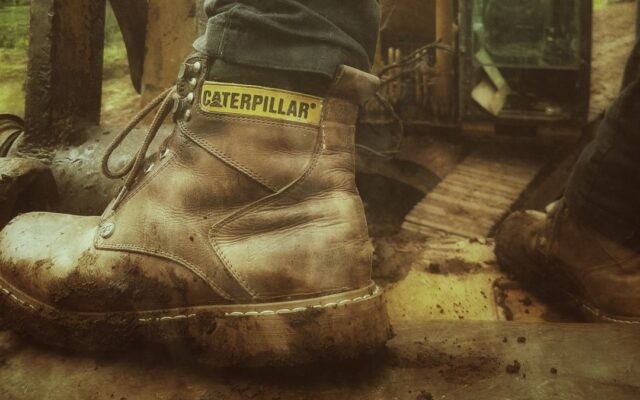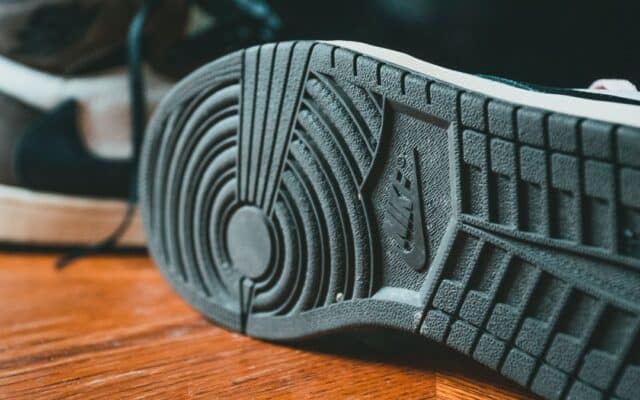
Slip-resistant shoes have outsoles made from soft rubber compounds with a tread pattern of small, closely spaced blocks and channels. The soft rubber grips smooth floors, and the channels push water, oil and soap out from under the sole so the rubber stays in contact with the ground. They are designed for kitchens, hospitals, cleaning work and other jobs on wet or greasy floors.
In this guide
- How slip-resistant soles work
- Slip-resistant, oil-resistant and non-slip: what is the difference?
- How are they tested?
- How to tell if shoes are slip-resistant
- Who needs slip-resistant shoes?
- What else to look for in work shoes
- How to keep the grip working
- Can you make ordinary shoes slip-resistant?
- Frequently asked questions
How slip-resistant soles work
- Softer rubber: a softer compound moulds to tiny irregularities in the floor, increasing friction.
- Tread channels: grooves give liquid somewhere to go, much like the tread on a car tyre, so a film of water or oil does not lift the sole off the floor.
- Many small tread edges: hexagons, circles or squiggles create lots of edges that cut through the liquid.
- Flat, wide contact area: more rubber on the floor means more grip. Deep hiking lugs are the wrong design for a tiled kitchen.
Slip-resistant, oil-resistant and non-slip: what is the difference?
| Term | What it means |
|---|---|
| Slip-resistant | The sole is designed, and usually tested, to give better grip on wet or contaminated floors |
| Non-slip / anti-slip | Marketing terms used in the same sense; no shoe is truly slip-proof |
| Oil-resistant | The sole material will not break down or swell when exposed to oil. It says nothing about grip |
| Oil- and slip-resistant | Both properties: the sole survives oil and grips on oily floors |
The key point: an oil-resistant sole is not automatically slip-resistant. For greasy floors, look for both.
How are they tested?
Slip resistance is measured by pulling or sliding the shoe across standard surfaces, such as wet or oily tile and steel, and recording the friction. In the United States, ASTM test methods are commonly used; in Europe, slip resistance forms part of the EN ISO 20345 and 20347 standards for safety and occupational footwear. A label or product description that names a test standard is more meaningful than the word “non-slip” alone. If your employer specifies a standard, buy to that.
How to tell if shoes are slip-resistant
- Check the label or box for “slip-resistant” and a named standard.
- Look at the tread: small, tightly packed shapes with channels between them, across a mostly flat sole.
- Feel the rubber: it should be slightly soft and tacky, not hard and plasticky.
- Check the edges: rounded sole edges help liquid escape.
Related: Best Shoes for Nurses in 2027: 7 Picks for Long Shifts
Who needs slip-resistant shoes?
- Chefs, kitchen staff and servers
- Nurses, carers and hospital staff
- Cleaners and janitorial staff
- Supermarket, bar and fast-food workers
- Factory and warehouse workers on smooth or wet floors
- Older adults who want extra stability at home on tiles and wet surfaces
What else to look for in work shoes
- Comfort for long shifts: cushioning and arch support matter as much as grip.
- Easy-clean uppers: wipeable leather or synthetic for kitchens.
- Closed toe and heel for protection from spills.
- Safety toe, if required. See composite toe vs steel toe.
- Correct fit and width; see shoe widths explained.
How to keep the grip working
- Clean the tread regularly. Grease and food packed into the channels turn a slip-resistant sole into a smooth one. Scrub with hot soapy water and a brush.
- Check for wear. When the tread pattern is worn flat, replace the shoes. Many work shoes used daily last six to twelve months.
- Keep work shoes for work. Wearing them on rough pavement wears the soft rubber faster.
Can you make ordinary shoes slip-resistant?
You can improve grip a little by scuffing smooth soles or adding grip pads, as described in how to make shoes non-slip. That is fine for everyday shoes, but it does not make them suitable for a workplace that requires slip-resistant footwear.
For a job-specific guide, see what shoes nurses wear.
Need toe protection as well? See the best steel toe work boots of 2027.
Ready to buy? See the best slip-resistant work shoes of 2027.
Frequently asked questions
Are slip-resistant shoes really non-slip?
They reduce the risk considerably, but no shoe prevents every slip. Clean floors, clean soles and careful walking still matter.
Are all rubber soles slip-resistant?
No. Hard rubber with a smooth or deeply lugged pattern can slide on wet tile. The compound and tread design make the difference.
Do slip-resistant shoes work on ice?
Not reliably. Ice needs studs, cleats or specialist winter soles.
How long do slip-resistant shoes last?
With daily work use, typically six months to a year before the tread wears down enough to reduce grip.