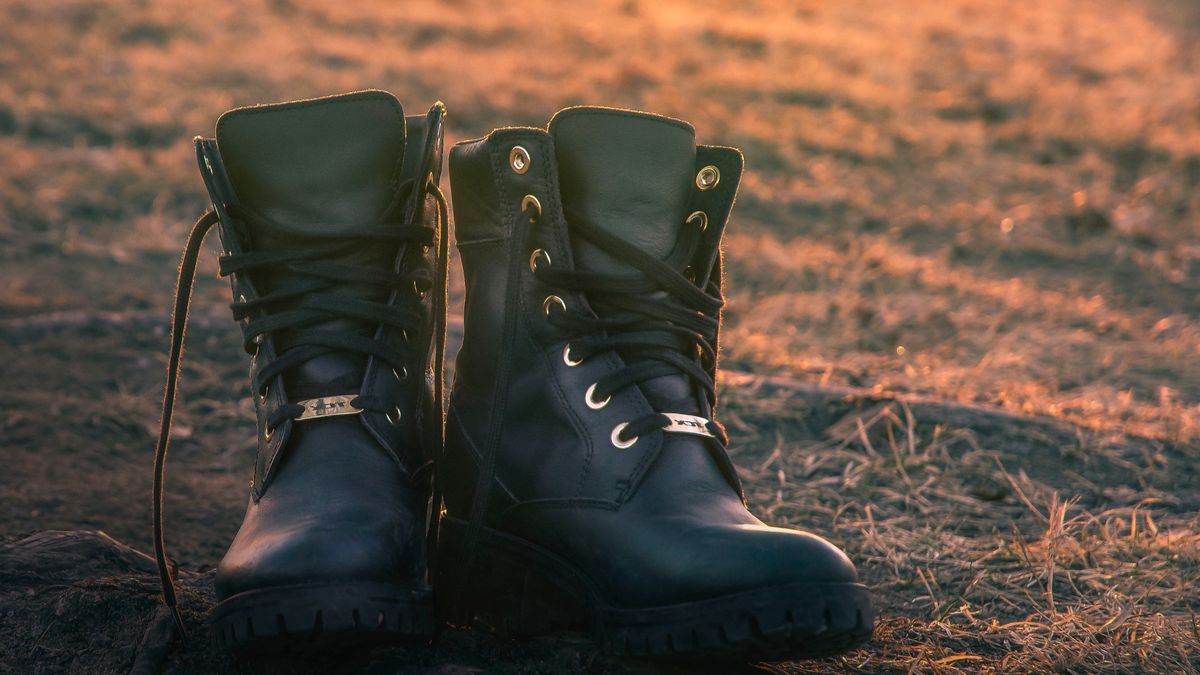
Leather work boots last longer, resist abrasion, sparks and heat better, mould to your feet and can often be resoled. Synthetic work boots are lighter, cheaper, need little or no break-in and dry faster. Choose leather for construction, welding, farming and other rough or hot work. Choose synthetic for warehouse, delivery and light industrial jobs where low weight and comfort from day one matter more than years of service.
In this guide
Leather vs synthetic work boots at a glance
| Leather | Synthetic (nylon, mesh, microfibre, PU) | |
|---|---|---|
| Durability | High; years with care | Moderate; uppers wear and split sooner |
| Weight | Heavier | Lighter |
| Break-in | Days to weeks | Little or none |
| Abrasion, cuts, sparks, heat | Very good | Poor to fair; mesh can melt or tear |
| Water resistance | Naturally resistant; improved by treatment or a membrane | Depends on membrane or coating; rubber and PVC boots are fully waterproof |
| Breathability | Moderate | Good in mesh designs |
| Drying time | Slow | Fast |
| Care | Needs cleaning and conditioning | Wipe clean |
| Repair | Often resoleable (welted boots) | Rarely repairable |
| Price | Higher up front; lower per year | Lower up front |
Why choose leather
- It lasts. Full-grain leather shrugs off scuffs, rebar, gravel and repeated flexing.
- It protects. Leather resists sparks, hot debris and many chemicals far better than fabric.
- It shapes to you. After the break-in, leather moulds to your foot and supports it.
- It can be maintained. Conditioning restores it, and Goodyear-welted boots can be resoled.
- It is often required. Many sites and trades specify leather uppers.
Downsides: more weight, a stiff start and regular care. See how to break in boots and how to clean leather boots.

Why choose synthetic
- Less fatigue. Lighter boots matter when you walk many thousands of steps a shift.
- Comfort from day one. Flexible uppers and trainer-style cushioning need no break-in.
- Cooler and quicker to dry in hot warehouses and wet conditions.
- Lower price and easy cleaning.
- Animal-free options for those who avoid leather.
Downsides: uppers fail sooner at flex points, offer less protection from heat and sharp edges, and usually cannot be repaired.
Related: What Shoes Do Nurses Wear? A Guide for Long Shifts
What about hybrid boots?
Many modern work boots combine a leather lower with nylon or mesh panels. They are lighter and more breathable than all-leather boots while keeping leather where abrasion is worst. For general trades and site work in warm climates, a hybrid is often the best compromise.
Which is better for your job?
| Work | Better choice | Why |
|---|---|---|
| Construction, demolition, landscaping | Leather | Abrasion, impact and puncture hazards |
| Welding, foundry, hot work | Leather | Spark and heat resistance |
| Farming and ranching | Leather or rubber | Durability; rubber for mud and washdown |
| Warehouse, logistics, delivery | Synthetic or hybrid | Low weight, lots of walking |
| Light manufacturing, assembly | Synthetic or hybrid | Comfort and breathability |
| Food processing, wet floors | Rubber or PVC | Fully waterproof and washable |
| Electrical work | Either, with an EH rating | The rating matters more than the upper |
Safety features matter more than the upper
Whichever material you pick, check the safety label first: toe protection, slip resistance, electrical hazard and puncture resistance. See composite toe vs steel toe, what slip-resistant shoes are and shoe sole types.
Cost over time
A budget synthetic boot may need replacing every six to twelve months of hard use. A well-made leather boot that is cleaned, conditioned and resoled can last several years. If you work in boots every day, leather usually costs less per year; for occasional use, synthetic is the economical choice.
Ready to buy? See the best steel toe work boots and the best slip-resistant work shoes. For comfort on hard floors, read walking on concrete all day and add one of the best insoles for standing all day. To keep leather dry, see the best waterproofing sprays.
Frequently asked questions
Do leather work boots last longer than synthetic?
Yes, in most cases. Leather resists abrasion and flex cracking better, and welted leather boots can be resoled.
Are synthetic work boots waterproof?
Only if they have a waterproof membrane or are made of rubber or PVC. Plain mesh is not waterproof.
Which is more comfortable, leather or synthetic?
Synthetic boots are more comfortable straight away. Leather becomes very comfortable after it has moulded to your feet.
Are leather boots hotter?
Usually a little, because leather breathes less than mesh. Unlined leather boots and moisture-wicking socks help.