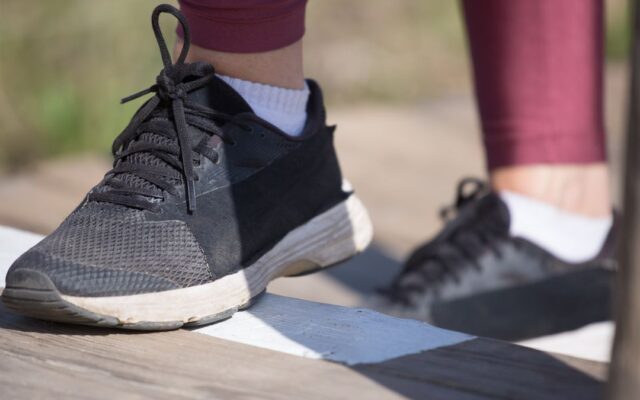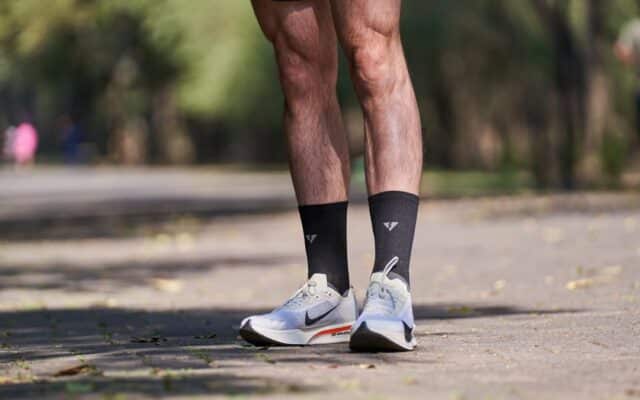
A wide shoe has more room across the ball of the foot and usually a little more volume in the toe box and instep than a regular (medium) shoe of the same length. Each width step adds roughly 5 to 6 mm (about a quarter of an inch) at the forefoot. You probably need a wide fit if your foot bulges over the edge of the sole, your little toe is squeezed, or you have been buying longer shoes just to get enough width.
In this guide
- Shoe width letters at a glance
- How much wider is a wide shoe?
- Signs you need a wide shoe
- Signs a regular width is right (or wide is too much)
- How to measure your foot width at home
- Typical foot widths (approximate)
- Wide shoes vs a wide toe box
- Why sizing up in length is a mistake
- If your feet are between widths
- Frequently asked questions
Shoe width letters at a glance
| Width | Men | Women |
|---|---|---|
| Narrow | B | 2A (AA) |
| Regular (medium) | D | B |
| Wide | 2E (EE) | D |
| Extra wide | 4E (EEEE) | 2E (EE) |
| Extra-extra wide | 6E | 4E |
Note that a men’s D is regular, while a women’s D is wide. Some brands simply label shoes N, M, W and XW. More detail in what D means in shoe size.
How much wider is a wide shoe?
- About 5 to 6 mm (roughly 1/4 inch) wider at the ball of the foot per width step.
- Usually a slightly wider heel and a little more depth, though this varies by brand.
- The length is the same: a 10 wide is as long as a 10 regular.
Signs you need a wide shoe
- The sides of your foot press hard against the upper or hang over the midsole.
- Your little toe rubs, or you get corns or blisters on the outer toes.
- Shoes wear through or split at the widest point.
- You feel numbness or tingling in the forefoot after an hour or two.
- You size up in length and then trip or get heel slip.
- You have bunions, hammertoes or swelling later in the day.
Signs a regular width is right (or wide is too much)
- Your foot does not slide side to side when you turn.
- The laces do not need to be pulled so tight that the eyelets nearly touch.
- There are no deep creases or folds of loose material over the forefoot.
- Your heel stays in place.
Related: How to Clean Converse Shoes: Canvas, Rubber and Laces
How to measure your foot width at home
- Stand on a sheet of paper in the afternoon, wearing your usual socks, with your weight evenly on both feet.
- Trace around each foot, keeping the pen upright.
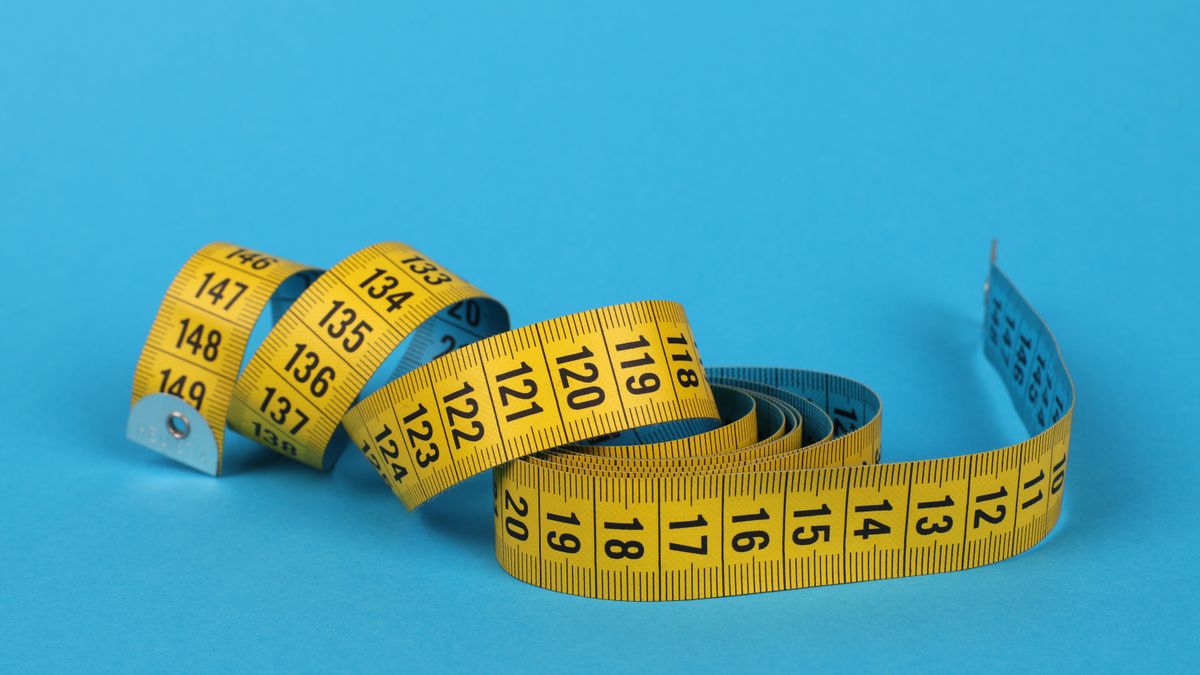
- Measure the widest part of each tracing, across the ball of the foot.
- Measure the length from heel to longest toe.
- Compare both numbers with the brand’s size chart, using the larger foot.
Step-by-step help: how to measure shoe size.
Typical foot widths (approximate)
| US size | Men’s regular (D) | Men’s wide (2E) | Women’s regular (B) | Women’s wide (D) |
|---|---|---|---|---|
| 7 | about 9.5 cm | about 10.0 cm | about 8.6 cm | about 9.5 cm |
| 9 | about 10.0 cm | about 10.5 cm | about 9.2 cm | about 10.2 cm |
| 11 | about 10.5 cm | about 11.0 cm | about 9.8 cm | about 10.8 cm |
These are rough guides only. Brands use different lasts, so always check the maker’s own chart.
Wide shoes vs a wide toe box
They are not the same thing. A wide shoe is roomier along its whole length. A wide toe box shoe keeps a normal heel and midfoot but lets the toes spread, which suits people with a narrow heel and broad forefoot. See the best shoes for wide feet and zero-drop shoes explained.
Why sizing up in length is a mistake
- The flex point and arch of the shoe no longer line up with your foot.
- Extra length causes tripping and toe-gripping.
- Your heel slips, which leads to rubbing; see how to prevent blisters.
If your feet are between widths
- Try a brand that runs roomier, or one with a stretch-knit upper.
- Use lacing tricks to relieve the forefoot.
- Have leather shoes stretched slightly; see how to stretch shoes.
- If a wide feels loose, add a thin insole; see how to make shoes smaller.
For the overall fit check, read how tight shoes should be. If you have a bunion, see the best shoes for bunions.
Frequently asked questions
Is a wide shoe bigger in length?
No. Wide and regular shoes of the same size are the same length; only the width and volume change.
What does W mean on shoes?
It usually means wide: 2E for men and D for women in most athletic brands.
Do feet get wider with age?
Often, yes. Ligaments relax and arches lower over time, and pregnancy and weight changes can also widen feet. Re-measure every couple of years.
Can I wear wide shoes if I have regular feet?
You can, but your foot will slide and the shoe will crease. A proper fit is more comfortable and lasts longer.