When your feet slide forward in your shoes, your toes jam into the front, you get blisters and black toenails, and walking downhill feels terrible. It happens in sneakers, running shoes, boots, sandals and heels alike. This guide explains why feet slide forward and how to stop it in every type of shoe, with simple fixes you can try today.
In this guide
- Why do my feet slide forward in my shoes?
- How to stop feet sliding forward in sneakers and running shoes
- How to stop feet sliding forward in boots
- Products that stop feet sliding forward
- How to stop feet sliding forward in sandals and heels
- When to buy a different size
- Related guides
- Frequently asked questions
Short answer: Feet slide forward when the shoe is too long, too loose over the top of the foot, or slippery inside. Lock your heel in with a runner’s loop lacing, tighten the laces over the instep, add a ball-of-foot pad or a thicker insole to take up space, and use grippy socks. In heels and sandals, use forefoot gel pads and adjust the straps. If nothing works, the shoes are probably a size too big.
Why do my feet slide forward in my shoes?
Your foot slides forward when nothing holds it back against the heel of the shoe. The most common reason is a shoe that is a little too long or too wide. Other reasons include laces that are loose over the top of the foot, slippery socks or insoles, sweaty feet, worn-out insoles that have lost their grip, and walking downhill, where gravity pushes your foot forward with every step.
Feet can also change over time. Arches may flatten and feet may lengthen or widen with age, so a size that fit years ago may now be too roomy.
This guide is based on published brand care and fit guidance, expert advice and common owner experiences. We have not been paid by any brand. Links to Amazon are affiliate links, which support the site at no extra cost to you.
| Shoe type | Main cause of sliding | Best fix |
|---|---|---|
| Sneakers and running shoes | Loose laces, shoe slightly long | Runner’s loop lacing, snug instep |
| Hiking boots | Loose lacing, downhill walking | Surgeon’s knot at the ankle, tighten before descents |
| Work and cowboy boots | Boot too long or stretched | Thicker insole, boot socks |
| Sandals | Loose straps, slippery footbed | Adjust straps, grip pads |
| High heels and open-toe heels | Slope of the heel pushes the foot forward | Ball-of-foot gel pads |
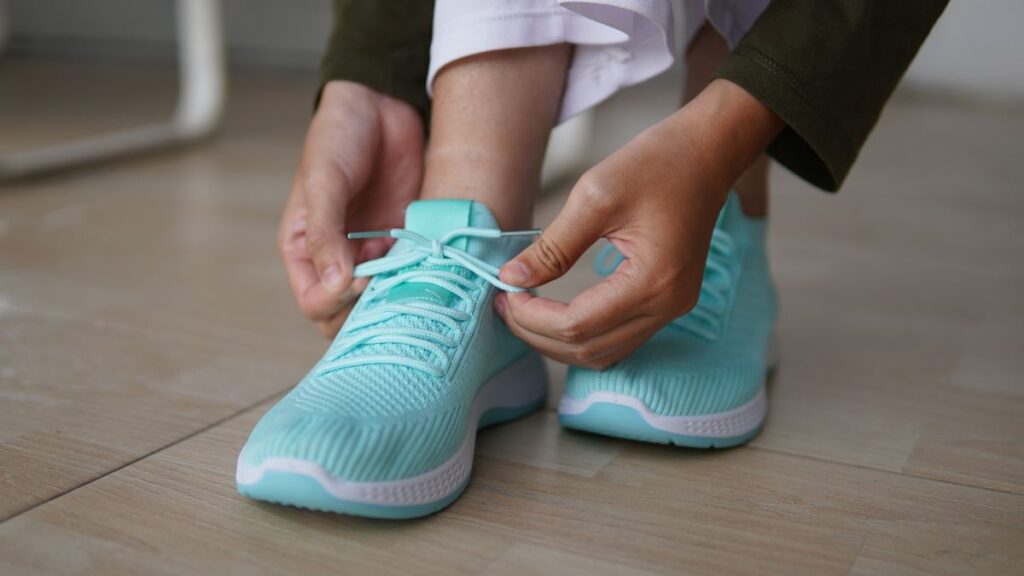
How to stop feet sliding forward in sneakers and running shoes
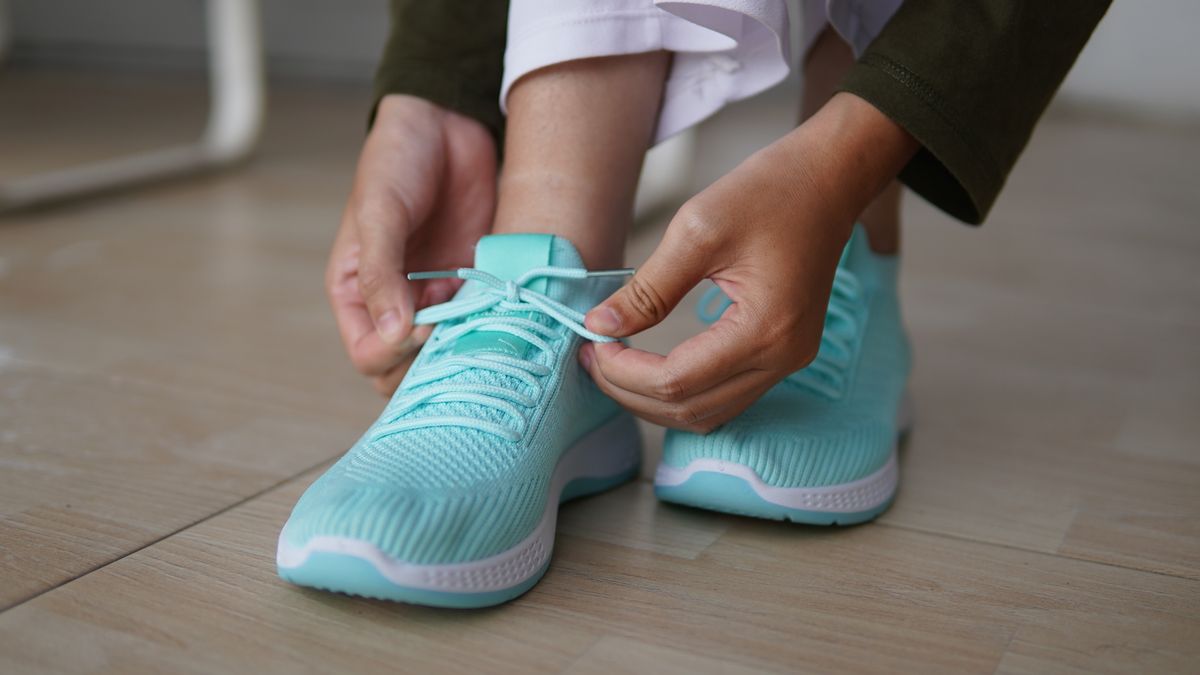
- Use a runner’s loop (heel lock) lacing with the top spare eyelets. It pulls the heel back into the heel cup.
- Tighten the laces over the top of your foot (the instep), not just at the ankle.
- Try a slightly thicker insole that fills extra volume.
- Wear socks with some grip, such as merino or technical running socks, instead of slippery cotton.
- Check the length: with your heel at the back, you should have about a thumb’s width of space in front of your longest toe. Much more than that means the shoe is too long.
How to stop feet sliding forward in boots
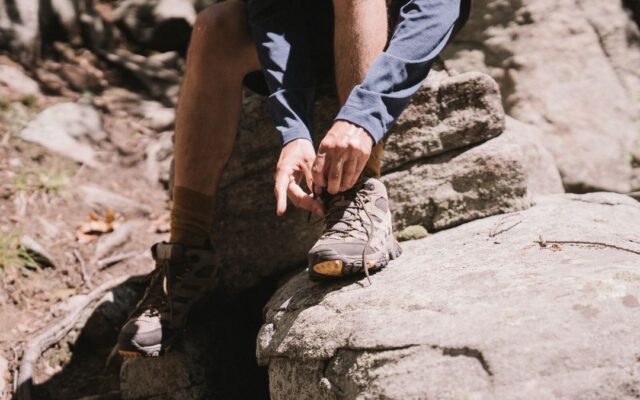
- Tie a surgeon’s knot (an extra twist) at the point where the boot bends at the ankle, then lace the top part firmly. This holds the heel down on descents.
- Tighten your boots before walking downhill.
- Use thicker boot socks or a sock liner plus a cushioned sock.
- Add a supportive insole if the boot has stretched.
- For cowboy boots, a little heel lift is normal, but your foot should not slide into the toe.
Related: How Should Boots Fit? A Part-by-Part Guide
Products that stop feet sliding forward
Ball-of-foot gel pads
Best for: heels and sandals
Gel pads add grip and cushion under the front of the foot.
- Good: Small and invisible
- Less good: Can wear out
Thicker cushioned insoles
Best for: roomy sneakers and boots
A thicker insole fills extra space inside the shoe.
- Good: Adds comfort
- Less good: May tighten the toe box
Heel grip pads
Best for: shoes slightly too big
Pads at the back push the foot forward less and hold the heel.
- Good: Cheap
- Less good: Adhesive may peel
Running socks with grip
Best for: sweaty feet in sneakers
Technical socks hold the foot better than cotton.
- Good: Reduce slipping and blisters
- Less good: Cost more than cotton
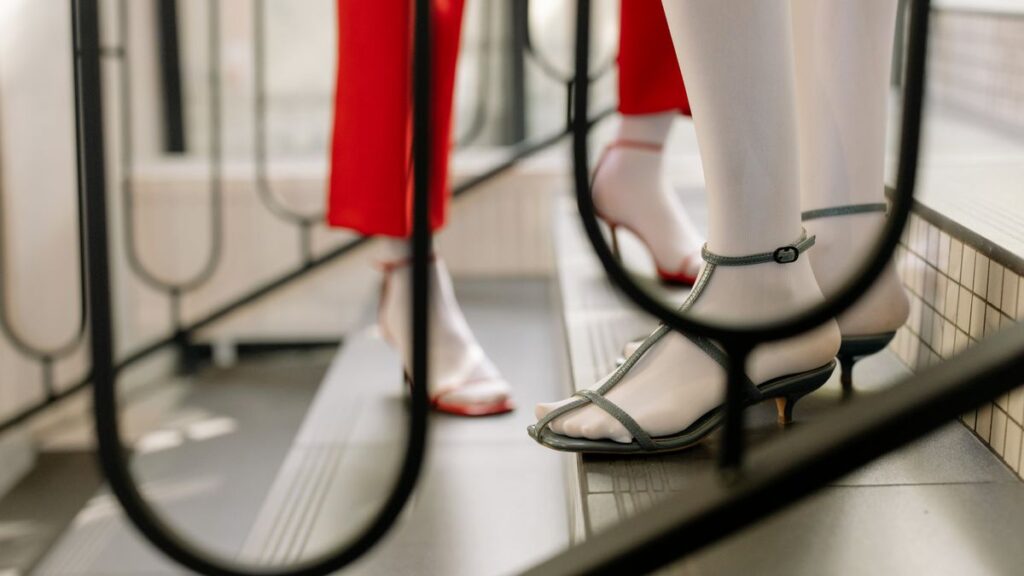
How to stop feet sliding forward in sandals and heels
- Place gel ball-of-foot pads where the front of your foot rests. They add grip and stop the forward slide.
- Tighten or adjust straps, especially the back strap on sandals.
- Use non-slip insole strips on smooth leather footbeds.
- Lightly roughen a very smooth new sole lining with fine sandpaper so your foot grips better.
- If your toes hang over the edge of open-toe heels, the shoe is likely too big or the heel too high for comfort.
When to buy a different size
If your foot still slides after better lacing, insoles and pads, the shoe is probably too long. Measure your feet in the afternoon, when they are slightly bigger, and try shoes with the socks you plan to wear. Ask for a half size smaller or a narrower width if the shoe comes in widths.
Note: if your toes hurt, go numb or your toenails darken, change shoes and see a podiatrist if it does not improve. This is general information, not medical advice.
Related guides
Read why sneakers eat your socks.
Learn how running shoes should fit.
Learn how to measure your shoe size.
Learn how to prevent blisters.
Frequently asked questions
Why do my feet slide forward in my shoes?
Usually the shoe is a little too long or loose over the top of the foot, or the socks and insole are slippery.
How do I keep my feet from sliding forward in sneakers?
Use runner’s loop lacing, tighten the laces over the instep, add a thicker insole and wear grippy socks.
How do I stop my feet sliding forward in heels?
Use ball-of-foot gel pads and adjust the straps. A lower heel also reduces forward slide.
How do I stop my feet sliding in boots when walking downhill?
Tie a surgeon’s knot at the ankle and tighten the top lacing before descending.
Should I size down if my feet slide forward?
If you have more than about a thumb’s width in front of your longest toe, a half size down or a narrower width may fit better.