To walk in heels, land on the heel first and roll forward onto the ball of the foot, take shorter steps than usual, keep your shoulders back and your core engaged, and look ahead instead of down. Start with a low block heel and practise at home before wearing heels out.
In this guide
Start with the right pair
| If you are | Choose |
|---|---|
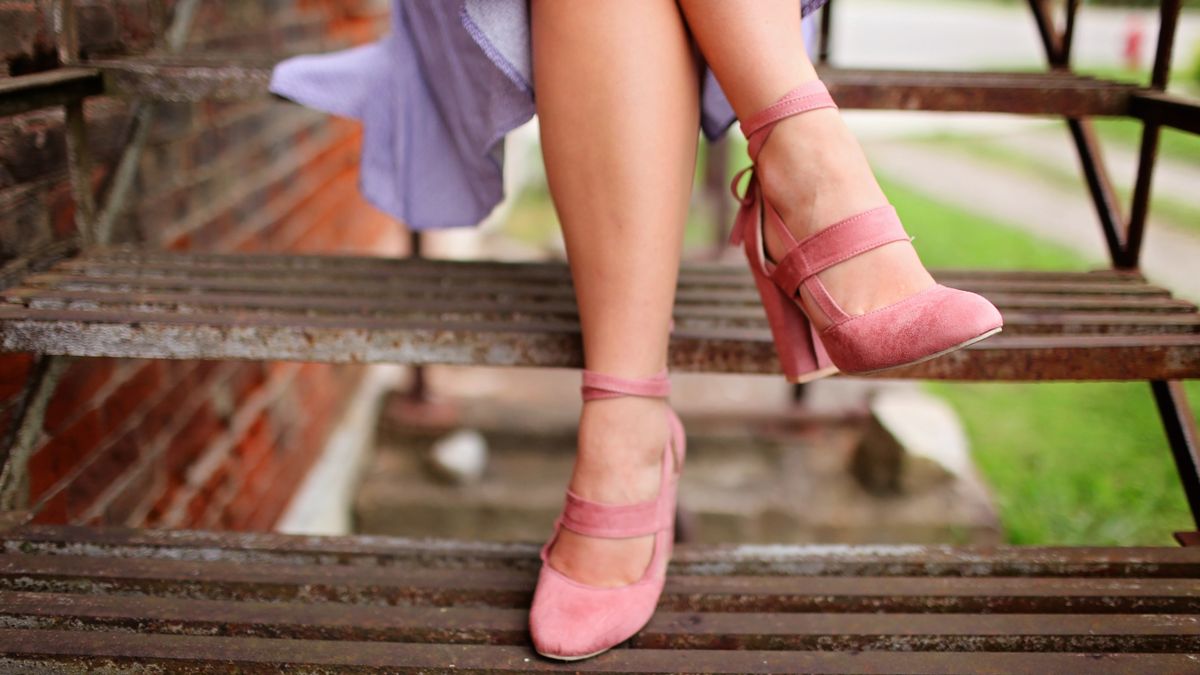
| A complete beginner | Block heel or wedge, 3 to 5 cm (1 to 2 inches), with an ankle strap |
| Comfortable in low heels | Block or thicker heel up to 7 cm (about 3 inches) |
| Experienced | Stilettos and higher heels, ideally with a small platform |
The shoes must fit. A heel that slips or toes that are crushed make balance much harder. For help with fit and padding, see how to make heels more comfortable.
The basic technique
- Stand tall. Shoulders back and down, chin level, stomach muscles gently tightened. Good posture moves your weight back over your heels instead of onto your toes.
- Step heel first, then toe. Put the heel down a moment before the ball of the foot and roll forward smoothly. Landing flat-footed or toe-first looks stiff and feels unstable.
- Shorten your stride. Heels shorten your natural step. Small steps keep you balanced.
- Walk in a straight line. Place each foot roughly in front of the other, as if following a line on the floor. Do not exaggerate it.
- Let your arms swing naturally to help balance.
- Look ahead, a few metres in front of you, not at your feet.
- Slow down. Rushing is when ankles roll.
How to practise at home
- Wear them around the house for 15 to 30 minutes a day. This also breaks the shoes in.
- Start on a hard, even floor. Carpet feels safer but is harder to balance on.
- Practise the heel-to-toe roll slowly along a straight line, such as the edge of a floorboard.
- Practise turning, stopping and standing still. When standing, put your weight on the back foot with the front foot slightly angled.
- Build ankle and calf strength with calf raises and by balancing on one foot.
Related: How Should Running Shoes Fit? A Simple Fit Check
Stairs, slopes and tricky surfaces
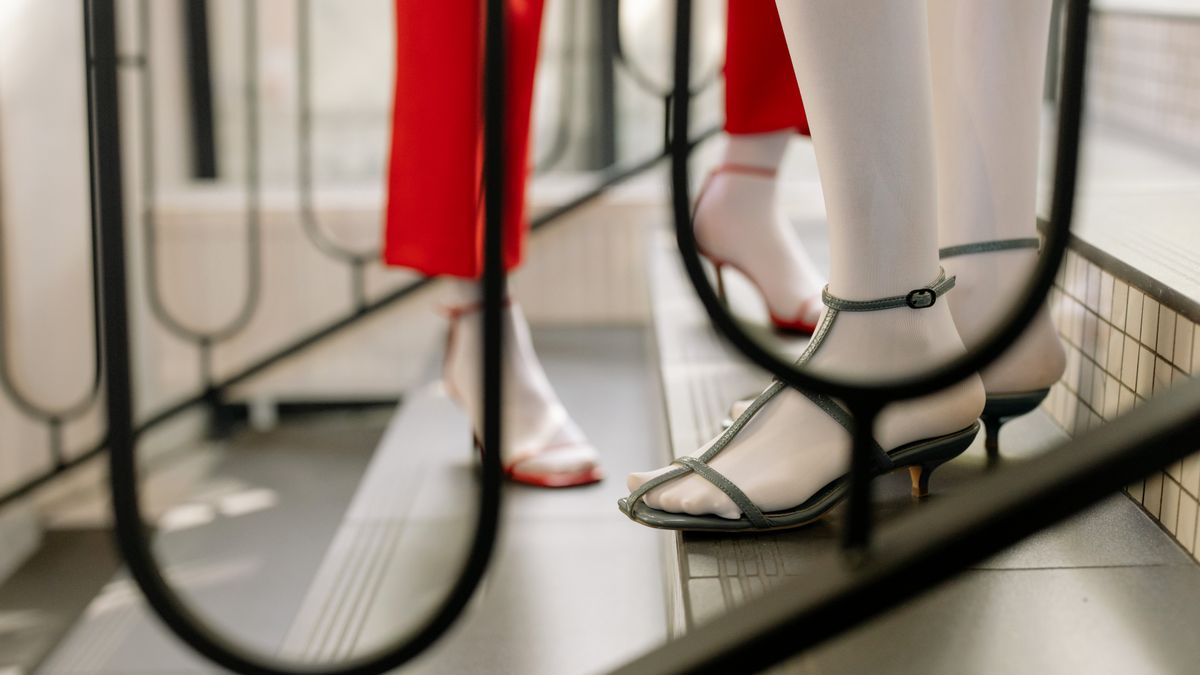
- Going upstairs: place the ball of the foot, or the whole foot if the step is deep enough, on each step and hold the rail.
- Going downstairs: place the whole foot on the step, heel included, and go slowly, slightly side-on if the steps are narrow.
- Slopes: lean very slightly into the hill going up, and take small, careful steps going down.
- Grass and gravel: put more weight on the balls of your feet so thin heels do not sink, or choose a block heel or wedge for outdoor events.
- Grates, cobbles and gaps: step over or around them; a stiletto tip catches easily.
- Smooth floors: new soles are slippery. Scuff them first; see how to make shoes non-slip.
Common mistakes
- Leaning forward from the hips.
- Taking normal-length strides.
- Walking on the toes without putting the heel down.
- Locking the knees. Keep them soft.
- Wearing a brand-new pair for a long event without practice.
- Choosing a heel that is too high for your current ability.
Look after your feet
Take sitting breaks, stretch your calves afterwards, and avoid wearing high heels every day. If you have pain in the ball of the foot or numb toes that does not settle, see a podiatrist. This article is general information, not medical advice.
If you have a bump at the base of your big toe, read our bunion guide before choosing heels.
Sore big-toe joint? See the best shoes for bunions.
Frequently asked questions
Do you walk heel first or toe first in heels?
Heel first, followed quickly by the ball of the foot, in one smooth roll. The heel should touch down just before the toe.
How long does it take to learn to walk in heels?
With a low block heel and short daily practice, most people feel steady within a week or two.
Why do I wobble in heels?
Usually the heel is too high or thin for your current ankle strength, the shoes do not fit securely, or your steps are too long.
Are block heels easier to walk in?
Yes. A wider heel gives a larger base, so it is more stable and puts less strain on the ankle.