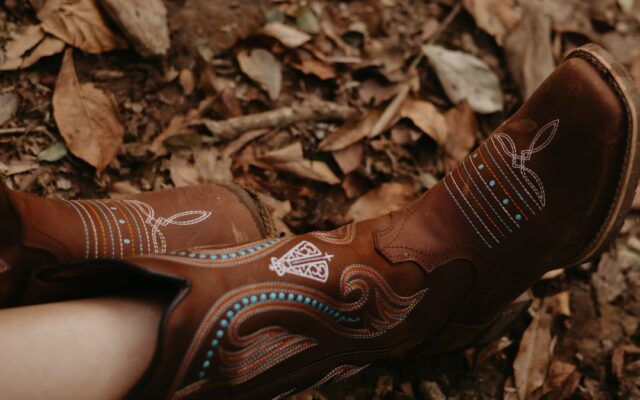
To choose cowboy boots, get the fit right first: a snug instep, the ball of your foot at the widest part of the boot, toes free, and a slight heel slip when new. Then pick the toe shape, heel height and shaft that suit how you will use them, whether that is riding, work or everyday wear.
In this guide
Cowboy boots have no laces, so they fit differently from almost any other footwear. The terms can also be confusing: roper, snip toe, walking heel, scallop. This 2027 guide explains each part and how to choose a first pair you will actually enjoy wearing.
How cowboy boots should fit
| Area | Correct fit | Sign of a problem |
|---|---|---|
| Instep | Snug, like a firm handshake; this is what holds the boot on | Loose instep lets the foot slide; painful pressure means too tight |
| Ball of the foot | Sits at the widest part of the sole | Too far forward or back means the wrong length |
| Toes | Free to move, not touching the end | Toes pinched by the taper |
| Heel | Lifts about a quarter to half an inch when new | No slip at all can mean too short; a lot of slip means too big |
| Shaft | Comfortable around the calf with room for trousers or socks | Tight shaft digs in when you walk |
You should feel some resistance as your foot passes the turn of the boot, then a soft drop into place. Heel slip is normal at first, because the sole is stiff; it reduces as the boot flexes. Many people take about half a size smaller than in trainers, but sizing differs between makers, so measure your feet and try on with the socks you will wear. General fitting advice is in how boots should fit.
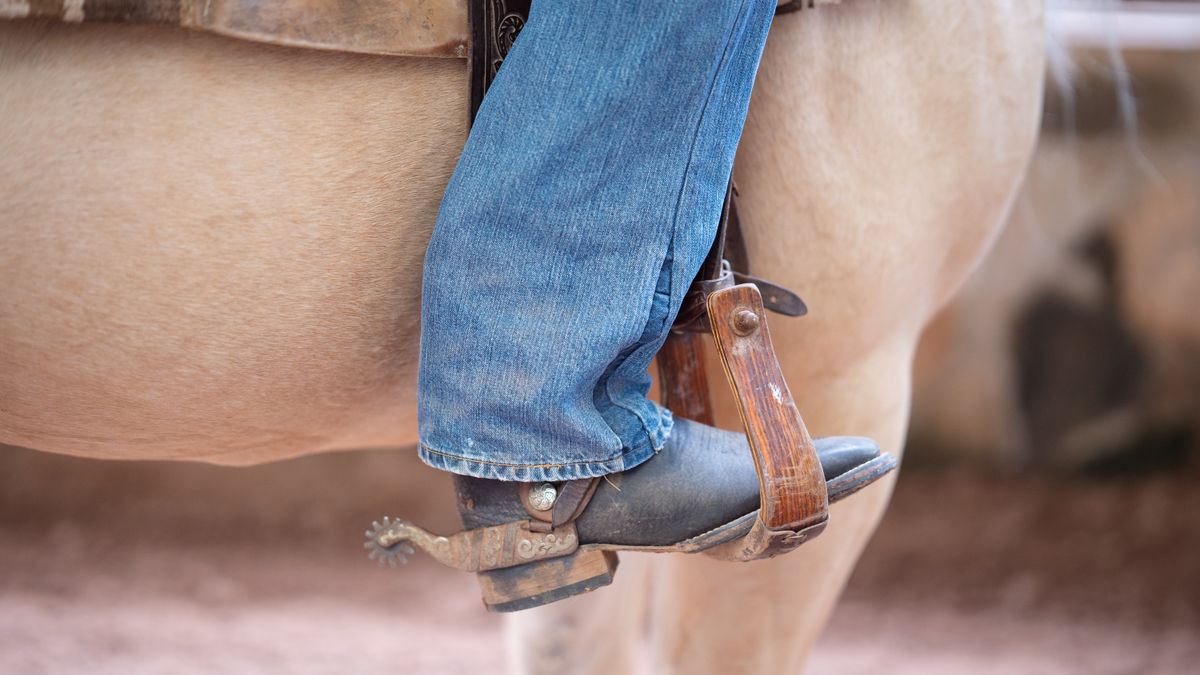
Toe shapes
| Toe | Look | Room | Typical use |
|---|---|---|---|
| Round | Classic, softly curved | Good | Everyday, riding, work |
| Square or broad square | Modern, blunt front | Most | Work, ranch wear, wide feet |
| Snip | Tapered with a clipped tip | Less | Dress and fashion |
| Pointed | Traditional narrow point | Least | Dress, dancing, traditional riding |
In pointed and snip toes, your toes sit behind the taper, so the tip is empty. Do not size up to fill it.
Heel styles
| Heel | Height | Shape | Best for |
|---|---|---|---|
| Roper | About 1 in (2.5 cm) | Low and flat | Walking, all-day wear, beginners |
| Walking | About 1.5 in (4 cm) | Broad, slightly angled | Mixed walking and riding |
| Riding or cowboy | About 1.75 to 2 in (4.5 to 5 cm) | Taller and angled | Time in the saddle; classic look |
| Fashion | Over 2 in | Varies | Dress and occasion wear |
Shaft height
- Classic western: about 12 inches, reaching mid-calf. The standard choice.
- Roper: about 10 inches, with a round toe and low heel. Easy to walk in.
- Tall or buckaroo: 14 inches or more, for extra leg protection and decoration.
- Short or ankle: below mid-calf, the simplest to style with everyday clothes.
The dip at the top of the shaft is called the scallop; a deeper scallop makes boots easier to pull on.
Related: How Much Does It Cost to Resole Boots? (2027)
Leather and materials
| Material | Character | Notes |
|---|---|---|
| Cowhide | Tough, affordable, widely used | The practical choice for a first pair |
| Goat | Soft, supple, breaks in quickly | Comfortable from early on |
| Suede or roughout | Matt, textured | Hides scuffs; needs brushing |
| Exotics such as ostrich or caiman | Distinctive texture | Expensive; need careful conditioning |
| Synthetic | Low cost, light | Does not mould to the foot or last as long |
Soles and construction
Traditional boots have leather soles, which slide easily in a stirrup and on a dance floor but are slippery on wet pavement. Rubber soles grip better and last longer for walking and work; leather sole vs rubber sole compares them. A stitched welt means the boot can be resoled, which matters for a pair you intend to keep for years.
Match the boot to its job
| Use | Toe | Heel | Sole |
|---|---|---|---|
| Everyday and town wear | Round or square | Roper or walking | Rubber or leather with rubber heel |
| Riding | Round or pointed | Riding | Smooth leather |
| Ranch or work | Broad square or round | Walking | Oil-resistant rubber |
| Dress and dancing | Snip or pointed | Riding or fashion | Leather |
For recommended pairs in each style, see our best cowboy boots, and for outfit ideas how to wear cowboy boots.
Breaking in and care
Leather boots feel firm at first. Wear them for an hour or two at a time around the house and follow how to break in boots. A tight instep or width can be eased by a cobbler or with the methods in how to stretch shoes. Brush off dust, condition the leather a few times a year and polish smooth finishes, as shown in how to clean leather boots and how to polish shoes. Store them upright with boot shapers; see how to store boots.
Shopping in person? See where to buy cowboy boots in Nashville and custom boot makers in Texas.
See our Tony Lama boots review for a classic El Paso option.
Frequently asked questions
Should cowboy boots be tight or loose?
Snug over the instep and comfortable everywhere else. They should not pinch, and your toes should move freely.
Is heel slip normal in cowboy boots?
Yes. About a quarter to half an inch of lift is normal in new boots and lessens as the sole breaks in.
Do cowboy boots run big or small?
Many people wear about half a size smaller than their trainer size, but it varies by brand and toe shape. Always check the maker’s guidance.
What toe shape is most comfortable?
Round and square toes give the most room. Square is the best choice for wide feet.
Are cowboy boots good for walking?
Roper and walking-heel styles with rubber soles and cushioned insoles are comfortable for long days. Tall riding heels and smooth leather soles are less suited to pavements.