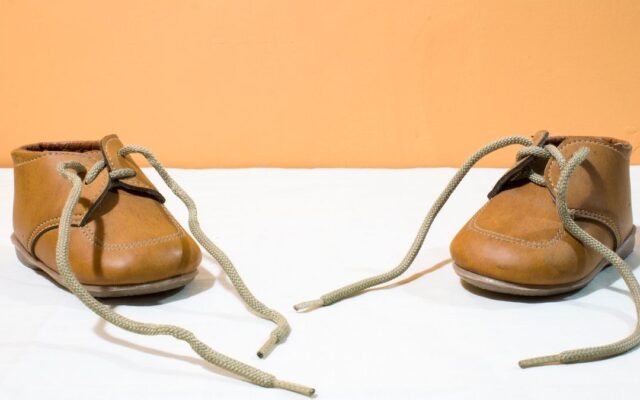
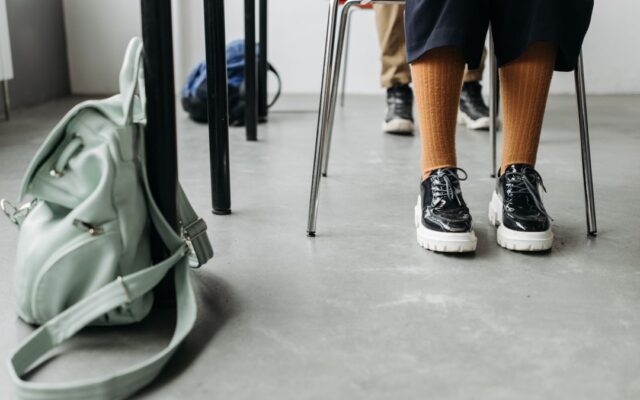
To choose kids shoes, measure both feet while your child is standing, buy for the larger foot with about a thumb width (roughly 1 to 1.5 cm) of growing room, and pick a shoe that bends at the ball of the foot, holds the heel and fastens securely. Children’s feet grow quickly and their bones are still soft, so a correct fit matters more than brand or price, and sizes need checking every few months.
In this guide
This guide is general information, not medical advice. If your child limps, trips often, complains of foot pain or wears shoes very unevenly, speak to a doctor or podiatrist.
Step 1: Measure properly
- Measure in the afternoon, with the socks your child normally wears.
- Have them stand with weight on both feet, heel against a wall, on a sheet of paper.
- Mark the longest toe (not always the big toe) and measure heel to mark in centimetres.
- Do both feet and use the longer measurement.
- Add 1 to 1.5 cm for growing and wiggle room, then find that length on the brand chart.
Full instructions and charts are in how to measure your shoe size and our shoe size conversion guide.
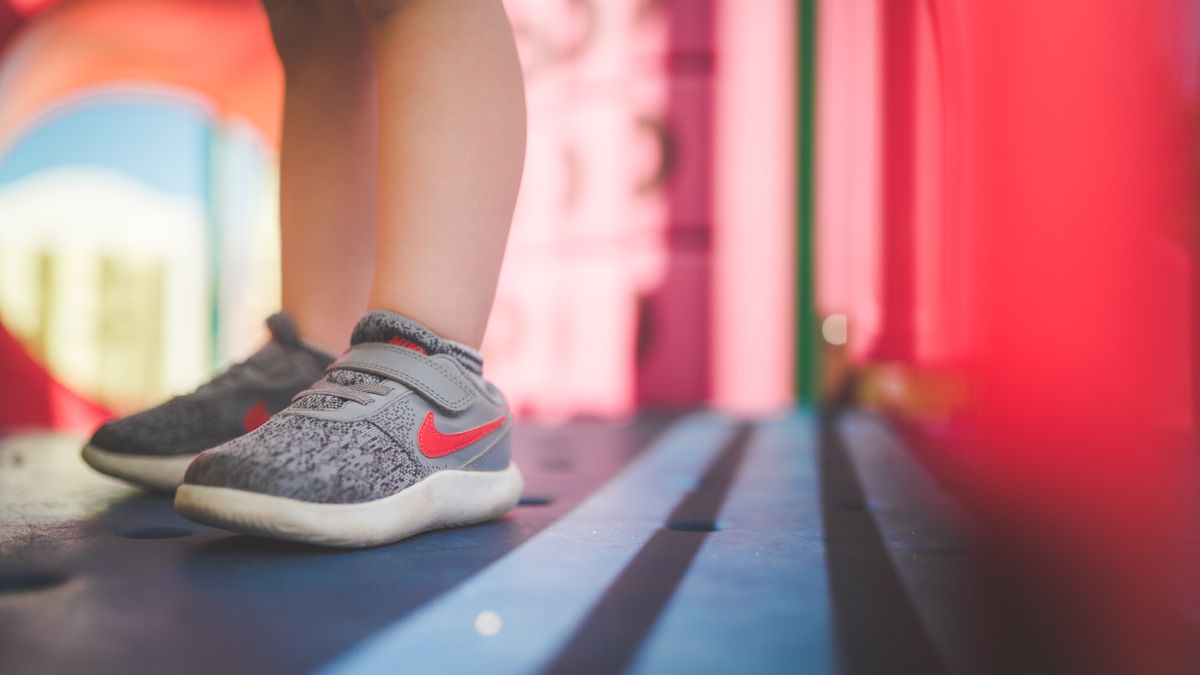
Step 2: Check the fit on the foot
| Check | How | What you want |
|---|---|---|
| Length | Press above the longest toe while the child stands | About a thumb width of space |
| Width | Feel along the sides at the widest part | No bulging, no hard pressure on the little toe |
| Heel | Watch them walk away from you | Heel does not slip out |
| Instep | Fasten the shoe | Snug, with no red marks after a few minutes |
| Walking | Let them walk and run in the shop or at home | Normal gait, no tripping or complaints |
Young children often cannot tell you a shoe is tight, so check red marks on the toes and heels after the first few wears. More detail in how tight shoes should be.
Step 3: Look for the right features
- Flexible forefoot: the shoe should bend easily where the toes bend, not in the middle.
- Firm heel and secure fastening: hook-and-loop straps or laces keep the foot from sliding. Slip-ons are convenient but less secure for all-day play.
- Roomy, rounded toe box: toes should be able to spread. If shoes pinch at the sides, try wide fittings; see wide vs regular shoe width.
- Light weight: heavy shoes tire small legs and change the way children walk.
- Flat, grippy sole: no raised heel, good traction for playgrounds.
- Breathable upper: leather, canvas or mesh. Children’s feet sweat heavily.
- Smooth lining: fewer seams mean fewer blisters; see how to prevent blisters.
Related: Freshly Picked Review 2027: Are Baby Moccasins Worth It?
What kids need at each age
| Age | What matters most | How often to check size |
|---|---|---|
| Pre-walkers and cruisers | Barefoot or socks indoors; soft, thin-soled shoes only for warmth and protection | Every 6 to 8 weeks |
| Toddlers (about 1 to 3) | Very flexible, light, wide toe box, secure strap | Every 2 to 3 months |
| Pre-school and early primary (4 to 7) | Durable toe, easy fastening they can manage, good grip | Every 3 to 4 months |
| Older children (8 to 12) | Cushioning and support for sport; separate shoes for school and play | Every 4 to 6 months |
| Teens | Adult sizing; sport-specific shoes; watch for growth spurts | Every 6 months |
Common mistakes to avoid
- Buying far too big to grow into. More than about 1.5 cm of spare length makes children trip and lets the foot slide.
- Relying on the size number. Sizes vary between brands; always measure and try on.
- Hand-me-down shoes for daily wear. A worn shoe has moulded to another child’s foot and gait. Occasional-use items such as rain boots or party shoes are less of a concern if they are in good condition.
- Stiff, heavy or heeled styles. They restrict natural movement.
- Not rechecking. Outgrown shoes are a common cause of sore toes and ingrown nails.
- Shopping without the child. If you must order online, measure first and check the returns policy.
Signs the shoes are too small or worn out
- Toes touching the end, or less than half a thumb width of space
- Red marks, blisters or your child taking shoes off whenever possible
- Bulging sides or straps that no longer close easily
- Soles worn smooth or heels worn down heavily on one side
School shoes, sneakers and sandals
For school, look for a sturdy toe, wipe-clean upper and a fastening your child can do alone; our best kids school shoes has current picks. For sport and play, a light, cushioned sneaker with a flexible forefoot is the most versatile choice. Summer sandals should have a back strap and a protective toe for active play.
Frequently asked questions
How much room should kids have in their shoes?
About a thumb width, or 1 to 1.5 cm, between the longest toe and the end of the shoe when the child is standing.
How often should I measure my child’s feet?
Every two to three months for toddlers, every three to four months for young children and about twice a year for older children.
Should I buy kids shoes a size bigger?
Half a size of growing room is sensible. A full size or more usually causes slipping and tripping.
Do toddlers need arch support?
Usually not. Young children naturally have flat-looking feet, and flexible shoes let the arch develop. Ask a professional if you see pain or a marked difference between the feet.
Are straps or laces better for children?
Hook-and-loop straps are easiest for young children and still secure. Laces give the most adjustable fit once a child can tie them.