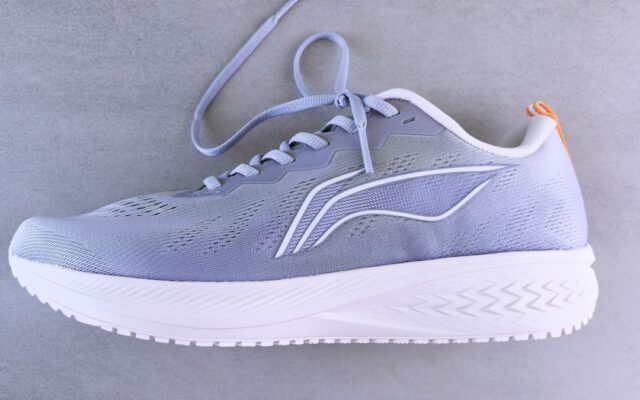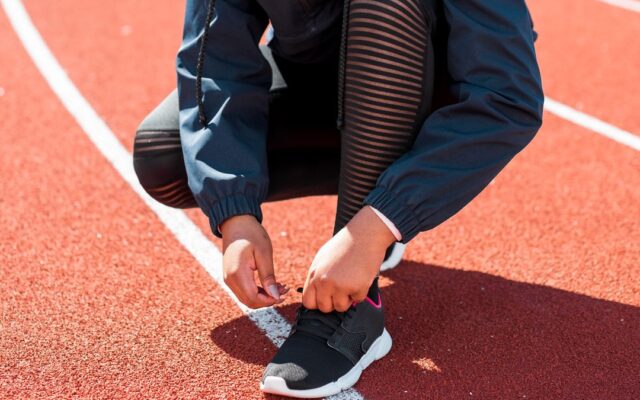
The best way to lace running shoes for most runners is standard criss-cross lacing finished with a heel lock (runner loop) through the extra top eyelets, which stops the heel lifting without over-tightening the rest of the shoe. If you have a specific problem, such as pressure on top of the foot, a wide forefoot, black toenails or numb toes, changing the lacing pattern in that one zone often fixes it in minutes and costs nothing.
In this guide
Which lacing technique do you need?
| Problem | Technique | What it does |
|---|---|---|
| Heel slipping, blisters at the back | Heel lock (runner loop) | Pulls the collar snug around the ankle |
| Pain or numbness on top of the foot, high arch | Window (box) lacing | Removes pressure over one spot |
| Wide forefoot, bunions | Skip the first crossover | Lets the front of the shoe open up |
| Whole shoe feels tight | Parallel (straight bar) lacing | Spreads pressure evenly, easier to loosen |
| Black toenails, toe pressure | Diagonal toe-relief lacing | Lifts the toe box off the big toe |
| Narrow foot, shoe feels loose | Double-cross or loop lacing | Takes up extra volume |
| Laces coming undone | Runner knot (double-wrapped bow) | Holds without a bulky double knot |
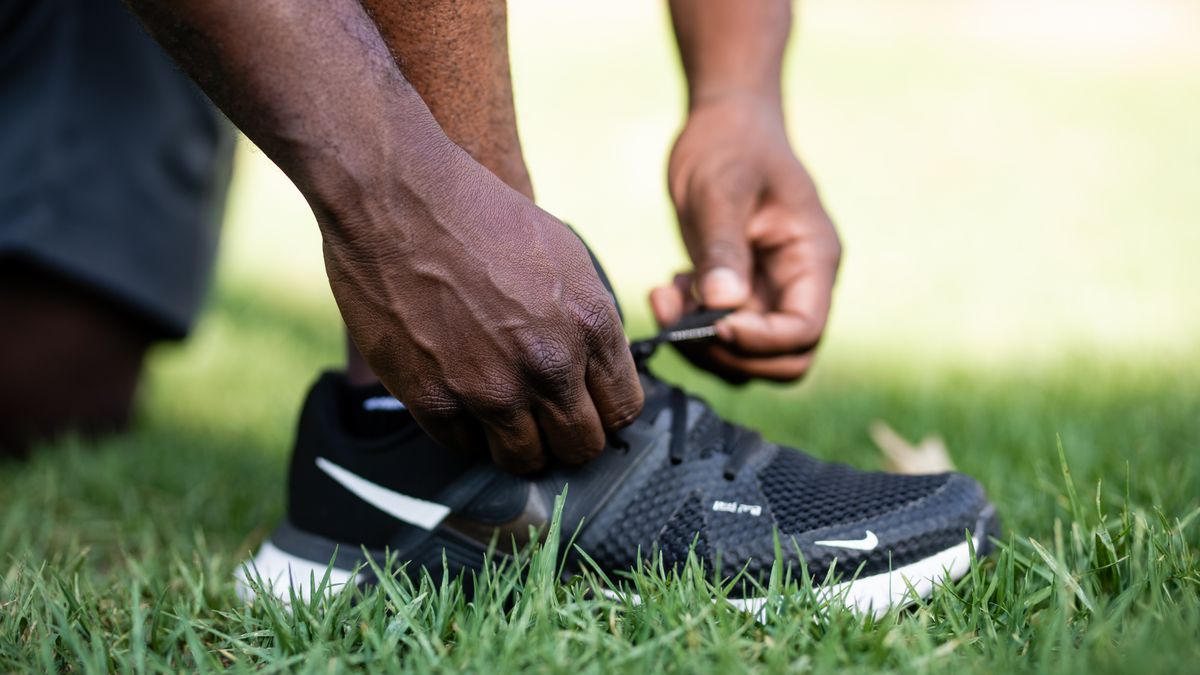
1. Heel lock (runner loop)
Use it for: heel slip, sliding forward on downhills, blisters on the heel.
- Lace normally up to the second-to-last eyelet.
- Feed each lace into the last eyelet on the same side, from outside to inside, leaving a small loop.
- Cross the laces and pass each end through the loop on the opposite side.
- Pull downward and back to snug the collar, then tie your usual bow.
This is the single most useful technique for runners. Other fixes are in how to fix heel slip.
2. Window lacing
Use it for: a sore or numb spot on top of the foot, high insteps, lace bite.
- Unlace down to the eyelets just below the sore area.
- Run each lace straight up to the next eyelet on the same side instead of crossing.
- Resume criss-cross lacing above the gap.
The open “window” takes pressure off the nerves and tendons that run across the top of the foot.
3. Wide-forefoot lacing
Use it for: wide forefeet, bunions, toes that feel squeezed.
- Thread the lace through the bottom eyelets as usual.
- Run each end straight up the side through the next one or two eyelets without crossing.
- Begin criss-crossing from the midfoot upward.
If the shoe is still tight, you may simply need a wide size or a roomier shape; check how to measure foot width and our best wide toe box shoes.
4. Parallel (straight bar) lacing
Use it for: general tightness across the top, or feet that swell on long runs.
- Start with the lace going straight across the bottom eyelets, ends inside.
- Take one end straight up to the next eyelet on the same side, then straight across.
- Take the other end up two eyelets on its side, then straight across.
- Continue, alternating, so every visible section is a horizontal bar.
With no diagonal crossings pressing down, pressure is spread more evenly.
Related: How to Clean Running Shoes Without Ruining Them
5. Toe-relief (diagonal) lacing
Use it for: black or bruised big toenails, pressure on top of the toes.
- Thread one end of the lace from the bottom eyelet nearest your big toe diagonally to the top eyelet on the opposite side.
- Use the other end to lace across and up through every remaining eyelet in a zigzag.
- Tie as normal. Pulling the diagonal lace lifts the material over the big toe.
Black toenails are also a sign of shoes that are too short; see how running shoes should fit.
6. Lacing for narrow feet
Use it for: low-volume or narrow feet in a shoe that feels baggy.
- Lace criss-cross as normal for two rows.
- At the midfoot, make a heel-lock style loop on each side and cross the laces through them.
- Continue to the top and, if needed, add a heel lock there too.
The mid-shoe lock holds tension in the lower half so the upper wraps the foot. Thicker socks or a volume-reducing insole also help; see how to make shoes smaller.
7. A knot that stays tied
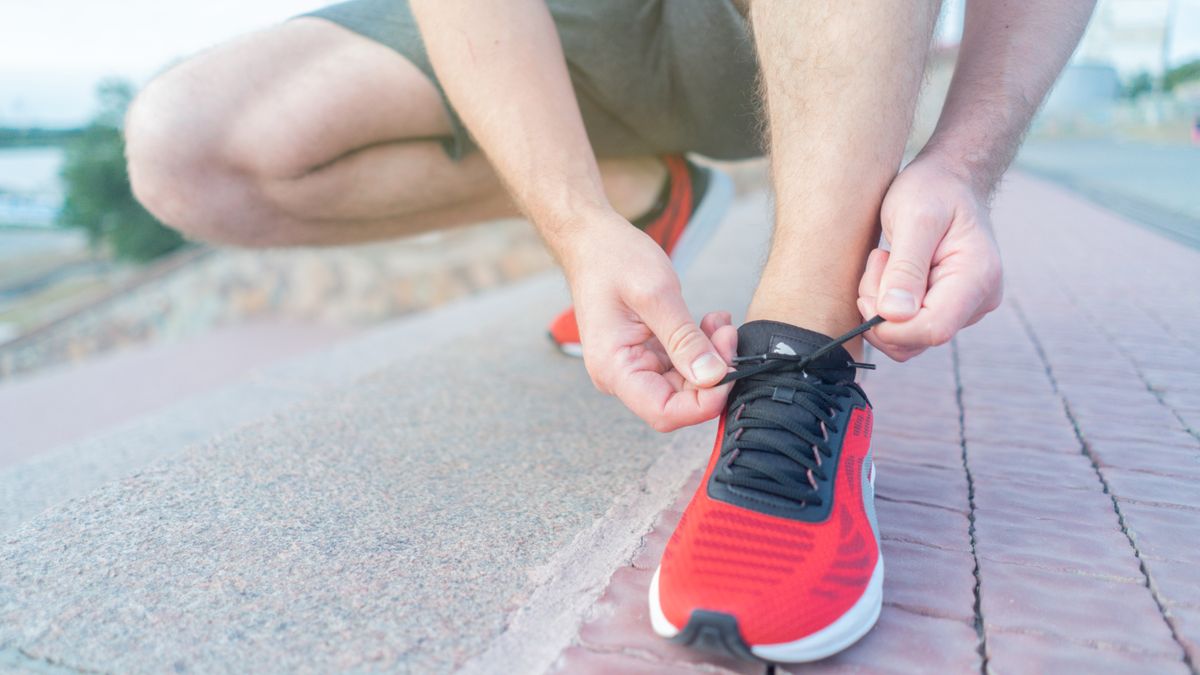
Tie the first half of a normal bow, then wrap the loop around twice instead of once before pulling it through. This runner knot holds through a marathon but still releases with one pull. If your bows sit crooked and loosen quickly, you are probably tying a granny knot; the fix is in how to tie shoes.
How tight should running shoes be laced?
- Forefoot: relaxed enough to wiggle and spread your toes.
- Midfoot: snug, so the foot does not slide, with no pressure points.
- Heel: secure with no lift.
- Test: you should be able to slide one finger under the knot. Tingling or numbness means too tight.
- Re-adjust a mile or two into long runs, because feet swell.
Lace tips
- Flat laces hold tension and knots better than round, slippery ones.
- Replace frayed laces; standard running shoe lengths are roughly 100 to 120 cm depending on the number of eyelets.
- Elastic or lock laces suit triathletes and anyone who prefers slip-on convenience, though they give less precise adjustment.
- Wash laces now and then; see how to clean white shoelaces.
Lacing fine-tunes a shoe that basically fits. It cannot rescue the wrong size or shape, so start with how to choose running shoes. For hot spots that remain, see how to prevent blisters. Lacing boots is a different job, covered in how to lace boots.
Frequently asked questions
What is the extra hole on running shoes for?
The extra top eyelet is for a heel lock, also called a runner loop, which secures the heel and reduces slipping and blisters.
How do I lace running shoes for wide feet?
Skip the crossings over the forefoot by running the laces straight up the sides for the first one or two eyelets, then criss-cross from the midfoot.
Why do my feet go numb when I run?
Often the laces are too tight over the top of the foot. Loosen the midfoot or use window lacing. Persistent numbness should be checked by a professional.
Should I use all the eyelets?
Use as many as you need for a secure heel. Many runners skip the top pair until they need a heel lock.
How do I stop running shoe laces coming undone?
Tie a balanced bow and wrap the loop around twice before pulling through, or tuck the bow under the crossed laces.