The best shoe stretcher for most people is a two-way wooden stretcher that widens the forefoot and adds a little length, such as the FootFitter Premium. It is sturdier than plastic models and comes with plugs to relieve pressure on bunions and corns. If you only need to ease one tight pair, the plastic Eachway two-way set does the job for less. Used with a stretch spray on leather or suede, a stretcher can add roughly a quarter to half a size in width. It cannot make a shoe that is far too small fit.
In this guide
Picks are based on published product information and independent reviews, not our own testing. Stretch gradually: forcing a stretcher can split seams or crack finishes.
Quick picks
| Tool | Best for | Type |
|---|---|---|
| FootFitter Premium Two-Way Stretcher | Best overall | Beech wood, width and length |
| Eachway Two-Way Shoe Stretcher (pair) | Value | Tough plastic, width and length |
| Boot stretcher with instep raiser | Boots and high insteps | Wood or metal, long handle |
| High-heel shoe stretcher | Pumps and heels | Angled wooden form |
| Ball-and-ring bunion stretcher | One painful spot | Metal spot stretcher |
| Shoe stretch spray | Use with any stretcher, or with thick socks | Liquid leather softener |
The 6 best shoe stretching tools
1. FootFitter Premium Two-Way Stretcher
Best for: leather dress shoes, loafers and casual shoes
A solid beech-wood stretcher with steel hardware. Turning the handle spreads the split toe block for width, and the wheel pushes the heel block back for length. Holes in the wood take the included plugs for targeted relief.
- Good: sturdy, precise, stretches width and length, includes bunion plugs
- Less good: sold singly in some listings; check you are buying the right size range
2. Eachway Two-Way Shoe Stretcher (pair)
Best for: occasional use on a budget
A pair of hard plastic stretchers that work the same way as wooden ones, with metal rods and pressure plugs included. Having two lets you stretch both shoes at once.
- Good: inexpensive, sold as a pair, light
- Less good: plastic can flex or crack under heavy force; less precise
3. Boot stretcher with instep raiser
Best for: ankle boots, work boots and tight insteps
Boot stretchers have a long shaft handle to reach down the leg of a boot, and many add a hinged top piece that lifts the vamp to give a high instep more room. Separate calf stretchers exist for tall boot shafts.
- Good: reaches into boots, relieves the instep
- Less good: bulky; rigid safety toe caps will not stretch
4. High-heel shoe stretcher
Best for: pumps, court shoes and heeled sandals
The toe block is angled to match a raised heel, so it sits properly in the toe box of pumps where a flat stretcher will not fit. It widens the forefoot, the usual pressure point in heels.
- Good: fits heeled shoes correctly, widens the toe box
- Less good: does not lengthen much; delicate uppers need gentle turns
5. Ball-and-ring bunion stretcher
Best for: a single rub point over a bunion, corn or little toe
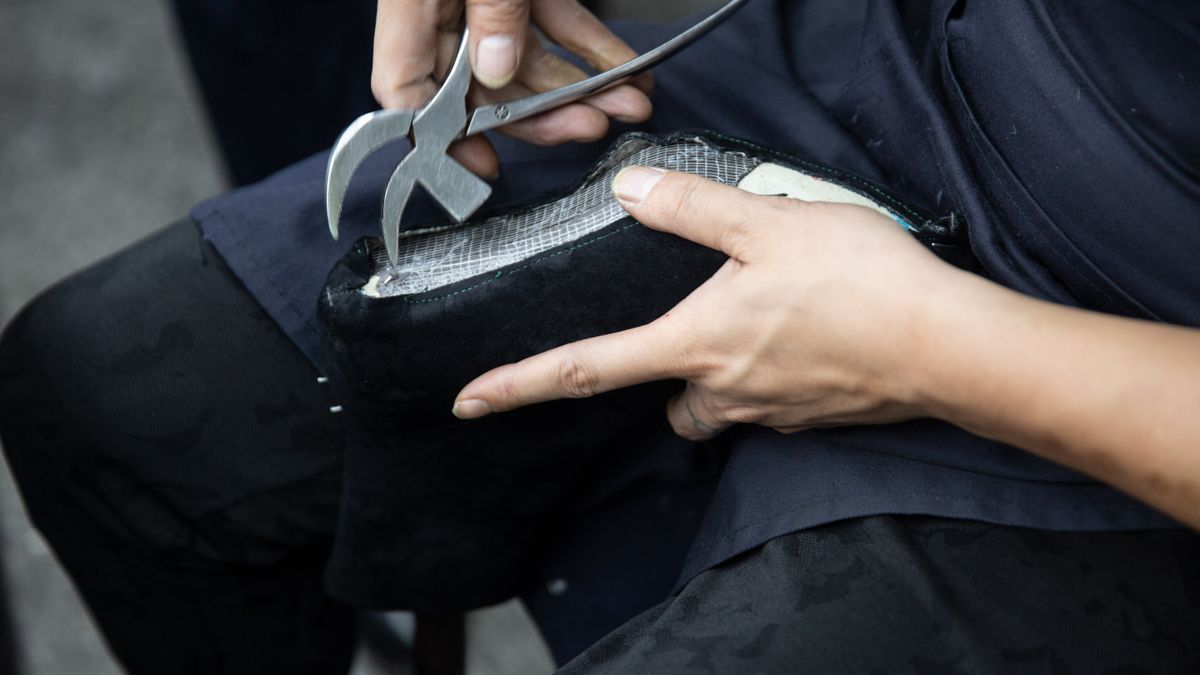
A plier-like tool with a ball on one jaw and a ring on the other. You clamp it over the exact spot that hurts to push out a small pocket in leather, without widening the whole shoe.
- Good: precise spot relief, works on boots and shoes
- Less good: leather only; can leave a visible bump if overdone
6. Shoe stretch spray
Best for: helping leather give without cracking
Stretch sprays soften the fibres of leather and suede so they relax around a stretcher or your foot. Spray the tight area inside and out, then insert the stretcher or wear the shoes with thick socks.
- Good: makes stretching quicker and gentler, cheap
- Less good: little effect on synthetics; can darken some light leathers, so test first
Related: How to Clean UGG Slippers and Other Sheepskin Slippers
How to use a shoe stretcher
- Apply stretch spray to the tight areas, if the material allows.
- Insert the stretcher fully and add plugs where needed.
- Turn the width handle until the upper is taut, then two or three more half turns.
- Leave for 24 hours. Try the shoe on.
- Repeat with a few more turns if needed, rather than forcing it in one go.
What stretching can and cannot do
| Material | How well it stretches |
|---|---|
| Full-grain leather, suede, nubuck | Well: up to about half a size in width |
| Canvas and knit | A little |
| Patent leather, synthetics, plastic | Poorly; may crack or spring back |
| Length (any material) | Very little: a few millimetres at most |
For the no-tool methods, see how to stretch shoes and how to break in shoes. If you keep needing to stretch shoes, you may be buying the wrong width: read wide vs regular shoe width, how tight shoes should be and the best shoes for wide feet. For bunion-friendly footwear, see the best shoes for bunions. To keep the shape afterwards, use the best shoe trees.
Frequently asked questions
Do shoe stretchers really work?
Yes on leather and suede, for modest gains in width. They do little for synthetic uppers or for length.
How long should I leave a shoe stretcher in?
At least 24 hours per session. Stubborn leather may need two or three sessions.
Can a shoe stretcher make shoes a full size bigger?
No. Expect a quarter to half a size in width at most.
Is a shoe stretcher the same as a shoe tree?
No. A shoe tree keeps the shape and absorbs moisture; a stretcher applies force to enlarge the shoe.